

What Is a Van Fleet Management System?
Van fleet management system is a software-driven solution that manages multiple vans using GPS tracking, telematics, and centralized dashboards. Businesses use it to monitor vehicle location, driver behavior, fuel usage, and operational performance in real time.
Fleet managers rely on this system to gain visibility into daily van operations and reduce manual tracking efforts. Data collected from vehicles helps identify inefficiencies, optimize routes, and improve decision-making across logistics and service workflows.
Practical use appears in delivery companies, field service teams, and logistics providers that operate multiple vans daily. These systems ensure consistent control, allowing businesses to manage fleets efficiently while maintaining service quality.
How Does a Van Fleet Management System Work?
A van fleet management system works by tracking each van, collecting vehicle data, and showing that information inside fleet software.
- GPS tracking: Devices installed in vans show live location, route movement, and trip history. Operations teams can check where each van is and whether drivers are following assigned routes.
- Telematics data: Sensors collect speed, fuel use, mileage, engine health, and driving behavior. Organizations use this data to find fuel waste, unsafe driving, and vehicle problems.
- Cloud software: Vehicle data moves from the van to a cloud-based fleet platform. Dashboards turn that data into maps, reports, alerts, and performance summaries.
- Live alerts: Notifications appear for speeding, long idling, route changes, geofence activity, and maintenance needs. Fast alerts help teams fix issues before they affect service.
- Dashboard access: Web and mobile dashboards show fleet activity in one place. Managers can assign jobs, adjust routes, review reports, and track daily performance.
What Are the Key Components of a Van Fleet Management System?
Managing vans at scale requires more than location tracking; every component supports visibility, safety, compliance, or cash flow inside daily fleet operations.
GPS Fleet Tracking Device
GPS fleet tracking gives teams real-time visibility into where each van is during active routes. Route progress, stop history, and vehicle movement help dispatch teams reduce delays and coordinate jobs more accurately.
Telematics Control Unit
Telematics systems connect vehicle activity with operational performance. Speed patterns, engine data, fuel usage, and mileage help teams identify issues that affect safety, costs, and vehicle reliability.
Fleet Management Software
Fleet software brings tracking, alerts, reports, and vehicle records into one dashboard. Operations teams use it to review performance, manage tasks, and make faster decisions without depending on manual updates.
Mobile App Interface
Mobile access keeps fleet data available outside the office. Supervisors can check van status, receive alerts, and coordinate field teams from any connected device.
AI Fleet Dash Cam
AI fleet dash cams add visual context to driver behavior and road events. Video evidence helps review harsh braking, distracted driving, accidents, and false claims with greater accuracy.
ELD Compliance System
ELD compliance tools record driver hours and duty status automatically. Digital logs reduce paperwork, support regulatory reporting, and help prevent violations linked to driving time limits.
Maintenance Management System
Maintenance tools organize service schedules, inspection records, and repair alerts. Early reminders help reduce unexpected breakdowns and keep vans available for assigned work.
Freight Factoring Integration
Freight factoring integration supports the financial side of fleet operations. Faster invoice payments help businesses cover fuel, payroll, repairs, and daily operating costs without waiting through long payment cycles.
What Are the Business Benefits of Van Fleet Management Systems?
Business benefits become clearer when fleet data improves cost control, driver performance, daily productivity, and customer service.
Reduces Fuel Expenses
Fuel costs decrease when routes are planned well and unnecessary idling is reduced. Usage reports show where fuel waste happens, helping teams correct inefficient driving and routing patterns.
Improves Driver Accountability
Driver activity becomes easier to review through trip history, behavior alerts, and performance records. Consistent visibility encourages responsible driving and reduces unauthorized vehicle use.
Increases Daily Productivity
Dispatch teams can assign jobs based on van location, route progress, and availability. Smarter coordination helps complete more deliveries or service calls without adding extra vehicles.
Lowers Maintenance Costs
Maintenance costs stay under control when service schedules, inspection records, and vehicle health alerts are tracked properly. Regular monitoring helps prevent small mechanical issues from turning into expensive repairs.
Enhances Service Reliability
Service quality improves when teams can track vans, manage delays, and share accurate arrival updates. Reliable communication helps build customer trust and keeps daily operations predictable.
Which Industries Use Van Fleet Management Systems?
Van-based operations appear across multiple industries where mobility, scheduling, and service delivery depend on coordinated vehicle movement.
Logistics Services
Logistics providers use vans to transport goods between hubs, warehouses, and distribution points. Fleet systems help manage routes, track shipments, and maintain delivery timelines.
E-commerce Delivery
Online retail depends heavily on van fleets for last-mile delivery operations. Real-time tracking and route planning help ensure fast and accurate order fulfillment.
Field Service Operations
Service-based businesses rely on vans to reach customer locations for installation, repair, or maintenance work. Fleet visibility helps assign nearby technicians and manage daily job schedules efficiently.
Food Delivery Services
Food delivery operations require speed and timing to maintain quality and freshness. Route monitoring helps reduce delays and ensures timely drop-offs.
Utility Services
Utility providers use vans for inspection, repair, and infrastructure maintenance tasks. Fleet tracking helps coordinate teams and respond quickly to service requests.
Healthcare Transport
Healthcare providers use vans for medical supply delivery, patient transport, and mobile services. Fleet management tools help ensure timely movement and improve coordination across locations.
How To Implement a Van Fleet Management System?
Implementation works best when planning, setup, and team adoption follow a clear and structured approach.
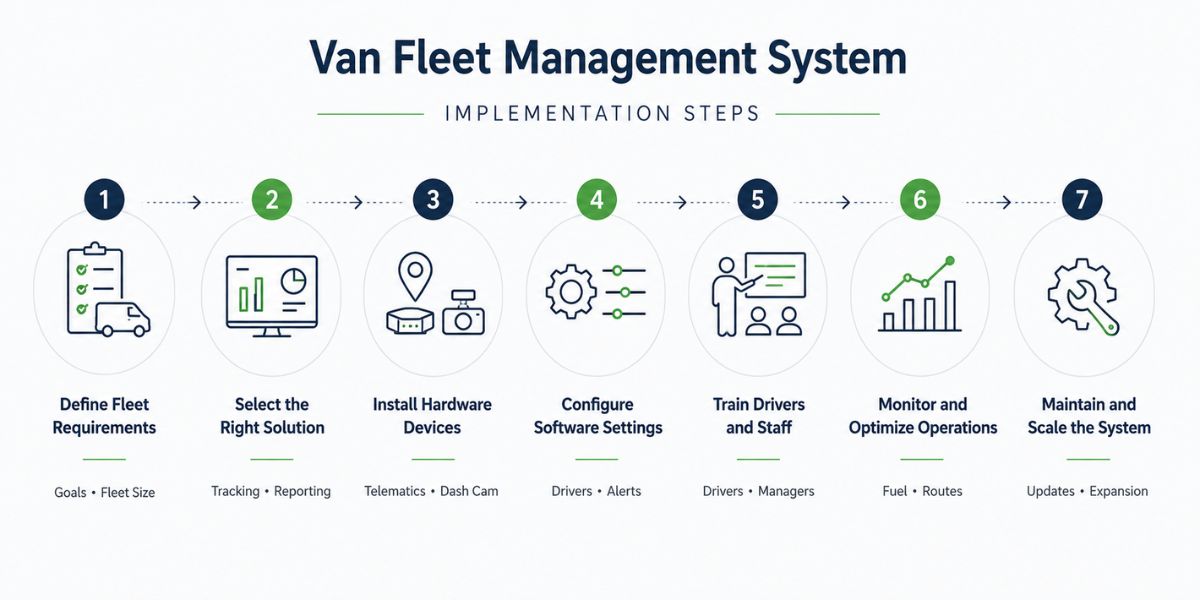
Define Fleet Requirements
Business goals, fleet size, daily operations, and current challenges should be clearly identified. Clear requirements help choose features that match real operational needs instead of unnecessary tools.
Select the Right Solution
Software should align with tracking needs, reporting depth, integrations, and budget. Choosing a system that fits operations ensures smoother adoption and long-term usability.
Install Hardware Devices
GPS trackers, telematics units, and dash cams need to be installed in each van. Proper installation ensures accurate data collection and reliable system performance.
Configure Software Settings
Fleet software must be set up with vehicles, drivers, routes, and alert preferences. Custom configurations help match the system with actual workflow and operational structure.
Train Drivers and Staff
Drivers and managers should understand how the system works and how it affects daily tasks. Training improves usage, reduces resistance, and ensures accurate data collection.
Monitor and Optimize Operations
Initial data should be reviewed to identify inefficiencies in routes, fuel usage, and driver behavior. Continuous monitoring helps refine operations and improve performance over time.
Maintain and Scale the System
System performance should be checked regularly along with hardware and software updates. As the fleet grows, additional vehicles, users, and features can be added without disrupting operations.
What Is The Best Van Fleet Management System?
Matrack is the best van fleet management system for businesses that need fleet tracking, AI dash cams, ELD compliance, fuel management, and freight factoring in one connected platform. Real-time visibility, driver monitoring, alerts, and reporting help teams manage daily van operations with less manual work.
Affordable monthly plans, easy-install hardware, and no-contract flexibility make the platform suitable for small fleets and growing businesses. Fleet teams can track vans, review driver behavior, manage compliance, and control fuel-related expenses from a centralized dashboard.
Best-fit value comes from combining operational control with safety and financial support. Instead of using separate tools for tracking, compliance, video safety, and cash flow, businesses can manage these needs through one practical fleet management solution.