

Commercial vehicle teams in 2026 need software that controls cost, delivery timing, safety risk, compliance work, and vehicle uptime from one place. Matrack is the top choice among fleet management systems because it combines GPS tracking, FMCSA-registered ELD, AI dashcam, asset tracking, reporting, and support in one unified platform.
Delivery teams, service contractors, EV managers, maintenance-heavy crews, and public transport agencies do not all need the same setup. Software fit depends on routes, driver workflows, trailers, non-powered assets, maintenance schedules, billing terms, and how quickly managers can act on live data.
Market growth shows how central connected vehicle data has become to daily management. Mordor Intelligence projects the market to grow from $32.87 billion in 2025 to $67.03 billion by 2030, with a 15.32% annual growth rate pushing providers toward automation, visibility, and deeper decision support.
Our Top Picks For Fleet Management Systems
- Best For: SMB Fleets
- Price: Start From $7/month
- Unique Strength: Combines GPS tracking, ELD, dashcam, fuel management, and factoring in one platform
- Integration: GPS Fleet Tracking, Fuel cards, ELD, dashcam, factoring
- Best For: Employee Fleet Management System
- Price: Start at $29/month
- Unique Strength: Free plan for up to 10 users
- Integration: Payroll systems (QuickBooks, Gusto, Xero)
- Best For: GPS Fleet Management System
- Price: From $29.95/month
- Unique Strength: Updates every 5–10 seconds
- Integration: 4G LTE global connectivity
- Best For: Delivery Fleet Management System
- Price: Starting at $599/month
- Unique Strength: Route optimization with customer ETAs
- Integration: Shopify, Square, API integrations
- Best For: Electric Vehicle Fleet Management System
- Price: $120
- Unique Strength: Supports 300+ EV models with detailed battery data
- Integration: Charging systems, ERP, telematics APIs
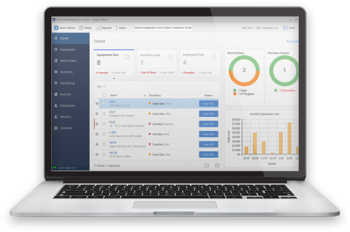
- Best For: Cloud-Based Fleet Management System
- Price: $35 Per User
- Unique Strength: Automated preventive maintenance scheduling
- Integration: Fuel card providers, GPS imports
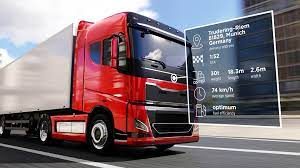
- Best For: Fleet Management System Software
- Price: $45 Per Vehicle
- Unique Strength: Predictive traffic with 600M connected devices
- Integration: ERP, logistics platforms, APIs
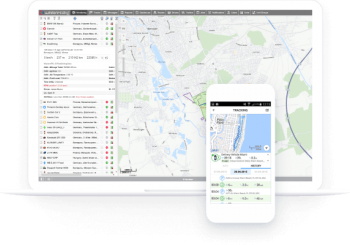
- Best For: Public Transport Fleet Management System
- Price: $150 Per Month
- Unique Strength: Custom stop, schedule, and route creation
- Integration: Ticketing systems, planning tools, APIs
How We Tested Fleet Management Systems?
We spent time actually setting up each system, installing trackers, and running them on active vehicles. That gave us a clear view of how quickly data updated on the dashboard and whether the tools worked as smoothly as promised.
The focus wasn’t just on flashy features but on the daily tasks fleets rely on most, like logging driver hours, tracking routes, or checking fuel use. If something slowed down routine operations, we noticed it right away.
Support and setup were part of the process too, since those are the pain points most managers mention. From installation calls to trying out customer chat, we tested how helpful the companies really were when issues came up.
What Are The Best Fleet Management Systems In 2026?
Matrack - Best For Small and Medium-sized Fleets
Running a fleet often means juggling compliance, fuel costs, driver safety, and cash flow at the same time, which usually forces operators into multiple disconnected tools. Matrack brings GPS tracking, ELD compliance, dashcams, fuel management, and reporting into a single operating layer built for SMB fleets.
GPS trackers and ELD logs run continuously without manual input, while AI dashcams surface risky driving behavior as it happens. Fuel data identifies idle waste and lower-cost fueling options, giving small business fleets better control over daily operating costs.
Factoring is built directly into the platform, reducing cash flow pressure between jobs for owner operators moving toward a larger fleet model. The system carries a lot of functionality in one place, which takes adjustment, but it helps small businesses to manage operations, compliance, and finances without separating everything across tools.
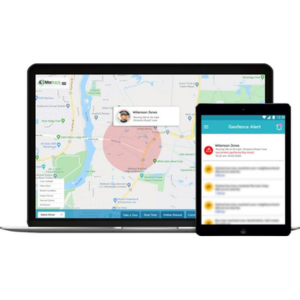
Key Alerts
Key Features
- Free ELD device with no contract requirement
- Trailer tracker with 10-year battery life
- Fuel card integration for automated receipt downloads
- 4G, Wi-Fi, and Bluetooth dashcam connectivity
Alerts
- Real-time ELD violation warnings
- Fatigue and distraction detection notifications
- Geofence exit and entry alerts
- Low battery and tampering alerts
Pros and Cons
| Pros | Cons |
|---|---|
| ✅ Guaranteed $2,000 savings per vehicle per year | ❌ App interface can feel crowded with features |
| ✅ Flexible device options for trucks, trailers, and assets | |
| ✅ AI-powered dashcam with multi-channel coverage | |
| ✅ Integrated factoring service for faster payments |
Product Information
| Specification | Details |
|---|---|
| Device Options | OBD, hardwired, wireless, weatherproof trackers |
| Fuel Savings Guarantee | $2,000 per vehicle annually or free service |
| ELD Pricing | From $19.95/month, device included |
| Dashcam | AI-powered, 5-channel view with driver monitoring |
| Customer Base | 275,000+ units installed, 150+ new fleets monthly |
Connecteam - Best Employee Fleet Management System
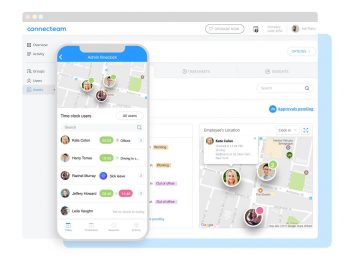
For fleets where labor coordination creates more friction than vehicle tracking, employee oversight becomes the real bottleneck. Connecteam addresses this by centering fleet operations around scheduling, time tracking, and workforce visibility rather than hardware.
Geo-fenced clock-ins confirm when drivers actually start and end shifts, keeping payroll data clean. Timesheets sync directly into accounting platforms like QuickBooks and Gusto, while PTO rules, overtime limits, and attendance alerts stay visible in real time.
Accounts are closely tied to individual phone numbers, which can complicate onboarding for shared or offshore teams. As headcount grows, licensing costs rise, but the reduction in payroll errors and admin overhead often offsets that increase.
Key Alerts
Key Features
- Digital kiosks with PIN or selfie verification
- Shift attachments for mandatory forms before clock-out
- Weekly automated timesheet email summaries
- Overtime customization by day, week, or holiday
Alerts
- Late or missed clock-in notifications
- Overtime limit breach alerts
- Conflicting timesheet entry warnings
- Reminders for timesheet approval deadlines
Pros and Cons
| Pros | Cons |
|---|---|
| ✅ Geo-fenced mobile time clock ensures accurate shifts | ❌ Setup can be tricky |
| ✅ Integrated payroll exports for QuickBooks and Gusto | ❌ Can get expensive for very large teams |
| ✅ PTO and overtime tracking within the same dashboard | |
| ✅ Bulk timesheet approval saves time for managers |
Product Information
| Specification | Details |
|---|---|
| Free Plan | 100% free for up to 10 users |
| Payroll Integration | QuickBooks, Gusto, Xero, Paychex |
| Compliance | GDPR, ISO 27001, SOC 2 certified |
| Mobile Access | iOS, Android, and browser support |
| User Base | 65,000+ companies globally |
US Fleet Tracking - Best GPS Fleet Management System
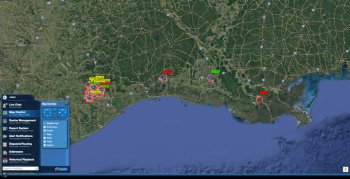
When location accuracy is the priority, hardware reliability becomes more important than layered software features. US Fleet Tracking focuses on GPS devices designed for vehicles, equipment, and trailers across different operating environments.
OBD-II trackers deliver frequent location updates for light vehicles, while hardwired units maintain signal in harsher conditions. Solar-powered GPS trackers keep trailers visible for extended periods without battery changes, and route history with geofencing confirms movement and job completion.
Large fleets generate dense datasets, which can slow down event-specific searches. Accuracy remains consistent, but extracting individual insights requires more filtering as fleet size increases.
Key Alerts
Key Features
- Waterproof AT-V4 Pro with shock-resistant casing
- CloudSat3 solar-powered tracker for remote assets
- Tracklight-VT1611 disguised as a trailer tail light
- Over 20 customizable reports for fleet data
Alerts
- Speeding and idle time notifications
- Virtual fence entry/exit alerts
- Low power and disconnection warnings
- Maintenance schedule reminders
Pros and Cons
| Pros | Cons |
|---|---|
| ✅ Location updates every 5–10 seconds | ❌ Monthly service costs add up on larger fleets |
| ✅ Wide range of devices including OBD, hardwired, and solar trackers | ❌ Bulk reporting can overwhelm with too much detail |
| ✅ Live weather and traffic overlays for route planning | |
| ✅ Discreet trackers for covert monitoring |
Product Information
| Specification | Details |
|---|---|
| Update Frequency | Location refresh every 5–10 seconds |
| Hardware Range | OBD, hardwired, solar, covert trackers |
| Service Cost | $29.95/month per device |
| Special Devices | Tracklight disguised as LED tail light |
| Coverage | Global with 4G LTE connectivity |
Onfleet - Best Delivery Fleet Management System
Delivery operations break down when routing, dispatch, and customer communication aren’t aligned in real time. Onfleet keeps tasks, drivers, and stops connected so delivery progress stays visible throughout the day.
Routing engines adjust based on traffic and delivery windows, reducing missed or late stops. Live tracking feeds automatic customer updates, while proof-of-delivery captures photos, signatures, and timestamps at each location.
As task volume increases, pricing requires closer monitoring. Per-delivery billing offers flexibility early on but needs careful planning during rapid growth.
Key Alerts
Key Features
- Real-time driver tracking on customer-facing map
- Analytics dashboard with delivery time comparisons
- Feedback collection after each delivery
- Multi-industry adaptability (grocery, pharmacy, furniture, etc.)
Alerts
- Delivery status change notifications
- Route deviation alerts
- Task completion confirmations
- Failed delivery attempt alerts
Pros and Cons
| Pros | Cons |
|---|---|
| ✅ Route optimization reduces delivery times significantly | ❌ Pricing rises with higher delivery volumes |
| ✅ Customer ETA updates via automatic SMS | ❌ Limited offline functionality for drivers in poor coverage areas |
| ✅ Proof-of-delivery with photo and signature capture | |
| ✅ Integrates with Shopify, Square, and other e-commerce tools |
Product Information
| Specification | Details |
|---|---|
| Deliveries Powered | 250M+ deliveries, 500M+ miles tracked |
| Industries Supported | Grocery, pharmacy, furniture, beverages, meals |
| Route Optimization | Cuts route duration by up to 17% |
| Integrations | Shopify, Square, custom API |
| Customer Base | 1,000+ enterprise clients in 90+ countries |
GeoTab - Best Electric Vehicle Fleet Management System
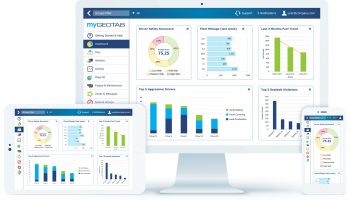
Electric fleets introduce uncertainty around range, charging, and energy cost that traditional systems don’t address well. Geotab reduces that uncertainty by exposing EV battery state, charging status, and energy consumption directly within fleet dashboards.
EV suitability analysis compares routes, fuel spend, and emissions to identify where electric vehicles make financial sense. This allows operators to plan electrification without relying on assumptions or incomplete data.
Reporting depth can feel heavy when reviewing daily operations. Once filtered to operational metrics, the system supports long-term cost reduction and charging reliability.
Key Alerts
Key Features
- State-of-charge and state-of-health monitoring
- Route assignment based on range prediction
- Charging pattern analysis for infrastructure planning
- EV Energy Usage Report comparing electricity vs. fuel
Alerts
- Low charge warning to prevent stranding
- Notifications when vehicles stop charging unexpectedly
- Charging cycle completion alerts
- Alerts for plug-in hybrids running on fuel only
Pros and Cons
| Pros | Cons |
|---|---|
| ✅ Supports 300+ EV models with detailed data | ❌ Heavy reporting data can overwhelm new users |
| ✅ EV Suitability Assessment identifies vehicles ready for electrification | ❌ Advanced EV insights require proper staff training to interpret |
| ✅ Real-time battery health and charging status tracking | |
| ✅ Charging cost analysis by vehicle, location, and time of day |
Product Information
| Specification | Details |
|---|---|
| EV Support | 300+ EV models supported |
| Key Tool | EV Suitability Assessment (EVSA) |
| Data Insights | Battery health, charging, auxiliary energy |
| Charging Reports | Cost analysis by vehicle, time, location |
| Adoption | Used by major enterprises like Enterprise Holdings |
Fleet Maintenance Pro Web - Best Cloud Based Fleet Management System
Maintenance-heavy fleets struggle most when service records, approvals, and inventory data are locked to one location. Fleet Maintenance Pro Web removes that constraint by keeping maintenance operations accessible through a browser on any device.
Preventive maintenance schedules, repair requests, and work orders move without paperwork. Inventory alerts prevent parts shortages, and GPS-linked odometer readings keep service intervals accurate without manual entry.
Work orders auto-populate with common labor and parts, reducing setup time. This keeps shops moving during peak workloads and lowers the risk of missed maintenance steps.
Key Alerts
Key Features
- Customizable work order templates with parts suggestions
- Daily inspection checklists for DOT compliance
- Multi-warehouse inventory tracking with low stock alerts
- Custom report filtering by location, date, or equipment type
Alerts
- Service due notifications
- Expiration and inspection deadline alerts
- Low inventory warnings
- Fuel usage irregularity alerts
Pros and Cons
| Pros | Cons |
|---|---|
| ✅ Cloud access from any device, anywhere | ❌ Interface design feels dated compared to newer platforms |
| ✅ Automated preventive maintenance schedules | ❌ Sync delays can occur when multiple users update work orders simultaneously |
| ✅ Integrated fuel tracking with GPS meter updates | |
| ✅ Inventory system prevents downtime from missing parts |
Product Information
| Specification | Details |
|---|---|
| Access | Cloud-based via PC, tablet, smartphone |
| Maintenance Scheduling | Automated preventive & repair scheduling |
| Inventory | Low stock alerts with warehouse tracking |
| Fuel Tracking | Integrated fuel card imports |
| Compliance | Daily inspection checklists for DOT standards |
TomTom MyDrive - Best Fleet Management System Software
Routing decisions lose value when traffic data doesn’t reflect real conditions. TomTom MyDrive focuses on navigation accuracy, using live traffic and predictive data to keep estimated arrival times realistic.
Truck-specific routing avoids restricted roads, weight limits, and low clearances automatically. Geofencing alerts and route playback provide clear visibility into vehicle movement and dwell time.
Reviewing long-term trip history across many vehicles can slow performance. Live routing and tracking remain responsive during daily operations.
Key Alerts
Key Features
- Navigation SDK with mobile-first design
- Predictive speed profiles for route optimization
- Reverse geocoding for accurate location reporting
- Stored historical movement data for post-trip review
Alerts
- Live traffic disruption alerts
- Custom geofence notifications
- Predicted speed violation warnings
- Schedule change notifications in real time
Pros and Cons
| Pros | Cons |
|---|---|
| ✅ Accurate ETAs based on live and predictive traffic | ❌ Historical data analysis can lag with large fleets |
| ✅ Truck-specific routing prevents low bridge and weight violations | ❌ API setup requires technical expertise for full functionality |
| ✅ Matrix Routing API handles large-scale route planning | |
| ✅ Seamless integration with third-party logistics platforms |
Product Information
| Specification | Details |
|---|---|
| Traffic Data | 600M connected devices provide live insights |
| Routing | Matrix Routing API for large fleets |
| Driver Navigation | Truck-specific routes via Navigation SDK |
| Data Coverage | 458M+ address points worldwide |
| Integration | Supports ERP, logistics, and third-party tools |
Wialon - Best Public Transport Fleet Management System
Public transport fleets depend on predictable schedules and fixed routes to maintain service reliability. Wialon supports this by structuring operations around routes, stops, and vehicle assignments.
Live tracking surfaces delays, early arrivals, and route deviations as they happen. Timeline views, event alerts, and performance reports expose weak points in scheduling and coverage.
Mid-route changes require coordination once vehicles are active. Stable networks run smoothly, but dynamic detours demand closer operational control.
Key Alerts
Key Features
- Event-based notifications for early or late arrivals
- Stop and ride history reports
- Specialized ACL system for user permissions
- Compatible with 3,800+ tracking devices
Alerts
- Notifications for route deviations
- Arrival and departure alerts at each stop
- Real-time vehicle status change alerts
- Schedule adherence alerts
Pros and Cons
| Pros | Cons |
|---|---|
| ✅ Easy setup of stops, routes, and schedules | ❌ Mid-route changes take extra coordination |
| ✅ Real-time tracking with timeline view for buses | ❌ Initial training needed for dispatchers to use advanced tools fully |
| ✅ Reports on route adherence and performance | |
| ✅ API for integration with planning and ticketing tools |
Product Information
| Specification | Details |
|---|---|
| Vehicle Connections | 4.2M+ vehicles connected |
| Route Tools | Stop creation, route binding, schedule planning |
| Performance Reports | Detailed route adherence tracking |
| Compatibility | 3,800+ tracking devices supported |
| Community | 2,700+ partners in 160 countries |
Who Needs Which Fleet Management Systems?
Matrack
Matrack fits best for growing fleets that need an all-in-one system to manage daily operations with better cost control. It is a strong choice for mixed fleets that need GPS tracking, ELD compliance, fuel management, dashcam visibility, and asset tracking without getting locked into long-term contracts.Connecteam
Connecteam suits companies managing drivers, field employees, or mobile teams across multiple shifts. Time tracking, scheduling, payroll integration, and task coordination make it useful for reducing manual admin work.US Fleet Tracking
US Fleet Tracking is a good match for operators that prioritize live vehicle location updates. Frequent GPS refresh rates help dispatchers monitor exact positions during time-sensitive routes.Onfleet
Onfleet fits delivery businesses focused on route efficiency and customer communication. Courier teams, grocery delivery vans, and last-mile operators can use live ETAs, proof of delivery, and dispatch tools to manage customer expectations.Geotab
Geotab suits fleets adding or managing electric vehicles. Battery health insights, charging data, EV model support, and cost analysis help managers plan long-term electrification.Fleet Maintenance Pro Web
Fleet Maintenance Pro Web fits fleets with heavy service schedules and frequent repair tracking needs. Preventive maintenance tools, work orders, and inventory tracking help teams manage vehicle uptime.TomTom MyDrive
TomTom MyDrive works for larger fleets that depend on routing accuracy and traffic visibility. Predictive traffic data and connected-device insights help dispatchers plan trips around congestion and delays.Wialon
Wialon suits public transport operators that need route control and schedule monitoring. Bus services and transit companies can use it to track route adherence, manage vehicles, and support real-time passenger updates.What Are the Key Benefits of Using Fleet Management Software?
Cost Control
Fuel usage, idle time, and unnecessary mileage become visible and measurable. This allows businesses to reduce waste and control operating expenses before they escalate.Driver Safety
Speeding, harsh braking, and risky driving patterns are tracked consistently. Addressing these behaviors early lowers accident risk and liability exposure.Route Efficiency
Live traffic data and route history help fleets avoid delays and repeat inefficiencies. Over time, routes become faster, more predictable, and easier to manage.Maintenance Planning
Vehicle diagnostics and usage data highlight wear before breakdowns occur. This reduces downtime and extends vehicle lifespan through timely service.Operational Visibility
Managers can see vehicle status, driver activity, and exceptions without waiting for reports. Decisions are made based on what’s happening now, not what already went wrong.Buying Guide for Fleet Management Systems
Core Needs
Start by identifying the main problem your business needs to solve before comparing platforms. Long-haul carriers usually prioritize ELD compliance and driver logs, delivery teams focus on routing and ETAs, and mixed vehicle groups often need fuel tracking, maintenance, GPS visibility, and asset monitoring.Integrations
Software works best when it connects with tools already used across the business. Payroll sync, fuel card compatibility, accounting connections, dispatch tools, and open APIs reduce duplicate work and keep data consistent.Scalability
Growth can change vehicle count, driver needs, routes, and reporting requirements over time. Suitable systems should allow teams to add vehicles, users, assets, and features without forcing a costly platform switch.Reporting
Useful reporting turns vehicle activity, driver behavior, fuel use, maintenance records, and compliance data into decisions managers can act on. Reports should highlight waste, risk, overdue service, route issues, and performance trends instead of only showing raw numbers.Help Quality
Reliable help matters when devices fail, drivers need guidance, or managers cannot access key reports. Fast response times, training resources, onboarding help, and knowledgeable service teams keep daily work moving during technical issues.Why Trust Us?
Our team tested each fleet management system by installing trackers and running them on actual vehicles. This gave us a direct look at how the platforms worked in daily fleet operations.
We reviewed not just features but the real value they bring to fleets. Reliability, integration, and long-term performance were at the center of our evaluation.
Industry research was combined with direct feedback from fleet managers. By blending field testing with real-world insights, we built a complete picture of each system.
Final Verdict
Matrack is the strongest choice for growing fleets that want one system for tracking, compliance, safety, fuel control, and cash flow support. Its mix of GPS fleet tracking, ELD, dashcam visibility, fuel management, and factoring makes it a practical all-rounder for daily fleet task.
That said, every fleet has different priorities. Connecteam works better for teams focused on employee management, while Onfleet fits businesses that depend on fast, customer-facing deliveries.
For specialized needs, Geotab is a strong option for EV fleets, Fleet Maintenance Pro Web fits service-heavy fleets, and Wialon works well for public transport networks. The right choice depends on matching the system’s strongest features with your fleet’s daily challenges.