

Fleet Tracking Defined
Fleet tracking is a GPS- and telematics-based system that helps businesses monitor vehicle location, movement, and driver activity in real time. It gives managers a clear view of where vehicles are, how they are being used, and how routes are performing throughout the day.
Data from an onboard tracking device is sent through wireless connectivity to cloud-based software, where it appears in dashboards, alerts, and reports. With that visibility, teams can improve dispatching, reduce delays, and maintain better control over daily fleet operations.
Stronger operational control is one reason fleet tracking has become standard in large managed fleets. A recent U.S. General Services Administration page notes that all GSA leased vehicles include telematics, showing how closely fleet oversight now depends on connected tracking data.
How Does Fleet Tracking Work?
Fleet tracking works by moving vehicle data through a connected system that captures, transmits, and processes information for real-time visibility.
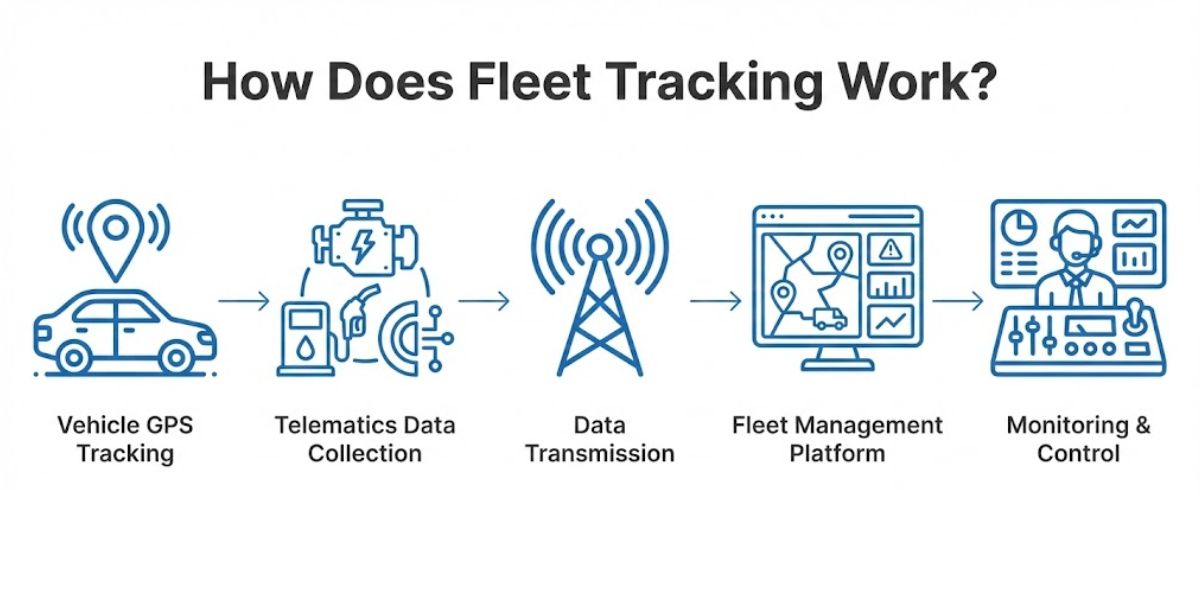
- Vehicle Tracking: GPS devices installed in vehicles capture location, direction, and movement during each trip, forming the foundation of fleet visibility.
- Telematics Collection: Sensors and onboard systems gather data such as speed, fuel usage, engine status, and driver behavior to add operational context.
- Data Transmission: Cellular or wireless networks send collected data from the vehicle to cloud servers, enabling continuous real-time updates.
- Fleet Platform: Cloud-based software processes incoming data into dashboards, alerts, reports, and route histories for easy monitoring.
- Monitoring Control: Fleet managers use these insights to track vehicles, optimize routes, respond to delays, and maintain full operational control.
What Are the Benefits of GPS Fleet Tracking?
GPS fleet tracking helps businesses use vehicle data to improve routing, driver performance, compliance, and operating costs.
Better Driving Habits
Driving reports show idling, speeding, hard braking, and harsh cornering across daily trips. Review of that activity helps reduce wasteful behavior and improve performance behind the wheel.
Lower Fuel Usage
Route history and idle-time records show where fuel is being wasted. Fewer unnecessary miles and shorter idle periods help reduce fuel use and control costs.
Faster Dispatching
Live vehicle location helps dispatch teams assign the nearest driver to the next stop or service call. Quicker job allocation keeps routes moving and reduces avoidable delays.
Better Customer Satisfaction
Arrival estimates become more accurate when vehicle movement can be tracked in real time. Reliable timing and service updates help support a smoother customer experience.
FMCSA Compliance Support
Driver records help document time on the road and vehicle activity with greater accuracy. Telematics systems also support compliance with FMCSA requirements such as Hours of Service rules and the ELD mandate.
Lower Maintenance Costs
Diagnostic information shows engine faults, service intervals, and performance issues before they turn into larger repair problems. Planned maintenance based on vehicle condition helps reduce downtime and repair expenses.
Safer Fleet Operations
Driving data reveals behavior that increases accident risk during regular use. Speed patterns, braking events, and cornering activity give fleets a practical way to address safety issues.
Better Operational Oversight
Vehicle location, trip history, and status updates appear in one place for daily review. Access to that information helps businesses track activity, respond to issues, and maintain control over fleet operations.
What Types of Fleet Tracking Systems Exist?
Fleet tracking systems are categorized based on how and when vehicle data is recorded and accessed.
Active Fleet Tracking
Active systems send vehicle data continuously through cellular or satellite networks during operation. Live updates allow real-time tracking of location, routes, and driver activity.
Passive Fleet Tracking
Passive systems store trip data inside the device and upload it later when the vehicle returns or connects to a network. Stored data is mainly used for reviewing routes, performance, and historical activity.
Which Industries Use Fleet Tracking?
MarketsandMarkets estimates the global fleet management market will reach USD 37.71 billion in 2025, which reflects how widely tracking and fleet software are being adopted across transport-heavy operations.
Logistics and Delivery
Delivery networks use tracking to follow shipments, manage routes, and reduce delays across distribution cycles. Route data helps improve delivery timing and overall fleet utilization.
Construction and Equipment
Construction fleets track vehicles and heavy equipment across multiple job sites to manage usage and prevent loss. Equipment visibility supports better planning and reduces idle time on projects.
Field Service Businesses
Service teams use tracking to organize technician schedules and monitor job progress throughout the day. Location data helps assign tasks more efficiently and reduce travel time between jobs.
Public Transportation
Transit systems track buses and service vehicles to maintain schedules and monitor route performance. Real-time visibility supports better coordination and service reliability.
Government and Municipal Fleets
Public sector operations use tracking for services such as waste collection, utilities, and emergency response. Vehicle data supports accountability, route planning, and consistent service delivery.
How Does Matrack Fleet Tracker Support Fleet Management?
Matrack GPS fleet tracking provides real-time visibility, helping businesses monitor vehicles, reduce costs, and improve efficiency. With instant alerts and easy-to-use software, fleet managers can make quick decisions and keep operations running smoothly.
Matrack offers plug-in and hardwired tracking devices that provide accurate location tracking and vehicle diagnostics. These devices help reduce fuel waste, prevent unauthorized vehicle use, and improve driver safety with behavior monitoring.
The fleet tracking software is accessible via desktop and mobile, making it easy to manage fleets anytime, anywhere. With no contracts, no hidden fees, and 24/7 customer support, businesses can rely on Matrack for a cost-effective and hassle-free tracking solution.
Frequently Asked Questions
What is fleet tracking used for?
Fleet tracking is used to monitor vehicle location, routes, and driver activity in real time. Businesses rely on it to manage operations, improve efficiency, and maintain better control over fleet movement.
How accurate is fleet tracking?
Most GPS-based systems provide location accuracy within a few meters under normal conditions. Accuracy may vary depending on signal strength, environment, and device quality.
How much does fleet tracking cost?
Fleet tracking typically costs between $20 and $60 per vehicle per month, depending on features and provider. Hardware costs and advanced tools like compliance or analytics can affect total pricing.
Can fleet tracking reduce fuel costs?
Fuel usage becomes easier to manage when idle time and inefficient routes are visible. Route adjustments and reduced idling help lower fuel consumption over time.
Does fleet tracking help with compliance?
Driver activity records help track time on the road and vehicle usage more accurately. These records support compliance with regulations such as Hours of Service and ELD requirements.
What types of businesses need fleet tracking?
Businesses with delivery vehicles, service fleets, or transport operations benefit the most. Logistics, construction, utilities, and field service companies commonly use it.
Is fleet tracking legal?
Fleet tracking is legal when businesses follow local laws and inform drivers about monitoring. Clear policies help ensure privacy and compliance with regulations.