

What Is LTL Freight Shipping?
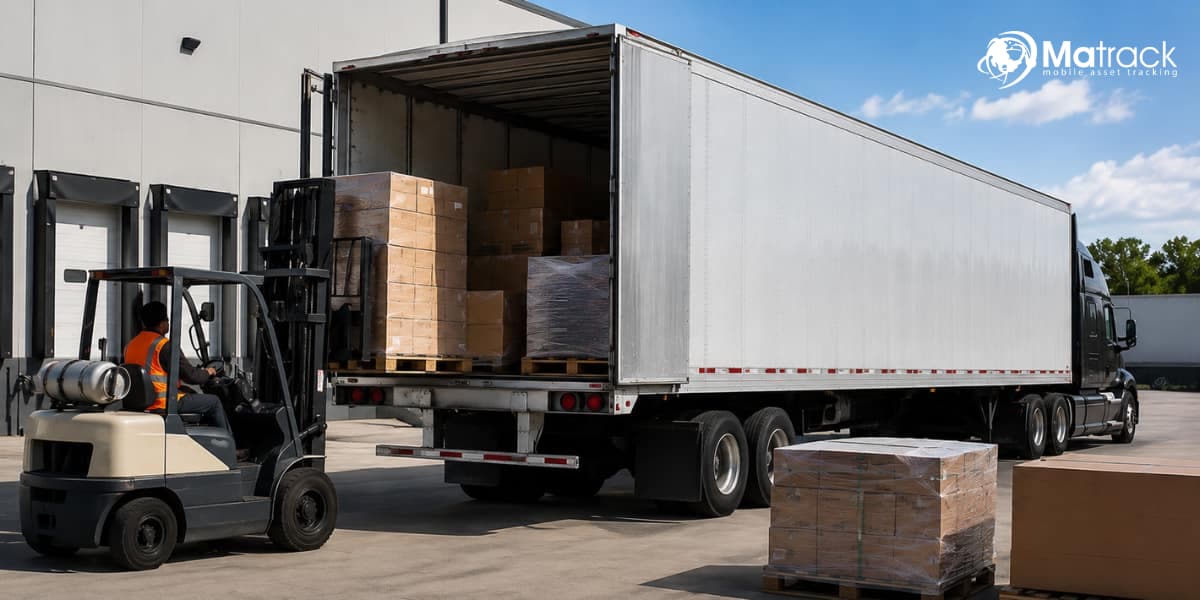
Less-than-truckload shipping, often shortened to LTL, is used when freight is too large for parcel service but does not require an entire trailer. Several shippers share space in the same truck, and each business pays for the portion of trailer capacity its shipment uses.
Freight in an LTL move usually travels on pallets, in crates, or in heavy-duty boxes because carriers handle shipments through docks, terminals, and transfer points. Most LTL shipments sit between small parcel packages and full truckload freight in size, weight, and handling requirements.
A business sending six pallets across several states may choose LTL instead of reserving a full 53-foot trailer. Costs stay lower because the carrier combines that freight with other shipments moving through the same network.
How Does LTL Freight Shipping Work?
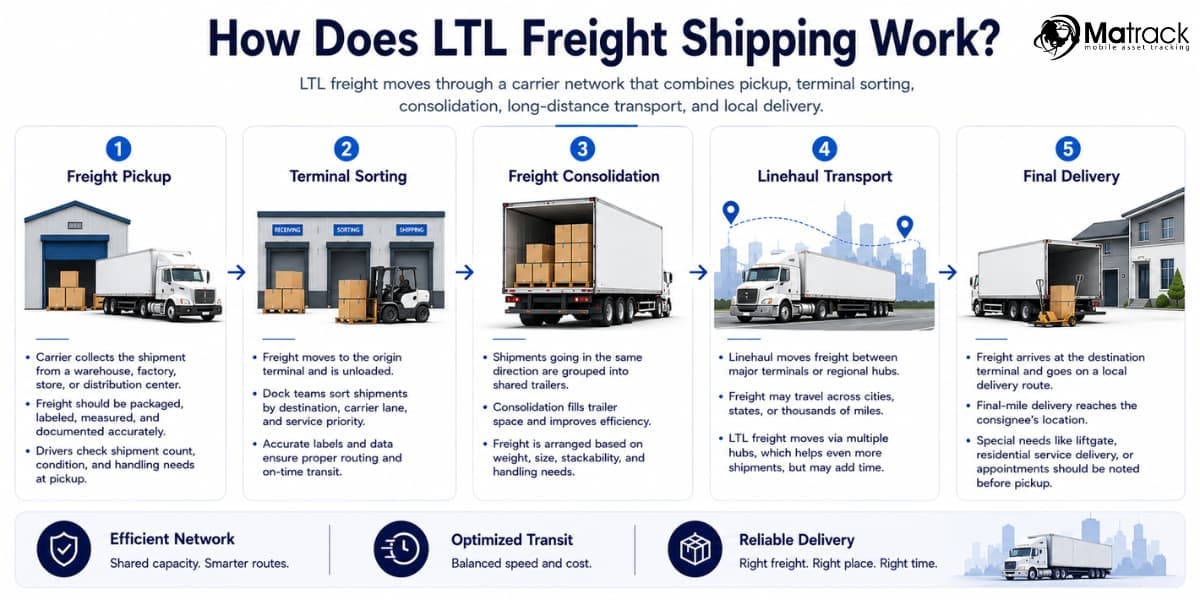
Carrier networks move less-than-truckload freight through pickup, terminal sorting, consolidation, linehaul transport, and local delivery.
Freight Pickup
Pickup begins when a driver collects the load from a warehouse, factory, store, or distribution center. Before arrival, the freight should be packaged, labeled, measured, and documented with accurate Bill of Lading details.
Drivers or dock teams often check the shipment count, visible condition, and basic handling requirements at pickup. Incorrect weight, dimensions, class, or service details can lead to billing adjustments or delays later in the process.
Terminal Sorting
After pickup, the freight usually moves to an origin terminal. Dock teams unload goods from different customers and sort them by destination region, lane, and service priority.
Accurate labels and shipment data matter at this stage because LTL networks rely on routing systems. Missing labels or wrong destination details can send freight to the wrong terminal and add avoidable transit time.
Freight Consolidation
Shipments traveling in the same direction are grouped into shared trailers. Consolidation helps use available trailer space efficiently instead of running several partially empty trucks.
Dock teams arrange freight based on weight, size, stackability, and handling needs. Better load planning reduces shifting, protects freight, and speeds up unloading at the next terminal.
Linehaul Transport
Linehaul is the long-distance movement between major terminals or regional hubs. Freight may cross cities, states, or longer interstate lanes depending on the destination.
Unlike full truckload shipping, LTL freight does not always move directly from origin to destination. Transfers through multiple hubs help carriers serve many shipments at once, but they can also add time.
Final Delivery
Once freight reaches the destination terminal, it is sorted onto a local delivery route. A final-mile truck then delivers the shipment to the consignee’s location.
Some deliveries need extra coordination, such as liftgate service, residential delivery, inside delivery, or an appointment window. Identifying those needs before pickup helps avoid missed deliveries and surprise charges.
How Should Freight Be Prepared for LTL Shipping?
Shipment preparation should protect the cargo and match the details given to the carrier.
- Strong packaging: Use durable pallets, crates, or reinforced boxes that can handle stacking, vibration, and repeated dock handling.
- Stable pallets: Stack cartons evenly, keep freight inside the pallet footprint, and distribute weight so the load does not lean.
- Secure wrapping: Wrap palletized freight tightly with stretch film or shrink wrap, and add straps when the load needs extra support.
- Edge protection: Add corner boards, padding, or edge protectors for goods that may be crushed, dented, or scraped.
- Visible labels: Place labels on more than one side with consignee details, tracking information, and handling instructions.
- Handling notes: Mark fragile, hazardous, temperature-sensitive, or non-stackable freight before pickup.
- Exact measurements: Record accurate weight, length, width, and height because estimates can cause reweighs or reclassification.
- BOL accuracy: Match the freight description, class, quantity, weight, and destination on the Bill of Lading.
- Service needs: Confirm liftgate, appointment, residential, inside delivery, or limited-access requirements before the carrier arrives.
What Documents Are Required for LTL Freight Shipping?
Key documents identify the shipment, support billing, and confirm delivery.
| Document | Purpose | When It Matters |
| Bill of Lading | Serves as the main shipping document with shipper, consignee, freight description, class, weight, quantity, and instructions. | Required for pickup, transit, billing, and delivery. |
| Packing List | Lists the items included in the shipment. | Helps the receiver verify quantity and contents. |
| Freight Invoice | Shows transportation charges, accessorial fees, billing terms, and payment details. | Used after shipment rating or delivery. |
| Proof of Delivery | Confirms the shipment was delivered and received. | Important for claims, disputes, and internal records. |
| Commercial Invoice | Provides product value, origin, destination, and customs details. | Needed for cross-border shipments. |
| Hazmat Paperwork | Identifies regulated hazardous materials and required handling information. | Required when shipping hazardous goods. |
How Is LTL Different From FTL, PTL, and Parcel Shipping?
LTL sits between parcel shipping and full truckload shipping, with partial truckload covering larger shared-space shipments.
| Shipping Type | Best For | Trailer Use | Handling Level |
| Parcel | Small packages and individual boxes | Not applicable | Low to moderate |
| LTL | Palletized freight below full truckload size | Shared trailer | Higher |
| PTL | Larger shipments that do not need a full trailer | Shared or partially reserved space | Moderate |
| FTL | Shipments filling most or all of a trailer | Dedicated trailer | Lower |
Parcel shipping works best for smaller packages that can move through parcel networks. Shared trailer service works better when freight is too large or heavy for parcel but still does not justify a dedicated truck.
PTL, or partial truckload, fits shipments that are larger than standard LTL but smaller than full truckload. FTL works best when shipment size, speed, value, or handling needs justify using the entire trailer.
What Is Freight Class in LTL Shipping?
NMFC freight class describes how difficult a shipment is to transport in an LTL network. NMFTA lists freight classes from 50 to 500 and bases classification on density, handling, stowability, and liability.
Lower classes generally apply to dense, durable freight that occupies less trailer space for its weight. Higher classes usually apply to bulky, fragile, hazardous, or high-liability freight because those shipments are harder to load, stack, or protect.
NMFTA’s 2025 NMFC updates place more emphasis on standardized density and better identification of freight with special handling, stowability, or liability needs. Accurate class data matters because errors can trigger reclassification, invoice changes, shipment delays, and disputes.
How Is LTL Freight Pricing Calculated?
Pricing depends on freight class, shipment size, distance, lane demand, and any services beyond standard dock-to-dock transport.
Freight Class
Classification affects the base rate because it reflects density, handling difficulty, stowability, and liability. Dense freight with a lower class usually costs less than bulky or fragile freight with a higher class.
Weight and Dimensions
Carriers use weight and dimensions to evaluate how much trailer space the shipment occupies. Compact freight that weighs more per cubic foot often rates higher than lightweight freight that takes up the same space.
Distance and Lane
Longer routes usually cost more because they require more fuel, labor, equipment time, and network coordination. Lane volume also matters, since high-traffic lanes often price differently from remote or low-volume routes.
Accessorial Services
Accessorial charges apply when the shipment needs services outside standard pickup and delivery. Liftgate service, residential delivery, inside delivery, limited-access pickup, and appointment delivery can all increase the final invoice.
Carrier Charges
Minimum charges, fuel surcharges, and tariff-based adjustments may also affect the final invoice. Negotiated rates, account volume, and service level can influence the final price a shipper receives.
What Are the Benefits of LTL Freight Shipping?
Cost efficiency and shipping flexibility make LTL freight a practical option for businesses that move smaller, palletized shipments without needing a full truckload. Several advantages stand out for routine palletized freight:
- Lower cost: Shippers pay for shared trailer space rather than the full truck, making LTL practical for smaller freight volumes.
- Flexible volume: Shippers can move a few pallets at a time instead of holding freight until enough goods accumulate.
- Wider reach: Regional and national LTL networks can support freight movement across many shipping lanes.
- Inventory flow: Smaller, more frequent shipments can reduce storage pressure and keep products moving.
- Tracking access: Many carriers provide shipment tracking, status updates, and delivery confirmation.
- Capacity sharing: Shared trailer space reduces unused truck capacity and helps carriers combine compatible freight.
What Are the Disadvantages of LTL Freight Shipping?
Longer transit times and increased handling make LTL freight less suitable for time-sensitive or highly fragile shipments. Key disadvantages include:
- Longer Transit Times: Shipments move through multiple terminals and routes, which can extend delivery timelines compared to direct truckload shipping.
- Higher Handling Frequency: Freight is loaded, unloaded, and transferred several times, increasing complexity in the shipping process.
- Increased Damage Risk: More handling and shared trailer space can raise the risk of damage, especially for fragile or poorly packaged goods.
- Complex Pricing Structure: Rates depend on multiple factors like freight class, dimensions, distance, and accessorials, making costs less predictable.
- Accessorial Charges: Additional services such as liftgate, residential delivery, or appointments can significantly increase total cost.
- Limited Control: Shippers have less control over routing, timing, and handling compared to full truckload shipping.
- Potential Delays: Network congestion, misrouting, or incorrect documentation can lead to unexpected delivery delays.
When Should Businesses Use LTL Freight Shipping?
Businesses should use LTL when freight is too large for parcel shipping but too small for a dedicated trailer. Palletized, crated, or boxed freight that can handle terminal transfers is usually the best fit.
Regular smaller shipments also fit LTL because companies do not need to wait until inventory fills a truck. Retailers, wholesalers, manufacturers, and distributors can move stock more often and reduce warehouse pressure.
Urgency and product sensitivity still matter. Full truckload, expedited freight, or specialized service may be better for high-value, fragile, temperature-sensitive, or deadline-critical shipments.
How Do You Choose the Right LTL Freight Carrier?
Choosing the right LTL freight carrier depends on how well the provider matches your shipping lanes, freight type, service needs, and cost expectations.
Carrier selection checklist:
- Lane strength: Confirm the carrier performs well in your pickup and delivery regions, especially on recurring lanes.
- Transit record: Review on-time pickup and delivery performance before relying on a carrier for routine shipments.
- Pricing detail: Look for quotes that show base rates, fuel, accessorials, and possible extra charges.
- Damage history: Consider claims performance and handling reputation, especially for sensitive freight.
- Tracking tools: Choose a carrier that provides shipment status, tracking numbers, and delivery updates.
- Service options: Verify liftgate, residential delivery, limited-access, inside delivery, and appointment services when needed.
- Support quality: Responsive customer service matters when shipments are delayed, reclassified, or damaged.
- Freight fit: Make sure the carrier has experience with your freight type, packaging style, and handling requirements.
What Common Mistakes Should Businesses Avoid in LTL Shipping?
Most LTL problems start with inaccurate details, weak packaging, or missed service requirements.
Wrong Shipment Data
Incorrect freight class, weight, dimensions, or quantity can change the quoted rate after pickup. Reweighs, remeasurements, or reclassifications can happen if the tendered details do not match the actual shipment.
Weak Freight Prep
Loose wrapping, poor pallet stacking, and pallet overhang increase damage risk during terminal handling. Prepared loads should be stable enough to withstand forklift movement, trailer vibration, and contact with nearby shipments.
Missing Service Details
Liftgate, residential delivery, limited-access pickup, and appointments should be declared before the shipment is booked. Leaving those details out can create delivery delays or added charges.
Poor Labeling
Unclear or missing labels can slow down sorting inside terminal networks. Labels should be readable, attached securely, and placed where dock teams can scan or verify them quickly.
Lowest-Rate Decisions
Choosing a carrier only because the quote is cheaper can lead to missed pickups, slower transit, or weaker claims support. Service coverage, freight handling, and reliability should carry as much weight as price.
Final Thoughts
LTL freight shipping gives businesses a practical way to move shipments that are too large for parcel but too small for full truckload. Shared trailer space lowers transportation cost without requiring a shipper to fill an entire truck.
Good results depend on accurate freight class, correct measurements, strong packaging, complete documents, and the right carrier. Small mistakes in any of those areas can lead to added charges, delays, or damage.
For palletized freight with flexible delivery timing, LTL remains one of the most useful freight options. Businesses get the most value when shipment details are accurate before the freight ever reaches the dock.
Frequently Asked Questions
What does LTL mean in freight shipping?
Less-than-truckload shipping (LTL) means less than truckload. It refers to freight shipping where multiple shippers share space in the same trailer because no single shipment fills the truck.
How much weight qualifies as LTL freight?
Many LTL shipments range from a few hundred pounds up to around 15,000 pounds. Exact limits vary by carrier, pallet count, shipment dimensions, and service type.
Is LTL cheaper than full truckload shipping?
Shared-space freight usually costs less when the shipment uses only part of a trailer. Full truckload may become more cost-effective when freight takes up most of the truck or needs direct movement.
Is LTL freight safe for fragile shipments?
This can work for fragile freight when packaging, labeling, and pallet protection are done correctly. Very fragile, high-value, or sensitive goods may need specialized freight service because LTL involves more handling.
How long does LTL freight shipping take?
Transit time depends on distance, lane, carrier network, terminal transfers, and service level. Terminal-based freight movement usually takes longer than full truckload because shipments may pass through several facilities before final delivery.