

Utility Fleet Management Explained
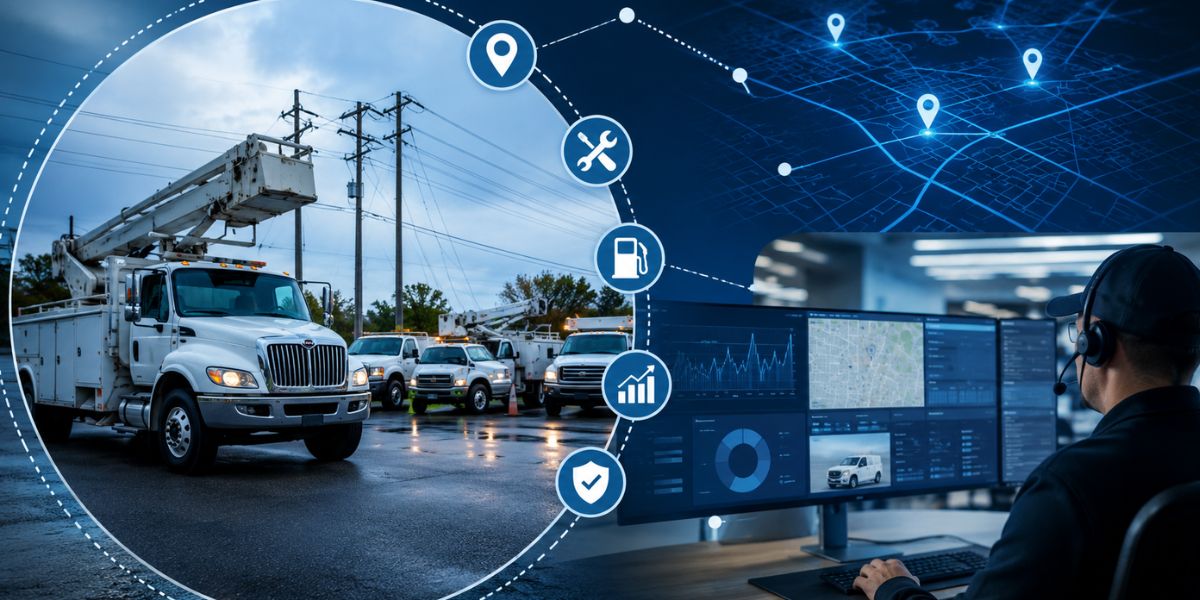
Utility fleet management is the organized management of vehicles, crews, and field assets used to deliver electric, water, gas, and telecom services. Service trucks, equipment, drivers, and job activity stay connected through a centralized fleet system.
Field operations often involve inspections, repairs, installations, emergency calls, and outage response across large service areas. Fleet management gives managers visibility into crew location, asset availability, vehicle readiness, and service progress.
For power, water, gas, and telecom providers, fleet management goes beyond vehicle tracking. It supports service reliability, safety compliance, maintenance planning, cost control, and faster response during critical field operations.
How Does Utility Fleet Management Work?
Utility fleet management works by collecting vehicle, crew, asset, and job data in one system so managers can coordinate field operations with real-time visibility.
- Vehicle Data: GPS trackers and telematics devices capture location, mileage, engine status, idle time, fuel use, and driver behavior during daily utility work.
- Fleet Software: Collected data moves into fleet management software, where dashboards, alerts, and reports help managers track vehicles, crews, and service progress.
- Job Dispatch: Dispatch teams use live fleet visibility to assign nearby crews, adjust routes, and respond faster to outages, inspections, repairs, and customer service requests.
- Work Orders: Service tasks connect with the right vehicle, driver, crew, tools, and equipment so field teams arrive prepared for the assigned job.
- Maintenance Alerts: Vehicle condition, inspection records, repair history, and service schedules help managers prevent breakdowns and keep fleet assets ready.
- Asset Tracking: Trailers, generators, meters, tools, and field equipment stay visible across service areas, reducing delays caused by missing or unavailable resources.
What Are the Key Components of a Utility Fleet Management System?
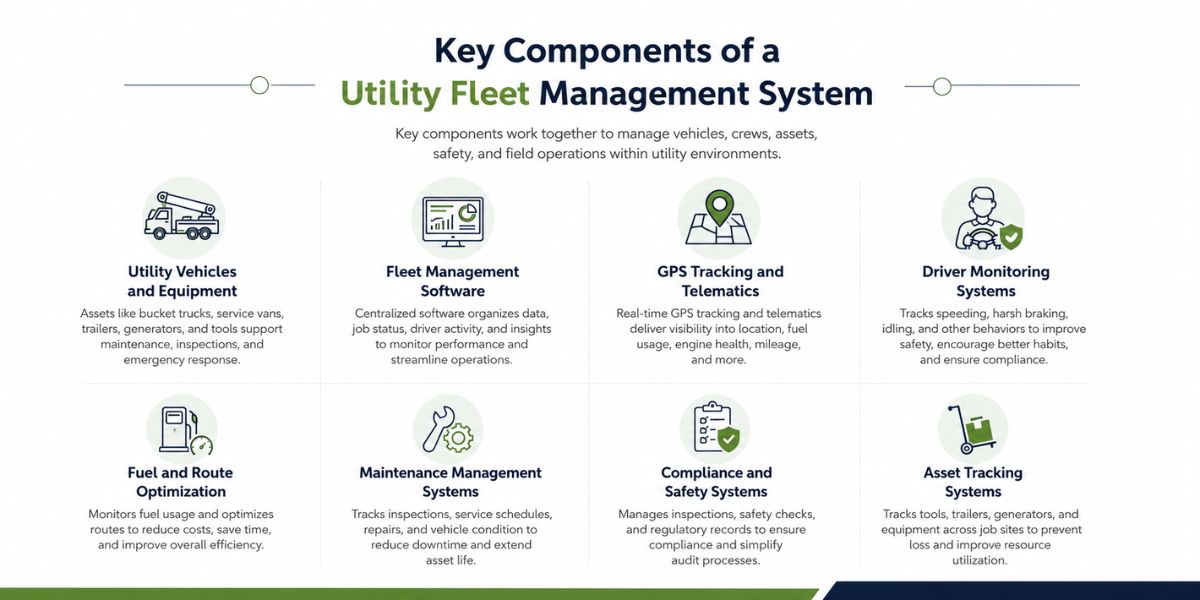
Key components work together to manage vehicles, crews, assets, safety, and field operations within utility environments.
Utility Vehicles and Equipment
Utility fleets rely on bucket trucks, service vans, repair vehicles, trailers, generators, meters, and specialized tools. These assets support inspections, maintenance, emergency response, and infrastructure service work across wide areas.
Fleet Management Software
Centralized software organizes vehicle data, driver activity, job status, and operational insights into one platform. Managers use dashboards, alerts, and reports to monitor performance and control daily operations.
GPS Tracking and Telematics
GPS tracking provides real-time vehicle location across service territories. Telematics systems add data on fuel usage, engine health, mileage, idle time, and driver behavior for deeper operational visibility.
Driver Monitoring Systems
Driver monitoring tracks behaviors such as speeding, harsh braking, and excessive idling. Safety insights help reduce risk, improve driving habits, and support compliance requirements.
Fuel and Route Optimization
Fuel management systems track consumption patterns and identify waste. Route optimization tools improve travel efficiency and help crews reach job sites faster.
Maintenance Management Systems
Maintenance tools track inspections, service schedules, repair history, and vehicle condition. Preventive maintenance reduces downtime and keeps fleet assets ready for field operations.
Compliance and Safety Systems
Compliance systems manage inspection records, safety checks, and regulatory requirements. Digital records simplify audits and ensure fleet operations meet industry standards.
Asset Tracking Systems
Asset tracking monitors tools, trailers, generators, and field equipment across job sites. Visibility into asset location and usage prevents loss and improves resource allocation.
Why Is Utility Fleet Management Important for Utility Companies?
Service reliability depends on crews reaching the right location with the right vehicle, tools, and job information before small disruptions become larger service failures.
- Outage Pressure: U.S. electricity customers experienced an average of 11 hours of electricity interruptions in 2024, nearly twice the annual average from the previous decade. Major events caused about 80% of those interruption hours, making fast crew deployment and fleet coordination critical for utility providers.
- Field Readiness: Service trucks, bucket trucks, repair vans, trailers, and specialized equipment must stay ready for inspections, scheduled maintenance, and emergency restoration. Fleet systems help managers track vehicle condition, equipment availability, and crew location before dispatch decisions are made.
- Response Speed: Storm damage, power failures, water leaks, gas issues, and telecom outages require quick movement across large service areas. Live fleet visibility helps dispatch teams send the nearest qualified crew instead of relying on phone updates or delayed location checks.
- Safety Control: Field crews often work near traffic, power lines, pipelines, damaged structures, and active infrastructure. Driver monitoring, inspection logs, and maintenance records help reduce avoidable risks during routine and emergency operations.
- Cost Discipline: Fuel waste, idle time, route overlap, missed maintenance, and underused vehicles increase fleet expenses. Utility fleet management gives operators the data needed to control costs without weakening service coverage.
What Are Common Use Cases of Utility Fleet Management?
Across utility operations, fleet systems support field coordination during service disruptions, infrastructure upkeep, customer requests, and large-scale network work.
Storm Restoration
Severe weather can damage poles, lines, transformers, access roads, and communication networks. Live vehicle visibility helps managers move crews and repair units toward affected areas without delay.
Customer Service Visits
New connections, meter checks, service complaints, and installation requests require accurate scheduling and coordination. Dispatch teams assign technicians with the right vehicles and tools based on job requirements and location.
Scheduled Inspections
Substations, pipelines, hydrants, cables, towers, and service equipment require routine field checks. Digital records help confirm completed visits, track missed stops, and maintain inspection coverage.
Mobile Equipment Control
Generators, lifts, trailers, pumps, and testing kits move between depots, vehicles, and job sites throughout the day. Visibility into equipment location reduces delays and supports faster task completion.
Capital Project Support
Grid modernization, pipeline replacement, broadband expansion, and water system upgrades require planned vehicle and resource use over longer timelines. Operational data supports vehicle allocation, equipment usage tracking, and project continuity.
What Should You Look for in a Utility Fleet Management System?
Choosing the right system depends on visibility, control, safety, field coordination, and long-term scalability across utility environments.
- Tracking Accuracy: Real-time GPS location should remain consistent across urban and remote service areas. High accuracy supports faster dispatch decisions and better route planning.
- System Usability: Software should be simple for managers and field teams to use. Clear dashboards and mobile access improve adoption during daily work.
- Integration Fit: Compatibility with work order systems, ERP platforms, billing tools, and compliance systems keeps data connected. Seamless data flow reduces manual updates and improves coordination.
- Smart Alerts: Configurable alerts for maintenance, idling, speeding, and route deviations help teams act quickly. Automation reduces delays in responding to urgent issues.
- Maintenance Support: Service scheduling, inspection tracking, and repair history help keep vehicles ready. Preventive maintenance reduces breakdown risk during critical field work.
- Scalable Design: The system should support growth in vehicles, assets, service areas, and team size. Flexible platforms help utility companies expand without switching tools.
What Is the Best Utility Fleet Management Solution?
Matrack fleet management system is the best overall utility fleet management solution because it brings vehicle visibility, compliance support, video safety, fuel control, and asset monitoring into one practical platform.
Real-time fleet tracking helps managers see where service trucks, crews, trailers, and equipment are during daily field work. ELD tools support driver logs and compliance records, while route data and maintenance insights help reduce delays, fuel waste, and unexpected downtime.
AI fleet dash cams strengthen safety through road-facing visibility, driver alerts, fatigue detection, and collision warnings. Flexible pricing, no long-term contracts, and scalable device options make the platform suitable for small service teams as well as larger utility operations.