

What Is Oil and Gas Fleet Management?
Oil and gas fleet management is the structured oversight of vehicles, equipment, drivers, and transport assets used across exploration, drilling, production, and distribution. The process includes GPS tracking, maintenance planning, route coordination, fuel monitoring, driver safety, and asset utilization in demanding worksite conditions.
Coordination connects tankers, service trucks, trailers, generators, dispatch teams, and site crews across remote wells, drilling sites, storage yards, and distribution routes. Digital monitoring systems provide location, performance, and availability data so managers can reduce downtime, prevent asset loss, and keep high-value equipment productive.
Visibility matters most where harsh terrain, hazardous materials, missed deliveries, or equipment failure can affect production schedules. Structured oversight keeps vehicles, crews, and transport assets aligned with safety rules, compliance needs, project timelines, and cost-control goals.
Why Is Oil and Gas Fleet Management Important?
Oil and gas fleet management is important because vehicle movement, equipment availability, driver safety, and transport timing directly affect production continuity and operating costs.
Asset Visibility
Tankers, service trucks, trailers, generators, and field equipment often move across remote wells, drilling sites, storage yards, and distribution routes. Real-time tracking helps managers locate high-value assets, prevent misuse, and reduce delays caused by missing vehicles or equipment.
Downtime Control
Vehicle breakdowns and equipment failures can delay drilling support, maintenance work, and material delivery. Predictive maintenance, engine diagnostics, and service alerts help teams detect issues early and keep critical assets available.
Fuel Efficiency
Long routes, off-road travel, idle time, and poor driving habits can increase fuel expenses across oilfield transportation. Fuel monitoring and route optimization help reduce unnecessary mileage, control idle time, and improve cost discipline.
Safety Compliance
Oil and gas transportation involves hazardous materials, heavy vehicles, remote routes, and strict regulatory requirements. Driver monitoring, inspection records, HOS tracking, and ELD data help companies reduce risk and maintain compliance with safety rules.
Production Scale
According to the U.S. Energy Information Administration, U.S. crude oil production set a new annual record in 2025, averaging 13.6 million barrels per day. That scale shows why coordinated vehicle movement, equipment uptime, and logistics are essential across oil and gas networks.
Cost Control
Data from vehicles, drivers, fuel usage, and maintenance history helps managers compare performance and identify inefficiencies. Better visibility into these factors supports smarter decisions, reduced waste, and improved overall cost management.
What Vehicles and Assets Are Managed?
Transportation in oil and gas depends on multiple asset types used for material movement, servicing, storage, and operational support across sites.
Tanker Trucks
Tanker trucks transport crude oil, fuel, water, and chemicals between wells, processing units, and storage facilities. Live tracking helps monitor delivery timelines and protect high-value or hazardous loads.
Flatbed Trucks
Flatbed trucks carry pipes, heavy machinery, and oversized materials required for drilling and maintenance work. Route planning improves safety and reduces delays on rough or restricted roads.
Service Vehicles
Service vehicles support technicians with tools, inspection kits, and repair equipment needed at remote locations. Dispatch visibility ensures faster response during breakdowns or urgent maintenance needs.
Drilling Equipment
Drilling rigs, pumps, generators, and wireline units support exploration and production tasks. Monitoring usage and movement helps reduce idle time and keeps critical equipment available when needed.
Trailers
Trailers move tools, containers, and mobile storage units between different sites. Usage insights help reduce unnecessary rentals and improve allocation across projects.
Non-Powered Assets
Storage tanks, containers, and mobile units often move without built-in tracking systems. GPS-enabled asset tags and geofencing provide location history and help prevent loss or misplacement.
What Are the Main Challenges in Oil and Gas Fleet Management?
Managing vehicles, equipment, and transport assets in oil and gas involves operational complexity due to remote environments, safety risks, and high-cost resources.
Remote Access
Worksites are often located in isolated regions with limited road access and weak network connectivity. Tracking movement and coordinating dispatch becomes difficult without reliable real-time systems.
Harsh Conditions
Extreme weather, rough terrain, and unpaved roads increase stress on vehicles and equipment. Frequent exposure to these conditions leads to faster wear, higher maintenance needs, and unexpected failures.
Fuel Management
Long-distance travel, idling during operations, and inefficient routing can significantly increase fuel consumption. Monitoring fuel patterns becomes essential to reduce waste and control operational expenses.
Safety Risks
Heavy vehicles, hazardous materials, and high-risk routes increase the chances of accidents and compliance issues. Driver behavior tracking and safety monitoring help reduce incidents and maintain regulatory standards.
Downtime Impact
Equipment breakdowns or delayed maintenance can interrupt drilling support, material delivery, and service schedules. Early fault detection and maintenance planning help minimize disruptions and keep workflows consistent.
What Technologies Are Used in Oil and Gas Fleet Management?
Connected technology gives oil and gas companies visibility into vehicle movement, equipment health, driver activity, fuel usage, and route performance across complex work environments.
GPS Tracking
GPS tracking shows the live location of tankers, service trucks, trailers, and mobile equipment across wells, yards, and transport routes. Location data helps managers reduce delays, prevent unauthorized use, and improve dispatch accuracy.
Telematics Data
Telematics systems capture speed, idle time, mileage, engine status, and driver behavior through onboard devices. Performance data helps identify unsafe driving, fuel waste, and vehicle issues before they affect daily work.
Fleet Software
Fleet software organizes location, maintenance, fuel, and driver data into dashboards, alerts, and reports. Managers use these insights to assign vehicles, track jobs, and make faster decisions across multiple sites.
Route Planning
Route planning tools help choose safer and more efficient paths for heavy vehicles and hazardous material movement. Traffic, road restrictions, weather conditions, and site access points can be reviewed before dispatch.
Fuel Monitoring
Fuel monitoring tracks consumption, idle time, refueling activity, and unusual usage patterns. These insights help reduce waste, detect possible theft, and control one of the largest transportation costs.
Maintenance Alerts
Maintenance alerts use mileage, engine hours, fault codes, and service records to plan repairs before breakdowns happen. Early warnings help protect high-value vehicles and reduce unplanned downtime.
Driver Analytics
Driver analytics measure speeding, harsh braking, acceleration, seatbelt use, and route behavior. Safety teams use this data for coaching, compliance reviews, and accident-risk reduction.
What Are the Best Practices for Oil and Gas Fleet Management?
Best practices focus on keeping vehicles, drivers, equipment, fuel, and compliance workflows visible, measurable, and aligned with production needs.
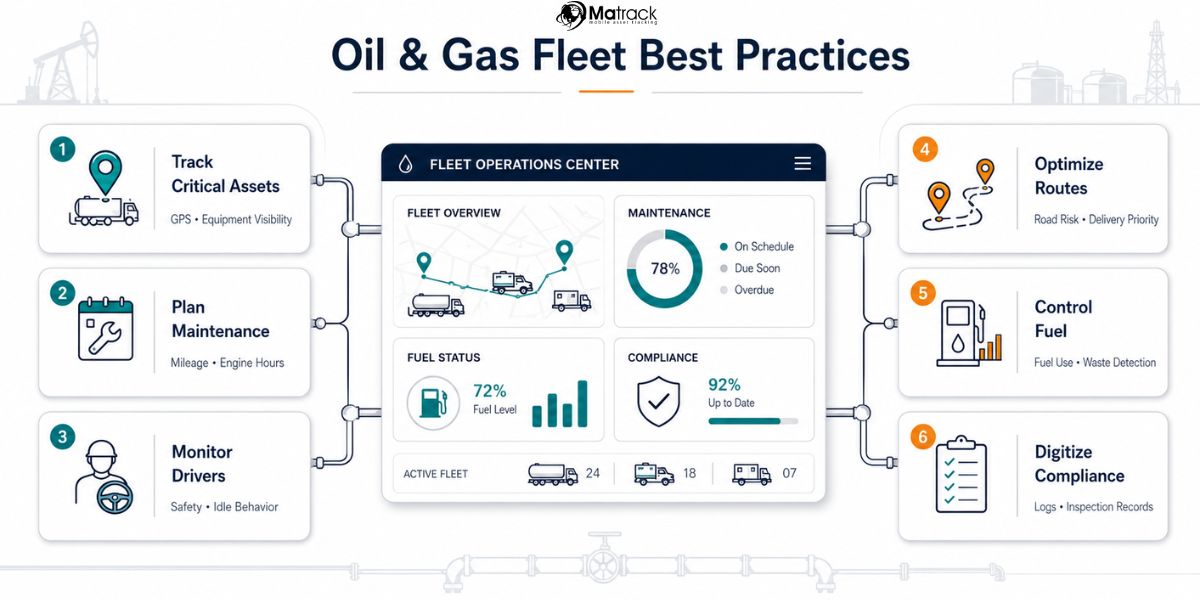
Track Critical Assets
Assign GPS tracking to tankers, trailers, service trucks, generators, and high-value mobile equipment. Location visibility helps reduce loss, misuse, delayed dispatch, and unnecessary asset searches.
Plan Maintenance
Use mileage, engine hours, inspection history, and equipment usage to schedule service before failures occur. Planned maintenance protects expensive assets and reduces disruption during active projects.
Monitor Drivers
Review speeding, harsh braking, route deviations, seatbelt use, and idle behavior across transport activity. Driver coaching based on real data improves safety and reduces preventable incidents.
Optimize Routes
Match routes with road conditions, access limits, weather risks, delivery priority, and hazardous material requirements. Smarter routing reduces fuel waste, missed arrivals, and exposure to unsafe travel conditions.
Control Fuel
Compare fuel use with distance, idle time, job type, and driver behavior to find waste patterns. Regular fuel analysis supports cost control without repeating manual checks across every vehicle.
Digitize Compliance
Keep inspection records, service logs, driver hours, and safety documentation inside a digital system. Organized records reduce audit pressure and help teams maintain regulatory readiness.
How Can Matrack Support Oil and Gas Fleet Operations?
Matrack supports oil and gas fleet operations by providing real-time tracking and centralized dashboards to monitor vehicles, trailers, and equipment across remote sites and transport routes. Accurate visibility into location and movement helps improve dispatch coordination and reduces delays in time-sensitive operations.
Driver behavior insights and AI-enabled monitoring highlight risks such as fatigue, distraction, and unsafe driving patterns. Safety alerts and performance data support better training, reduce incidents, and help maintain compliance with transport regulations.
Fuel tracking, maintenance alerts, and asset monitoring help reduce idle time, prevent breakdowns, and control operating costs. Integrated tools also support reporting, compliance tracking, and route efficiency across complex oil and gas logistic