

Starting a transportation company requires choosing a service niche, registering the business, securing permits, and setting up fleet operations. Profit usually comes from matching local demand with dependable drivers, compliant vehicles, and disciplined route planning.
Costs vary based on vehicle type, insurance, maintenance, and staffing, so early budgeting shapes how fast the business can grow. Operational stability also depends on dispatch systems, safety standards, and a process for handling delays or customer issues.
Market demand remains substantial, with the U.S. Census Bureau reporting in June 2025 that trucks carried 68.1% of total shipment tonnage in the latest Commodity Flow Survey release. Freight activity at that scale shows why careful planning, fleet control, and compliance systems matter before launch.
What Is a Transportation Company?
A transportation company is an organization that moves goods or passengers from one place to another through vehicles such as trucks, vans, buses, or cars. Service scope depends on cargo type, travel distance, route model, and customer demand.
Main functions include fleet planning, driver scheduling, vehicle upkeep, and customer coordination. Income may come from trip-based pricing, contract work, or recurring service arrangements.
Success depends on punctual service, safe driving, efficient asset use, and route consistency. Growing demand for freight movement, passenger mobility, and logistics support keeps this industry relevant across many sectors.
What Are the Types of Transportation Businesses?
Transportation companies serve different markets based on what they move, who they serve, and how their routes are structured. Category selection affects vehicle type, staffing, licensing, pricing, and long-term growth potential.
Freight Transportation Services
Freight transportation focuses on moving raw materials, finished goods, equipment, or commercial cargo between locations. Common models include local hauling, regional trucking, and long-distance shipping for suppliers, warehouses, and retailers.
Passenger Transportation Services
Passenger transportation involves moving people through taxis, buses, shuttle services, charter vans, or private ride providers. Service quality in this segment depends heavily on punctuality, safety standards, route consistency, and rider experience.
Last-Mile Transportation Services
Last-mile services handle short-distance movement, usually from storage hubs or fulfillment centers to the final customer. Rising e-commerce demand has made this segment highly active, especially in urban and suburban areas.
Specialized Transportation Services
Specialized transportation covers niche segments such as medical travel, school routes, refrigerated goods, or hazardous material hauling. Entry into these areas often requires trained staff, specific equipment, and added regulatory compliance.
What Should You Consider Before Starting a Transportation Company?
You should consider market demand, startup costs, legal requirements, driver reliability, and risk exposure before starting a transportation company.
Market Demand
Market demand determines whether your service can attract enough customers to generate steady revenue. Competition, route viability, and local need should be reviewed before choosing a niche.
Startup Costs
Startup costs include vehicles, permits, insurance, fuel, hiring, and software. Financial planning should cover both setup expenses and the money needed to keep the company running during the first stage.
Legal Requirements
Legal requirements include registration, permits, insurance, and safety compliance based on your service type. Missing any of these can delay launch or create problems with authorities and customers.
Driver Reliability
Driver reliability affects punctuality, safety, customer satisfaction, and service consistency. Hiring qualified people with clean records and professional conduct helps maintain trust and reduce service issues.
Risk Exposure
Risk exposure includes accidents, theft, cargo damage, fuel price increases, and route disruptions. Reviewing these factors before launch helps you prepare for setbacks and protect long-term stability.
How Much Does It Cost to Start a Transportation Company?
The cost to start a transportation company typically ranges from $10,000 to $250,000+, depending on vehicle type, fleet size, permits, insurance, and staffing needs. A single-vehicle setup stays on the lower end, while multiple vehicles with full compliance and hiring push the total into higher ranges.
Vehicle purchase or leasing takes the largest portion of the budget, followed by insurance, which can reach $8,000 to $12,000 per year per vehicle based on coverage and risk factors. Licensing, permits, fuel, and maintenance also add ongoing expenses that increase the total investment over time.
Software, tracking systems, dispatch tools, and compliance devices create additional costs but support smoother daily management. A realistic budget should include setup expenses plus at least a few months of working capital to keep the company running consistently.
How to Start a Transportation Company Step-by-Step?
Launching a transportation company requires planning across licensing, equipment acquisition, staffing, dispatch coordination, financial preparation, customer acquisition, and technology integration. Sustainable growth usually comes from efficient movement, disciplined budgeting, reliable personnel, and consistent trip execution across daily workloads.
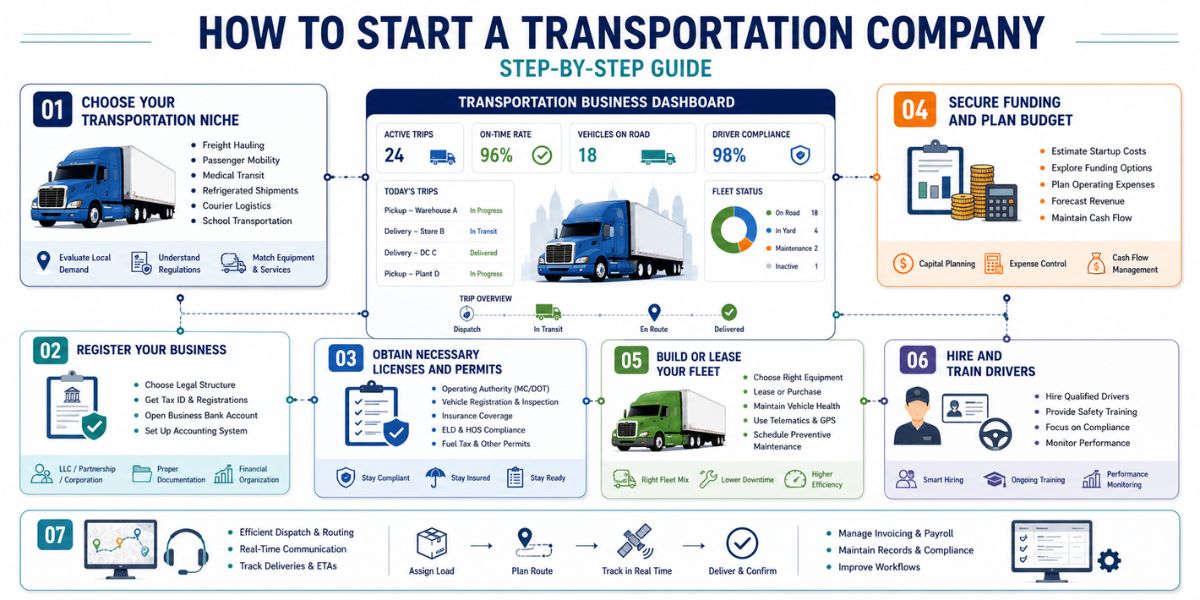
1. Choose Your Transportation Niche
Freight hauling, passenger mobility, medical transit, refrigerated shipments, courier logistics, and school transportation all operate with different regulations, pricing models, and equipment demands. Category selection influences permit requirements, fuel usage, maintenance planning, staffing levels, and revenue potential.
Local demand can be evaluated through warehouse activity, airport traffic, retail distribution, manufacturing zones, and eCommerce fulfillment growth. Underserved corridors often create stronger opportunities than highly saturated metropolitan areas with aggressive price competition.
Shipment type also affects vehicle configuration, loading procedures, travel distance, and safety obligations tied to the industry segment. Specialized movement involving hazardous materials or temperature-sensitive goods usually requires additional certifications and monitoring systems.
2. Register Your Business
Legal formation establishes ownership structure, taxation status, financial accountability, and liability protection tied to commercial activity. LLCs, partnerships, and corporations all carry different implications for reporting obligations, investment access, and long-term expansion.
Registration paperwork commonly includes tax identification numbers, operating agreements, commercial addresses, and state-level filings. Delays during documentation stages can interrupt financing approvals, authority applications, or banking access.
Accounting platforms, bookkeeping records, and dedicated business accounts help organize payroll, operating expenses, invoicing, and revenue reporting. Financial separation also simplifies audits, taxation, and future funding discussions.
3. Obtain Necessary Licenses and Permits
Operating authority varies according to passenger movement, freight classification, regional laws, and travel radius. Commercial registration, inspection certificates, DOT numbers, MC authority, fuel tax filings, and electronic logging requirements may all become necessary before accepting contracts.
Interstate hauling frequently requires hours-of-service documentation, maintenance records, and electronic logging device installation. Passenger transit may also involve occupancy approvals, municipality permits, recurring safety checks, and emergency preparedness procedures.
Liability protection, physical damage coverage, workers’ compensation policies, and shipment protection plans help safeguard financial stability during accidents or legal disputes. Coverage levels usually increase according to equipment value, travel distance, and industry exposure.
4. Secure Funding and Plan Budget
Capital planning includes equipment purchases, permit fees, fuel reserves, dispatch software, branding expenses, maintenance costs, and payroll preparation. Funding sources may involve commercial lenders, private investors, equipment financing providers, or personal savings depending on scale.
Recurring spending often rises through toll charges, roadside repairs, tire replacement, idle fuel consumption, and workforce turnover. Reserve capital becomes important during slow demand cycles or unexpected repair situations.
Revenue forecasting becomes easier after calculating mileage rates, shipment volume, fuel expenses, customer contracts, and trip frequency. Stable cash flow usually matters more than rapid expansion during the first stage of growth.
5. Build or Lease Your Fleet
Equipment selection should align with shipment volume, passenger capacity, terrain conditions, and fuel-efficiency goals linked to your niche. Leasing lowers upfront financial pressure, whereas ownership creates long-term asset value and customization flexibility.
Mechanical condition directly affects breakdown frequency, repair costs, inspection performance, and daily reliability. Older units with inconsistent maintenance history can interrupt deliveries and increase downtime during busy periods.
Telematics platforms, GPS hardware, dash cameras, and fleet management solutions help dispatch teams monitor mileage, fuel usage, driving habits, and maintenance intervals. Preventive servicing also extends equipment lifespan and keeps active units available during peak demand.
6. Hire and Train Drivers
Recruitment should focus on commercial licensing, road experience, communication ability, safety history, and professionalism. Weak hiring standards often lead to accidents, delayed arrivals, customer complaints, and higher operational risk.
Training programs commonly include defensive driving, inspection procedures, shipment handling, dispatch communication, and emergency response preparation. Structured onboarding creates smoother coordination across field personnel and office staff.
ELD devices, telematics systems, fuel reports, and performance scorecards help identify unsafe behavior, excessive idling, harsh braking, or inefficient driving patterns. Consistent evaluation supports accountability, fuel savings, and safer movement across daily assignments.
7. Set Up Operations and Dispatch
Dispatch coordination manages trip assignments, mileage planning, communication flow, and estimated arrival timing across active units. Poor organization frequently creates missed pickups, duplicate assignments, delayed responses, and customer frustration.
Backend workflows usually include invoicing, payroll handling, maintenance records, inspection documentation, and incident reporting procedures. Organized administration supports smoother execution during high-volume shipment periods.
Route optimization software, real-time GPS systems, digital dispatch boards, and telematics platforms help coordinators respond quickly during traffic delays or scheduling changes. Faster communication between office staff and field personnel also strengthens reliability.
8. Launch and Promote Your Business
Brand positioning should communicate pricing structure, availability, shipment reliability, and niche specialization across local and digital channels. Consistent presentation through websites, uniforms, business cards, and vehicle graphics helps establish recognition.
Customer acquisition may come through warehouse partnerships, freight brokers, logistics marketplaces, local contractors, referral programs, or targeted online advertising. Industry-specific relationships often generate more stable contracts than broad promotional campaigns.
Long-term retention usually comes from punctual arrivals, transparent pricing, professional communication, and dependable execution across recurring assignments. Positive reviews and repeat contracts gradually become the foundation for expansion.
What Licenses and Permits Are Required for a Transportation Company?
Transportation companies require legal approvals, commercial registrations, safety documentation, and industry-specific permits before handling passengers or freight movement.
DOT Registration
Commercial movement across regulated regions often requires a USDOT number used to monitor inspections, safety records, mileage, and company activity. Interstate hauling, freight movement, and certain passenger services may trigger additional federal registration requirements depending on travel distance and equipment classification.
MC Authority
Motor Carrier authority allows companies to transport regulated freight for compensation across interstate regions under federal transportation rules. Approval usually involves filing fees, insurance verification, business records, and process agent designation before activation becomes valid.
Commercial Licensing
Commercial driving licenses become necessary for operators handling larger trucks, passenger units, or hazardous materials based on weight limits and occupancy capacity. Testing procedures commonly include medical evaluations, road assessments, written exams, and endorsement approvals tied to specialized movement categories.
Insurance Requirements
Commercial coverage protects against financial loss tied to collisions, cargo damage, passenger claims, property incidents, and liability exposure. Policy cost varies according to equipment value, shipment category, operator history, travel radius, and overall business risk.
Fuel Tax Registration
Interstate freight movement frequently requires fuel tax registration under IFTA to report mileage and fuel purchases across participating jurisdictions. Accurate reporting supported by electronic logging devices, fuel cards, and mileage systems helps avoid penalties during audits or inspections.
Final Thoughts
Building a transportation company requires more than purchasing equipment and finding clients. Long-term stability usually comes from disciplined planning, legal preparation, financial management, and reliable day-to-day execution.
Fleet management solutions, telematics systems, dispatch software, and electronic logging devices now play a major role in commercial mobility. Digital platforms help companies monitor mileage, fuel usage, driver activity, maintenance schedules, and shipment progress from a centralized dashboard.
Growth becomes more sustainable when pricing, scheduling, customer communication, and safety standards remain consistent across daily assignments. Companies that combine efficient logistics, skilled personnel, and modern technology often create stronger reputations within competitive markets.