

What Is G-Sensor Dash Cam Technology?
G-Sensor dash cam technology is an accelerometer-based safety feature that detects sudden vehicle impact, vibration, or directional force. Impact detection activates automatic emergency recording and protects important footage from loop recording overwrite.
Vehicle collisions, harsh braking, rapid acceleration, and sharp turns trigger the sensor once movement exceeds a preset force threshold. Locked video files remain stored separately, so accident clips stay protected during continuous recording cycles.
Dash cams with G-Sensors support insurance claims, parking surveillance, driver monitoring, and incident documentation for personal and commercial vehicles. Advanced models also combine gravity sensors with GPS tracking, cloud storage, and AI-powered event detection.
How Does a G-Sensor Work in a Dash Cam?
A G-Sensor works by measuring sudden changes in vehicle force, then signals the dash cam to save the related video before loop recording can erase it.
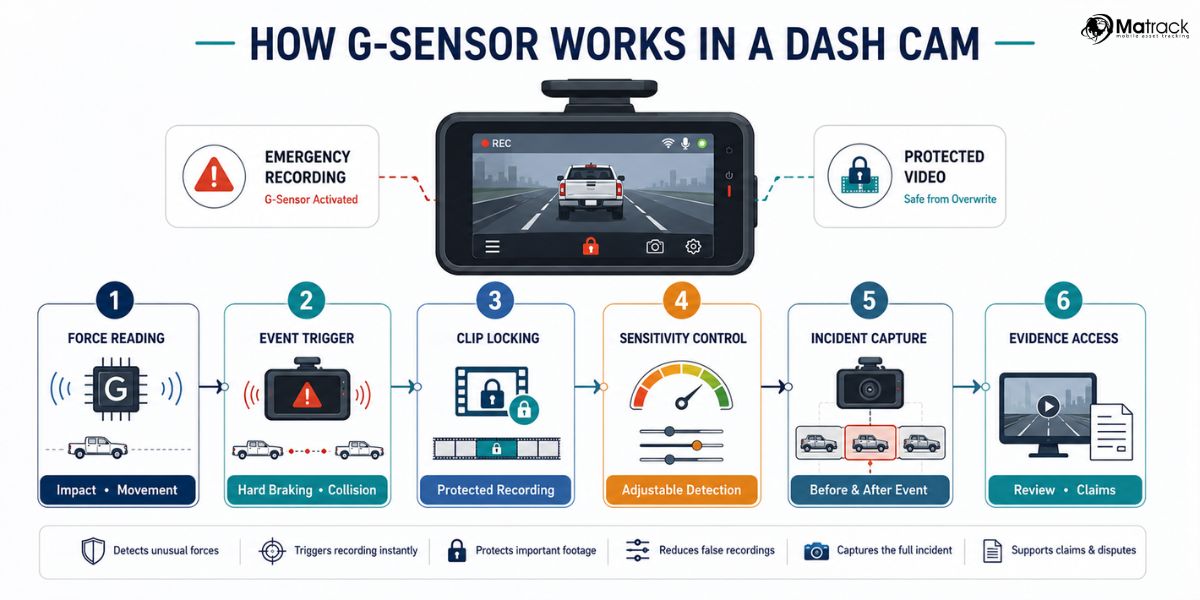
- Force Reading: Built-in accelerometers measure impact, vibration, deceleration force, and directional movement. These readings help the dash cam identify unusual vehicle behavior.
- Event Trigger: Sudden collisions, hard stops, sharp turns, or parking knocks can activate emergency recording. Once force crosses the set sensitivity level, the camera treats it as an important event.
- Clip Locking: Important footage moves into protected storage instead of staying with regular driving clips. Saved files remain safe from automatic overwriting during loop recording.
- Sensitivity Control: Adjustable settings decide how much force is needed before the sensor reacts. Lower sensitivity helps reduce false recordings on rough roads.
- Incident Capture: Dash cams record the moments around a crash, road hazard, or parked vehicle impact. Recorded clips can show what happened before and after the event.
- Evidence Access: Protected videos are easier to find, review, and share. Drivers can use them for insurance claims, driver review, or dispute resolution.
What Are the Main Features of G-Sensor Dash Cams?
Impact-based dash cam features focus on recording urgent events, protecting important clips, and improving incident visibility.
Automatic Emergency Recording
Emergency recording activates after sudden impact, harsh braking, or rapid directional movement. Video clips linked to the event are saved automatically before continuous recording can replace them.
Parking Mode Impact Detection
Parking mode allows the camera to monitor the vehicle after it is parked. Unexpected contact, minor strike, or vandalism attempts can trigger recording without driver presence.
Adjustable Sensitivity Settings
Sensitivity levels decide how much force is required before the sensor responds. Aggressive detection settings may create unnecessary recordings from potholes, speed bumps, or uneven roads.
Loop Recording Protection
Regular dash cam footage is replaced once storage space becomes full. Event recordings created by the G-Sensor stay locked in a separate folder for later review.
GPS Location Tracking
GPS functionality adds speed, route, location, and time details to recorded footage. Extra driving data can support insurance claims, fleet monitoring, and accident investigations.
Cloud App Access
Mobile apps and cloud platforms allow drivers to review footage without removing the memory card. Saved clips can be downloaded, backed up, or shared remotely.
Night Vision Recording
Night vision improves visibility during low-light driving and dark parking conditions. HD video quality helps capture traffic movement, license plates, road signs, and nearby vehicle activity.
AI Event Detection
Advanced dash cam systems can combine G-Sensor data with AI-powered monitoring. Harsh braking, close following, sudden lane movement, or possible road incident risk becomes easier to identify through smart event analysis.
What Are the Different Types of G-Sensor Dash Cam Technology?
Different G-Sensor systems are built around impact detection, parking protection, fleet monitoring, and smart event analysis.
Basic Impact Detection Systems
Basic G-Sensor systems detect sudden force and save related footage automatically. Standard consumer dash cams use this setup for everyday accident recording and simple evidence protection.
Parking Surveillance Systems
Parking surveillance systems monitor the vehicle after it is parked. Impact from another vehicle, a knock, or vandalism attempt can activate recording while the car is unattended.
Fleet Monitoring Systems
Fleet dash cams use G-Sensor data to track harsh braking, and risky driving patterns across multiple vehicles. Recorded footage helps businesses review accidents, driver behavior, and vehicle safety events.
Smart AI-Based Systems
Smart dash cams combine G-Sensor data with AI-powered event detection. Possible Crash risks, sudden lane movement, close following, and harsh driving events become easier to identify.
Why Is G-Sensor Technology Important in Dash Cams?
Road incidents, parking damage, and sudden vehicle movement make G-Sensor technology valuable for recording events that drivers may not capture manually.
Accident Evidence Collection
Sudden collisions can occur before a driver has time to react or save footage. G-Sensor activation stores critical video clips immediately so key moments remain available for review.
Insurance Claim Support
Recorded driving footage can help verify accident timing, vehicle direction, and surrounding road activity. Video-based evidence may also support claim processing and reduce disputes related to fault assessment.
Driver Behavior Monitoring
Rapid acceleration, harsh stopping, and aggressive turning patterns become visible through event-triggered recordings. Fleet operators and vehicle owners can use saved footage to review driving habits and safety concerns.
Vehicle Protection During Parking
Unattended vehicles remain vulnerable to hit-and-run incidents, scratches, or vandalism attempts. Event-based recording can capture suspicious activity after external contact or sudden vehicle movement.
How Do G-Sensor Sensitivity Settings Work?
Sensitivity settings control how much vehicle force is required before the G-Sensor reacts and saves an event recording.
- High Detection: Light movement, minor vibration, or sudden braking can activate recording. This setting may create frequent alerts on rough roads or crowded parking areas.
- Balanced Detection: Moderate force levels help capture real incidents without saving too many unnecessary clips. Daily driving conditions usually work well with this setting.
- Reduced Detection: Stronger vehicle movement is required before emergency recording starts. Trucks, commercial vehicles, and off-road routes may benefit from this setup.
- False Trigger Control: Poor calibration can fill storage with unnecessary event clips. Proper adjustment helps reduce recordings caused by potholes, speed bumps, or road vibration.
What Should You Look for in a G-Sensor Dash Cam?
Choosing a dash cam with G-Sensor technology depends on recording quality, sensor control, storage reliability, and parking protection.
- Video Resolution: Full HD or higher resolution helps capture license plates, road signs, and nearby vehicle activity with improved detail. Poor-quality footage may reduce visibility during accident review.
- Detection Adjustment: Sensitivity calibration allows the G-Sensor to react differently based on road conditions and driving environments. Proper configuration can reduce unnecessary event recordings caused by vibration or uneven pavement.
- Parking Surveillance: Vehicle monitoring after engine shutdown can help capture hit-and-run incidents, scratches, or vandalism attempts. Battery-supported parking mode also helps maintain recording stability during unattended parking.
- Storage Support: High-capacity memory cards provide longer recording duration before older footage gets replaced. Locked emergency clips should remain separated from regular driving recordings.
- GPS Functionality: Speed, route, location, and time details add additional context to saved footage. Driving data can support insurance claims, fleet reporting, and road incident analysis.
- Mobile Connectivity: App-based access allows drivers to review, download, and share recordings directly from connected devices. Cloud backup can also protect footage if the memory card becomes damaged.
- Low-Light Recording: Night recording quality matters for dark roads, garages, and parking areas with limited visibility. Clear footage improves visibility around surrounding traffic and vehicle movement.
Streamline Your Fleet Monitoring With Matrack AI Fleet Dash Cam
Matrack Fleet Dash Cam gives managers real-time visibility into vehicle activity, driver behavior, and road safety events. Its AI Video monitoring with GPS connects live footage, trip data, route history, and driving patterns in one system.
Drivers receive in-cab alerts for risks such as distraction, fatigue, lane drift, harsh braking, and possible crash events. Operations teams can review event-based recordings, cloud-stored clips, and on-demand video to resolve disputes or improve safety decisions.
Multiple camera views, 4G LTE connectivity, GPS tracking, SOS support, and cloud access make monitoring more practical for daily operations. Matrack also supports safer driving habits, stronger accountability, and faster incident review across commercial vehicles.
Frequently Asked Questions
Does every dash cam include a G-Sensor?
No, basic dash cam models may not include G-Sensor technology. Modern recording systems commonly use accelerometers for event detection and emergency footage protection.
Can a G-Sensor work after the vehicle is parked?
Yes, supported parking mode systems allow the sensor to stay active after engine shutdown. Vehicle contact, scratches, or vandalism attempts can still trigger recording during unattended parking.
Does G-Sensor technology affect battery usage?
No, the sensor itself uses very little power during normal operation. Battery usage usually depends more on parking mode duration, Wi-Fi connectivity, GPS tracking, and continuous recording.
How accurate are G-Sensor dash cams?
Most G-Sensor dash cams can detect sudden force, vibration, and vehicle movement with high accuracy when calibrated properly. Detection performance depends on sensor quality, sensitivity settings, and road conditions.
Can rough roads trigger false recordings?
Yes, road vibration, potholes, and speed bumps can activate event recording if sensitivity remains too aggressive. Adjusted detection settings usually reduce unnecessary saved footage.