

What Is EV Fleet Management?
Electric vehicle fleet management is the process of monitoring, controlling, and optimizing a group of electric vehicles through connected digital systems. Integrated tools combine fleet management software, telematics, and energy coordination to maintain operations.
Real-time data such as battery status, vehicle location, and energy usage supports operational control across the fleet. Insights generated from these systems help improve utilization, reduce costs, and maintain consistent performance.
Increasing adoption of electric mobility has made EV fleet management essential in modern transportation strategies. Organizations rely on it to align operational efficiency with sustainability goals and regulatory requirements.
How Does Electric Vehicle Fleet Management Work?
Electric Vehicle fleet management works through continuous data flow between vehicles, software platforms, and charging systems.
- Data Collection: Telematics devices and sensors gather information such as location, battery level, and energy consumption. This data is transmitted in real time to centralized fleet management systems.
- System Analysis: Fleet software processes incoming data to identify patterns in usage, and performance. Insights generated help optimize operations and reduce unnecessary energy consumption.
- Route Optimization: Intelligent algorithms adjust routes based on traffic, battery range, and delivery priorities. Optimized routing ensures maximum efficiency with minimal downtime.
- Charging Coordination: Smart systems schedule charging sessions based on battery levels and operational demand. Proper coordination prevents delays and maintains fleet readiness.
- Performance Monitoring: Continuous tracking allows managers to evaluate vehicle health and driver behavior. Monitoring ensures consistent performance and supports long-term operational planning.
What Are the Key Components of an EV Fleet Management System?
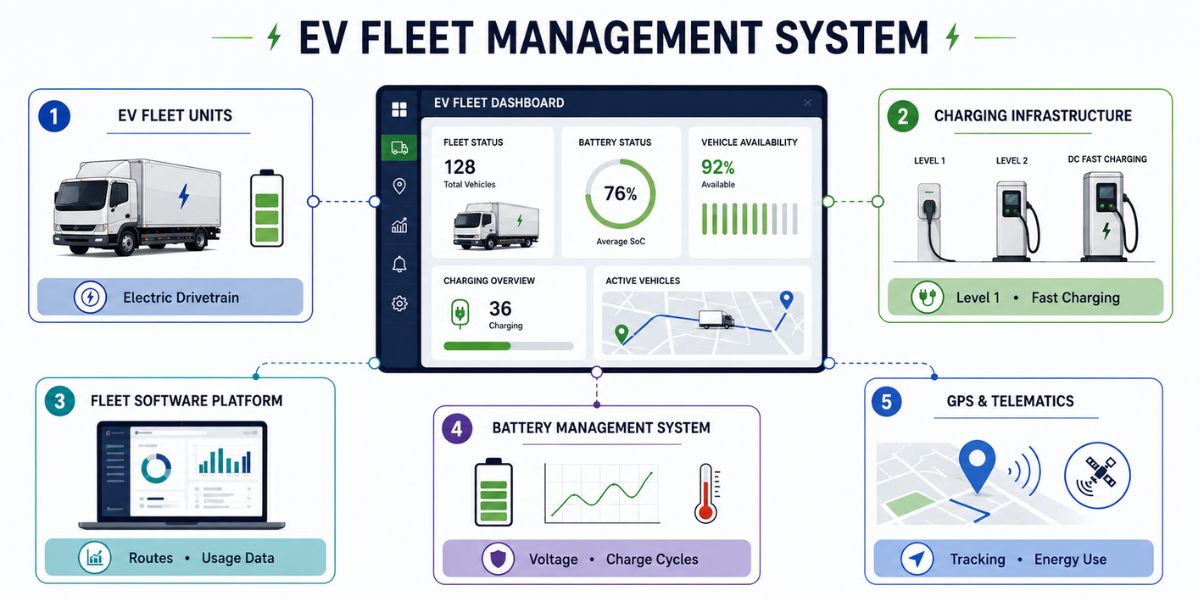
Smooth coordination of vehicles, energy systems, and data platforms relies on several interconnected components working together across daily movement and usage.
Electric Vehicles (EV Fleet Units)
Battery-powered vehicles replace internal combustion engines and run on electric drivetrains supported by lithium-ion technology. Driving range usually falls between 150 to 400 miles depending on battery size, terrain, and load conditions.
EV Charging Infrastructure
Power delivery comes from Level 1, Level 2, or DC fast charging stations placed across depots or public networks. Fast chargers can restore up to 80% battery capacity within 30 to 60 minutes, which directly affects vehicle availability.
Fleet Management Software Platforms
Central platforms convert incoming vehicle data into dashboards, alerts, and usage reports. Insights from these systems guide route planning, energy usage patterns, and performance tracking.
Battery Management System (BMS)
Battery systems rely on continuous monitoring of voltage, temperature, and charge cycles to maintain stability. Proper charge patterns can extend battery life by nearly 20–30%, reducing replacement frequency over time.
Telematics and GPS Tracking Systems
Vehicle movement data is captured through GPS-enabled telematics devices that track location, speed, and energy consumption. Real-time visibility supports faster decisions and improves route accuracy.
Why Is EV Fleet Management Important for Businesses?
Adoption of electric fleets requires structured systems that align vehicle usage, charging cycles, and cost planning across daily movement.
- Cost Reduction: Electricity pricing remains more stable than fuel, which lowers per-mile expenses over time. Maintenance cycles also decrease since electric drivetrains have fewer moving parts compared to combustion engines.
- Fleet Adoption Trend: Commercial fleet electrification continues to scale due to predictable routes and centralized charging setups. According to the U.S. Department of Energy (AFDC, 2025), fleet operators represent one of the fastest-growing segments in EV adoption across transportation sectors.
- Energy Planning: Charging schedules and battery usage patterns require precise coordination to avoid delays. Data-driven systems provide visibility into consumption trends, which supports better planning.
- Regulatory Alignment: Emission regulations across major markets are becoming stricter for commercial transport. Electric fleets support compliance while also qualifying for government incentives and tax benefits.
- Utilization Insight: Vehicle movement, idle time, and route patterns become measurable through connected tracking systems. Improved visibility allows higher asset usage without unnecessary downtime.
What Are the Benefits & Challenges of Electric Vehicle Fleet Management?
Electric fleet adoption delivers cost and sustainability advantages, yet it also introduces infrastructure and planning complexities that influence long-term performance.
| Benefits | Challenges |
| Electricity lowers per-mile costs compared to fuel over time. | High upfront investment is required for vehicles and charging infrastructure. |
| Zero tailpipe emissions reduce carbon output during operations. | Emission impact depends on the electricity source used for charging. |
| Smart charging enables better control over energy usage and scheduling. | Limited charging infrastructure can restrict flexibility in some regions. |
| Real-time tracking improves route efficiency based on battery range. | Range limitations require careful planning for longer routes. |
| Fewer mechanical parts reduce servicing frequency and costs. | Battery degradation affects long-term performance and replacement cycles. |
| Telematics systems provide real-time insights into vehicle activity. | System transition requires training and integration with existing workflows. |
How Much Does EV Fleet Management Cost?
The cost of EV fleet management in the United States depends on vehicle pricing, charging infrastructure, and software systems used for tracking and energy coordination. Electric fleet vehicles typically range from $35,000 to $90,000 for light-duty vans and cars, while medium- and heavy-duty electric trucks can cost between $120,000 to $180,000 depending on battery capacity and range.
Charging infrastructure represents a significant investment, with Level 2 chargers costing around $2,500 to $7,500 per port installed, while DC fast chargers can range from $40,000 to over $120,000 including installation and grid upgrades. Fleet management software and telematics systems usually operate on subscription models, averaging $15 to $60 per vehicle per month based on features such as tracking, analytics, and reporting.
Long-term costs shift as electricity remains cheaper than gasoline or diesel across most U.S. states, often reducing energy expenses by 30–50% per mile. Total Cost of Ownership (TCO) typically becomes favorable within 3 to 6 years, especially for fleets with high daily mileage and centralized charging setups.
How to Implement EV Fleet Management?
Successful implementation requires a structured approach that aligns vehicle selection, charging systems, and data-driven monitoring with real-world usage patterns.
1. Assess Current Fleet Usage
Start by analyzing daily mileage, route patterns, payload requirements, and idle time across existing vehicles. Clear visibility into current usage helps identify which segments can transition to electric mobility without disruption.
2. Select Suitable Electric Vehicles
Vehicle selection should match range requirements, load capacity, and charging compatibility with planned routes. Proper alignment prevents mid-route charging issues and supports consistent performance.
3. Plan Charging Infrastructure
Charging setup must reflect fleet size, turnaround time, and depot locations. Selection between Level 2 or DC fast chargers depends on how quickly vehicles need to return to service.
4. Coordinate with Utility Providers
Energy demand planning requires collaboration with local utility companies to ensure sufficient electrical capacity. Load balancing strategies help manage peak demand and reduce energy costs.
5. Install Telematics Systems
Tracking systems provide real-time data on location, battery levels, energy consumption, and driver behavior. Access to this data improves route planning, charging schedules, and overall visibility.
6. Set Preventive Maintenance Plan
Preventive maintenance schedules should focus on EV-specific components such as brakes, tires, and software systems. Regular inspections reduce unexpected downtime and extend vehicle lifespan.
7. Train Drivers and Staff
Driver training programs should cover charging practices, energy-efficient driving, and proper vehicle handling. Skilled usage improves battery performance and reduces energy waste.
8. Monitor Performance and Optimize
Continuous tracking of fleet data helps identify inefficiencies and adjust strategies over time. Insights from analytics support better routing, charging optimization, and future scaling decisions.
Why Matrack Is the Best Option for EV Fleet Management Operations?
Matrack supports EV fleet management through a connected platform that combines tracking, safety monitoring, compliance tools, and cost control features. Integrated systems provide full visibility into vehicle activity, energy usage, and operational performance across the fleet.
Real-time fleet tracking delivers insights into vehicle location, battery status, route progress, and energy consumption throughout daily movement. AI Fleet Dash Cam records driving activity, which improves driver accountability and provides reliable evidence in case of incidents or disputes.
Compliance requirements are handled through an ELD solution that tracks driver hours and maintains accurate records for regulatory needs. Fuel card integration allows businesses to monitor fuel expenses alongside electric usage, which supports mixed fleets operating with both EVs and traditional vehicles.