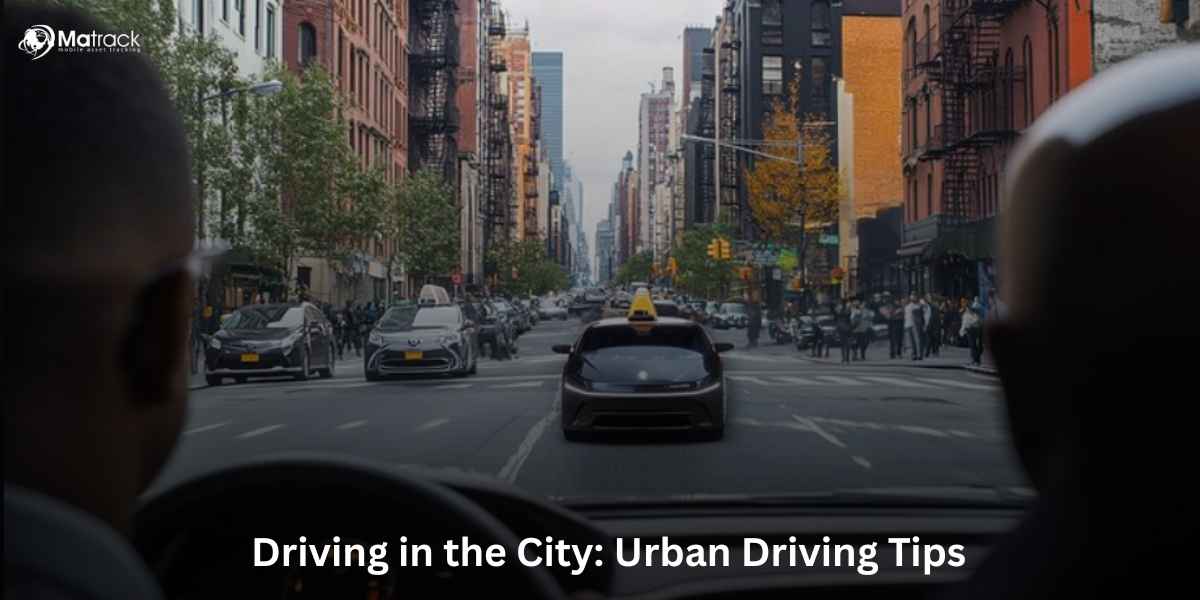


City driving packs a lot of decisions into a short stretch of road. A light changes, a pedestrian edges toward the crosswalk, a cyclist moves alongside traffic, and a delivery vehicle stops at the curb. According to the U.S. Department of Transportation’s 2026 National Roadway Safety Strategy, intersections account for more than one-quarter of annual roadway fatalities, which shows how quickly an ordinary trip through busy streets can become hazardous.
Heavy traffic is only part of the challenge. Limited sightlines, frequent turns, tight lanes, parked vehicles, crosswalk activity, and sudden braking leave little room for a late correction. Drivers have to judge speed, spacing, and surrounding movement early enough to stay in control.
Good urban driving comes down to keeping options open. Looking farther ahead, leaving a workable following gap, keeping vulnerable road users in view, and approaching intersections without rushing gives drivers more choices if conditions change suddenly. The result is steadier movement through stop-and-go traffic with fewer last-second reactions.
Why Does Urban Driving Require More Attention?
Several hazards often develop at once on city streets. A driver approaching a signal might be watching a cyclist beside the vehicle, a pedestrian near the curb, and a parked car blocking the view of a side street. Every movement changes what deserves attention next.
That overlap leaves less time to recover from a poor choice. Safe city driving depends on seeing enough of the road ahead, keeping useful space around the vehicle, and choosing a speed that matches what is actually visible. Early recognition turns many developing conflicts into small corrections rather than emergency reactions.
What Are 15 Practical Urban Driving Tips?
City streets are easier to manage when drivers keep time, space, and visibility in reserve for the unexpected. Each habit below addresses a different part of that job.
1. Maintain a Safe Following Distance
Leave a gap that gives you time to react if traffic bunches up suddenly. The vehicle ahead might stop for a crosswalk, a turning car, a delivery truck, or a signal that is still hidden from view. Extra spacing gives you a better look at brake lights and movement farther up the street.
Following too closely still appears in city enforcement data. NYPD logged 16 such violations in July 2026 and 130 years to date across New York City. Those figures are preliminary, but they show that poor spacing remains a concern even on streets where speeds are relatively low.
2. Keep Your Attention on the Road
City traffic changes too quickly for long glances at a screen. A few seconds of distraction is enough to miss a cyclist moving beside the vehicle, a signal change, or someone stepping off the curb.
State Farm surveyed 1,901 U.S. licensed drivers in 2026, and nearly 70% said in-vehicle infotainment systems and interactive displays can be distracting. Cut down the number of tasks competing for attention:
- Set navigation and audio while the vehicle is still parked.
- Handle phone messages after the trip or at a safe stop.
- Keep scanning the road ahead, mirrors, intersections, and curbside activity.
3. Follow Signals, Signs, and Lane Markings
Signals and pavement markings separate movements that would otherwise conflict at intersections. Rushing a yellow light, entering a blocked intersection, or drifting out of a marked lane puts the vehicle into space another road user may already be counting on.
Richmond, Virginia, offers a recent example of how often signal violations still occur. Four red-light-camera intersections generated 15,903 warnings and red-light-running citations through April 29, 2026, according to the City of Richmond.
Following the signal means checking that there is room to clear the intersection, entering the correct turn lane early, and staying with the pavement markings through areas where several traffic streams meet.
4. Match Your Speed to the Conditions
The posted limit does not guarantee that the same speed is appropriate on every block. Parked vehicles that block sightlines, crowded crosswalks, construction, rain, or brake lights stacking up ahead all call for a slower approach. San Francisco police issued 170 speeding violations citywide in May 2026, compared with 211 in April, so speeding remained an active enforcement concern in the city.
5. Check Mirrors Regularly
Mirror checks work best as part of a continuous scan, not as a single glance right before a maneuver. Short, regular looks show vehicles approaching from behind, motorcycles moving along the side, or cyclists advancing near the curb while your main focus stays on the road ahead.
Turning, merging, slowing sharply, or pulling away from a parking space calls for a direct blind-spot check. Mirrors show much of what is behind and beside the vehicle, but they do not cover every position another road user might occupy.
6. Brake Early and Smoothly
Look past the nearest vehicle and watch how traffic is developing farther ahead. If several brake lights come on or a bus is pulling toward a stop, lifting off the accelerator early lets the vehicle slow gradually and avoids a hard stop at the end.
Fuel use changes with that behavior too. Federal fuel-economy guidance for 2026 states that aggressive driving, including rapid acceleration and braking, can lower fuel economy by roughly 10% to 40% in stop-and-go traffic.
Smooth braking does not mean coasting through every situation. It means responding to visible conditions with enough time to slow in a controlled way.
Know about: Hard Braking
7. Plan the Route Before You Leave
Travel time on urban roads often varies well beyond the free-flow estimate shown by navigation software. FHWA reported a Planning Time Index of 2.03 for U.S. urban Interstates in May 2026. PTI compares the 95th-percentile travel time with free-flow travel time and reflects the extra time a traveler may need to arrive reliably.
A little preparation cuts down on rushed decisions once the trip is underway:
- Review major turns and lane requirements.
- Check likely congestion or construction areas.
- Build in a time buffer if arrival time matters.
- Note difficult exits or turns so navigation prompts do not force a last-second move.
Check more on: Route Planning
8. Hold a Predictable Lane Position
Nearby drivers, cyclists, and motorcyclists make decisions partly by reading your vehicle’s position. Drifting toward a lane line, weaving through small gaps, or changing lanes repeatedly makes your next move harder for others to judge.
In a March 2026 CAA survey of 1,504 Ontario drivers, 68% reported seeing unsafe lane changes and 96% had witnessed at least one dangerous driving behavior. The findings apply to Ontario, not the United States, but they show how often drivers encounter unpredictable lane movement. Choose the appropriate lane early, stay centered where conditions allow, and move over only after checking the surrounding space.
9. Give Pedestrians Extra Attention
A pedestrian does not always first appear in the middle of a crosswalk. Someone might step out from behind a parked van, move around a bus, cross from a crowded corner, or begin walking while a turning driver is watching oncoming traffic.
New York City recorded 46 pedestrian fatalities among 94 total traffic fatalities through June 29, 2026, according to NYC DOT. Pedestrian deaths were 13% lower than at the same point in 2025. Even with that decline, pedestrians accounted for nearly half of the traffic fatalities reported during the period.
Approach crosswalks and busy curb areas at a speed that leaves time to stop. Turns deserve extra care because a driver’s line of sight and a pedestrian’s path often meet at the same moment.
10. Keep Aggression Out of the Drive
Forcing a merge, tailgating, rushing a yellow light, or accelerating toward a closing gap usually trades a few seconds of perceived progress for another traffic conflict. Nationwide’s 2026 survey found that 90% of surveyed consumers believed other motorists had become more aggressive, while 87% said drivers had become more reckless compared with 12 months earlier.
If another driver acts aggressively, create distance and avoid competing for the same opening. Let the unsafe merge happen and continue once the road gives you room to do so safely.
11. Signal Before Turning or Changing Lanes
Turn signals give other road users advance notice, but signaling alone does not make a maneuver safe. East Lansing Police recorded three June 2026 charges involving failure to signal and/or observe, including one associated with an accident. Because that is a small local sample, it should not be treated as evidence of national behavior. Signal early, check the mirrors, look through the blind spot, and move only after the adjacent space is open.
12. Limit Unnecessary Idling
A stationary engine still uses fuel. Argonne National Laboratory’s 2026 fact sheet estimates that personal-vehicle idling wastes about 3 billion gallons of fuel annually in the United States. The publication is from 2026, although the 3-billion-gallon figure is not a newly measured 2026 total.
Argonne further notes that idling for more than 10 seconds generally uses more fuel than shutting off and restarting the engine. Whether shutting down makes sense depends on the vehicle, traffic conditions, manufacturer guidance, and local rules. A brief stop at a signal is different from sitting parked with the engine running for several minutes.
13. Read Traffic Beyond the Vehicle Ahead
Watching only the nearest bumper limits how much warning you get. Brake lights several cars up the street, a bus pulling toward the curb, people gathering at a crosswalk, or a car angled toward your lane may reveal the next slowdown or conflict sooner than the vehicle directly in front of you does.
Outside activity already places heavy demands on attention. In a 2026 national survey of nearly 4,000 Canadians, 35% identified traffic, pedestrians, and other activity outside the vehicle as their leading source of driving distraction. Cellphone distraction was cited by 32%.
The goal is to scan deliberately, not stare at every possible hazard. Look farther down the road for developing conflicts, then bring your attention back to the immediate lane, mirrors, and nearby road users.
14. Check Blind Spots Before Moving Sideways
Some areas beside a vehicle remain hidden even with correctly adjusted mirrors. Research published in June 2026 found that vehicles with large driver-side blind zones had 75.3% higher odds of involvement in a left-turn pedestrian crash than vehicles with small driver-side blind zones. The study examined pedestrian crashes across seven U.S. states.
Use a short sequence for any sideways move:
- Check the relevant mirror.
- Signal your intent.
- Turn your head briefly to inspect the blind spot.
- Check the space again if traffic shifts while you are preparing to move.
15. Drive Defensively
Defensive driving means planning for the possibility that someone else will stop, turn, merge, or enter your lane unexpectedly. Keep a workable gap ahead, avoid sitting unnecessarily beside another vehicle, and watch for conflicts that are starting to form.
NHTSA estimated 7,770 traffic deaths in the United States during January through March 2026, a 4.3% decrease from the same period in 2025. Its preliminary fatality rate was 0.99 deaths per 100 million vehicle miles traveled.
Those national estimates cover all road types, so they should not be read as an urban crash statistic. For city drivers, the practical takeaway is to leave enough flexibility in speed and position to deal with someone else’s mistake without an emergency maneuver.
How Can Efficiency Be Improved in Urban Driving?
Efficient city driving is mostly about cutting out wasted motion. Accelerating toward stopped traffic, braking hard at the next signal, jumping lanes for a small advantage, and sitting at long idle periods all use fuel or time without moving the trip forward in a meaningful way.
Reading traffic early lets a driver ease off the accelerator sooner and carry momentum where conditions allow. Route choice matters for the same reason. A slightly longer path with steadier movement may work better than the shortest route if it avoids repeated stops, difficult turns, or heavy congestion.
Three decisions make the biggest practical difference:
- Avoid unnecessary acceleration: Do not build speed if a red light, queue, or turning vehicle already shows that another slowdown is coming.
- Reduce avoidable idle time: Long stationary periods use fuel without advancing the trip.
- Limit navigation corrections: Choosing the correct lane and major turns early reduces missed turns, detours, and extra circulation through crowded streets.
Efficiency does not require driving unusually slowly. It comes from making fewer moves that have to be undone a few seconds later.
How Can Control Be Maintained in Urban Driving?
Control in city traffic depends on vehicle placement and smooth changes in speed or direction. Narrow lanes, parked cars, sharp turns, and frequent stops make small steering or braking errors more noticeable than they are on an open road.
Maintain Steady Steering Input
Look through the intended path and make small steering corrections as needed. On a narrow street or during a tight turn, abrupt steering can pull the vehicle toward a curb, parked car, or neighboring lane. A steadier line is easier for both the driver and nearby road users to judge.
Manage Braking Without Upsetting the Vehicle
Hard braking shifts the vehicle’s weight forward quickly and can make steering feel less settled. Easing into the brake pedal gives the vehicle time to slow more smoothly while the driver continues judging the space ahead. An emergency still calls for immediate braking, so smooth technique should never delay a necessary hard stop.
Set Up Early for Turns
A clean turn starts with good positioning. Enter the correct lane, bring speed down on the approach, and scan for pedestrians, cyclists, parked vehicles, or opposing traffic. That setup keeps steering corrections smaller once the turn begins.
Use Lane Space Deliberately
Road position should reflect the space actually available. Leave practical clearance from parked vehicles where doors might open, stay away from adjacent traffic, and hold a predictable line through intersections or narrow sections. Repeated side-to-side corrections make the vehicle harder for others to read.
Adjust as Conditions Change
City streets rarely stay the same for long. A bus moving toward the curb narrows the lane, a cyclist takes up space beside the vehicle, and a blocked sightline calls for a slower approach. Good control means adjusting speed and position as the available road space changes, so the driver is not forced into a sharp correction.
How Can Matrack Help Fleets Manage Urban Driving Risk?
Urban routes often reveal patterns that arrival times alone will not show. Matrack GPS Fleet Tracking records live location, route history, speed, idling, and driver behavior events such as harsh braking, hard acceleration, speeding, and cornering. Fleet managers can use those records to spot routes, times of day, or drivers linked to repeated speeding, harsh braking, hard acceleration, or cornering events.
Video adds context when a location point or driving alert does not tell the whole story. Matrack AI Dashcam captures supported events involving distracted driving, drowsiness, harsh maneuvers, and collisions through road-facing and driver-facing cameras, with event clips uploaded to the cloud. Safety teams compare the footage with GPS and ELD information during coaching or incident review.
Dispatchers see current vehicle location while assigning jobs or changing routes during the day. For dispatch and day-to-day coordination, Matrack Fleet Management Software keeps fuel tracking, maintenance scheduling, driver management, and reporting in the same platform, giving fleet teams a practical way to connect city-route activity with the records they use every day.
Frequently Asked Questions
What Should Drivers Do If They Miss a Turn in City Traffic?
Keep going until there is a legal and safe place to change direction. A missed turn is usually easier to fix with the next available route than with a sudden stop, abrupt lane change, or move across several lanes.
How Should Drivers Pass Parked Vehicles on a Narrow City Street?
Leave as much practical clearance as the lane allows and watch for signs that a door might open or a vehicle might pull out. Occupants inside a parked car, illuminated brake lights, or a front wheel beginning to turn are signs that the space beside it is about to change.
What Should Drivers Do When a City Bus Stops Ahead?
Expect movement around the bus. Passengers approaching the curb, pedestrians emerging from either end, and the bus pulling back into traffic can all change the available space quickly. Slow down, watch the area around the bus, and pass only after the lane is clear.
How Should Drivers Handle Unfamiliar One-Way Streets?
Read signs and pavement markings early, then stay with the legal traffic flow if a planned turn is unavailable. Let navigation recalculate. Sudden corrections only force other road users to react.
Why Do Short City Trips Still Require Careful Route Planning?
Even a short city trip can include difficult turns, one-way streets, construction, parking activity, or several congested intersections. Knowing the main turns ahead of time lowers the chance of last-second lane changes and unnecessary circulation through busy blocks.