

What Does Defensive Driving Mean?
Defensive driving means operating a vehicle with enough awareness, control, and caution to reduce the chance of a collision. The term covers how a driver responds to traffic conditions, road hazards, weather changes, and the behavior of other motorists.
Drivers who use this approach pay attention to following distance, speed control, blind spots, lane changes, braking patterns, and right-of-way decisions. Constant observation of traffic signals, surrounding vehicles, and possible hazards allows safer decisions before a risk becomes immediate.
Accident prevention often depends on hazard perception, reaction time, and the ability to stay composed under changing conditions. Defensive driving brings those elements together to support road safety in everyday traffic.
What Are the Most Important Defensive Driving Techniques?
Defensive driving techniques focus on real road behavior that helps reduce risk during everyday traffic situations.
Following Distance
Maintaining proper distance becomes critical when traffic slows without warning. Short gaps leave no room for braking, especially in city traffic or during sudden stops.
Mirror Observation
Mirror checks help track vehicles that move quickly between lanes or approach from behind. Missed checks often lead to unsafe lane changes or late reactions.
Lane Positioning
Stable lane positioning keeps vehicle movement predictable for others on the road. Drifting between lanes or late corrections often create confusion in dense traffic.
Signal Timing
Turn signals should come before movement, not during it. Late signaling gives other drivers less time to adjust, especially at intersections or during merges.
Braking Control
Hard braking usually happens when attention drops or distance is misjudged. Gradual braking keeps the vehicle stable and avoids chain-reaction slowdowns behind.
Speed Regulation
Speed needs constant adjustment based on traffic buildup, road surface, and visibility. Fixed speed habits often fail in mixed driving conditions.
Blind Spot Awareness
Vehicles can stay hidden alongside for longer than expected, especially in multi-lane roads. A quick shoulder check prevents risky lane shifts.
Intersection Handling
Intersections often involve mixed movement from all directions. Slowing down and observing signal changes reduces the chance of side-impact collisions.
Hazard Recognition
Loose gravel, potholes, stalled vehicles, or sudden obstacles require quick but controlled decisions. Delayed recognition usually leads to sharp corrections.
What Are the Basic Principles of Defensive Driving?
Safe driving habits are built on a set of principles that help reduce risk, improve judgment, and support better control in changing road conditions.
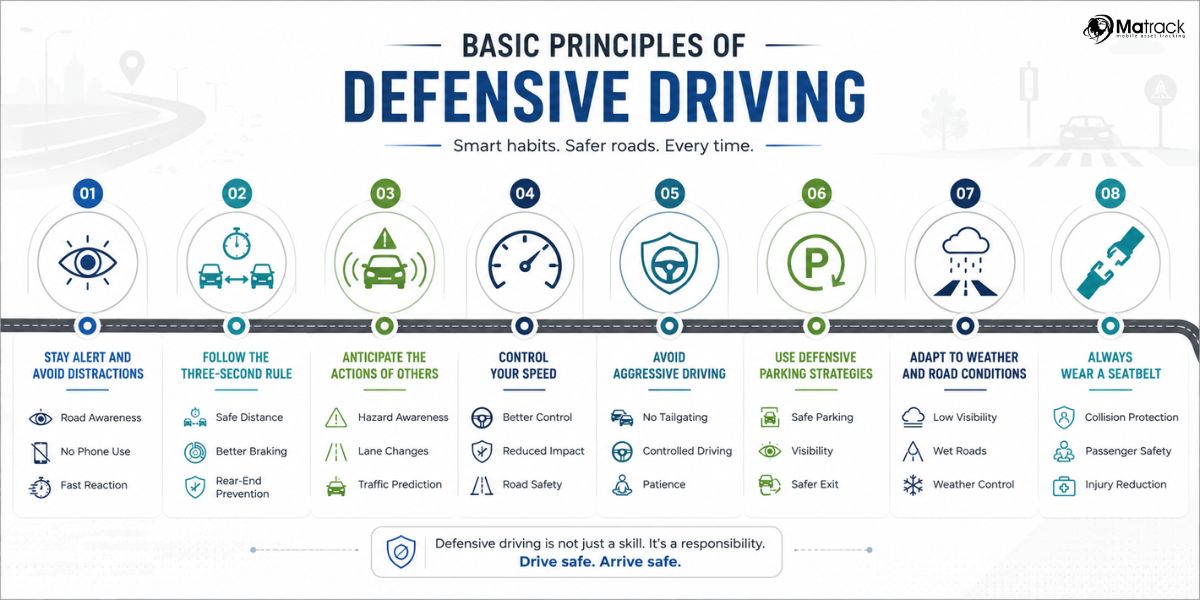
1. Stay Alert and Avoid Distractions
Attention on the road is the foundation of safe driving behavior. Visual focus, mirror checks, and awareness of traffic movement help detect changes in real time.
Distractions such as mobile phone use, eating, GPS adjustments, and conversations reduce reaction time and hazard awareness. Even short distractions can delay braking response and increase the chance of a collision.
2. Follow the Three-Second Rule
Following distance is measured using the three-second rule to maintain safe space between vehicles. This method improves stopping distance and reduces rear-end collision risk during sudden braking.
Drivers can track distance by selecting a roadside object and counting seconds as the vehicle ahead passes it. Rain, fog, snow, and low visibility require extending that gap to maintain control and braking safety.
3. Anticipate the Actions of Other Drivers
Traffic behavior is not always predictable, especially in busy roads and intersections. Drivers may change lanes suddenly, ignore signals, or brake without warning.
Hazard anticipation allows time to adjust speed, position, and direction before a situation becomes critical. Awareness of pedestrians, cyclists, and merging vehicles supports better decision-making.
4. Control Your Speed
Speed directly affects stopping distance, vehicle stability, and collision impact. Higher speed reduces the time available to respond to traffic signals, obstacles, and sudden changes.
Speed control depends on road surface, weather conditions, traffic density, and visibility. Slower speeds in residential zones, school areas, and highways exits improve safety and control.
5. Avoid Aggressive Driving
Aggressive behavior such as tailgating, lane weaving, excessive honking, and road rage increases accident risk. Emotional reactions often lead to poor judgment and unsafe driving decisions.
Calm driving supports better spacing, smoother lane changes, and controlled braking. Patience and discipline help maintain safer interaction with other road users.
6. Use Defensive Parking Strategies
Parking also involves risk management, especially in crowded or low-visibility areas. Positioning the vehicle properly reduces the chance of collisions, theft, or obstruction.
Well-lit parking areas improve visibility and security, while reverse parking allows safer exit into traffic. Checking surroundings before opening doors helps avoid contact with pedestrians or cyclists.
7. Adapt to Weather and Road Conditions
Weather conditions such as rain, fog, snow, and ice affect traction, visibility, and braking performance. Road surface changes require adjustments in speed, distance, and steering control.
Wet roads increase stopping distance, while fog limits visibility and requires proper headlight use. Night driving and low-light conditions demand higher alertness and reduced speed.
8. Always Wear a Seatbelt
Seatbelts reduce injury severity during sudden stops or collisions. Proper restraint keeps occupants secured and prevents impact with the steering wheel, dashboard, or windshield.
Seatbelt use remains a basic safety requirement for both drivers and passengers. Road safety regulations in most regions mandate seatbelt use to reduce fatal injuries.
What Is a Defensive Driving Course?
A defensive driving course provides structured training to improve road judgment, hazard awareness, and safe driving behavior.
Course Content
Course content covers hazard perception, traffic laws, right-of-way rules, speed control, and safe response to changing road conditions. Lessons also include following distance, blind spots, lane changes, braking distance, and intersection handling based on real driving situations.
Course Duration
Most defensive driving courses take 4 to 8 hours to complete depending on the provider and purpose. Some state-approved or court-required programs may extend to a full day, while shorter courses apply mainly for insurance eligibility.
Online Format
Online courses can be completed through self-paced modules within a set time window. Many providers allow completion in one sitting or across multiple sessions based on user convenience.
Who Takes It
New drivers take these courses to build safe driving habits early and improve road awareness. Experienced drivers, commercial drivers, and individuals with violations use them for skill improvement, compliance, or insurance-related benefits.
What Are the Benefits of Defensive Driving?
Defensive driving provides practical advantages that improve safety, reduce driving stress, and support better control in different road conditions.
Reduced Collision Risk
Fewer sudden reactions and better judgment lower the chances of accidents in both city traffic and highways. Controlled decisions help avoid common crash situations like rear-end and side-impact incidents.
Improved Road Safety
Safer driving behavior contributes to overall traffic discipline and reduces risk for pedestrians, cyclists, and other motorists. Habits create a more predictable road environment.
Lower Stress Levels
Calmer driving reduces pressure during heavy traffic, long journeys, and unpredictable situations. Fewer aggressive reactions lead to a more controlled and less exhausting driving experience.
Better Vehicle Handling
Smooth acceleration, controlled braking, and stable steering improve how a vehicle performs on the road. This also reduces wear on tires, brakes, and other mechanical components.
Fewer Traffic Violations
Awareness of signals, right-of-way rules, and road behavior helps avoid common violations. This reduces the chances of penalties, fines, or license-related issues.
Potential Insurance Benefits
Completion of approved defensive driving courses may help qualify for insurance discounts in some regions. Eligibility depends on insurer policies and local regulations.
Final Thoughts
Defensive driving supports safer decisions by focusing on awareness, control, and timely judgment in everyday traffic. Consistent use of these habits helps reduce collision risk and improves overall road behavior.
Driving conditions change constantly due to traffic flow, weather, and human error. A disciplined approach helps maintain stability, manage risk, and handle unexpected situations with better control.
Safer roads depend on responsible driving behavior from every road user. Defensive driving encourages that responsibility through preparation, attention, and steady decision-making behind the wheel.
Frequently Asked Questions
1. How Does Defensive Driving Help Prevent Accidents?
Accident prevention improves when a driver pays attention to traffic movement, road hazards, and the behavior of other motorists. Safer decisions with speed, following distance, and lane position reduce the chance of sudden conflict.
2. What Are the Main Skills Used in Defensive Driving?
Core skills include hazard perception, speed control, mirror observation, following distance, and safe lane changes. Braking judgment, right-of-way decisions, and awareness of blind spots also play an important role.
3. Why Is Defensive Driving Important in Heavy Traffic?
Heavy traffic increases the chances of sudden braking, close following, and unsafe lane movement. Defensive driving helps maintain space, improve reaction time, and reduce pressure in crowded road conditions.
4. How Is Defensive Driving Different From Regular Driving?
Regular driving often focuses on basic rule-following, while defensive driving adds risk awareness and preventive action. Greater attention to surrounding vehicles and possible hazards helps avoid preventable incidents.
5. What Are the Benefits of Defensive Driving?
Safer road behavior can reduce collision risk, improve vehicle control, and lower stress behind the wheel. Defensive habits also support smoother braking, steadier speed, and fewer traffic violations.
6. Can Defensive Driving Help in Bad Weather?
Rain, fog, snow, and low visibility affect traction, stopping distance, and overall control. Defensive driving helps by encouraging lower speed, more space, and better judgment in difficult conditions.
7. Who Should Learn Defensive Driving?
New drivers benefit by building safer habits early, especially in busy or unpredictable traffic. Experienced drivers, fleet operators, and daily commuters also gain value from stronger road awareness and safer decision-making.