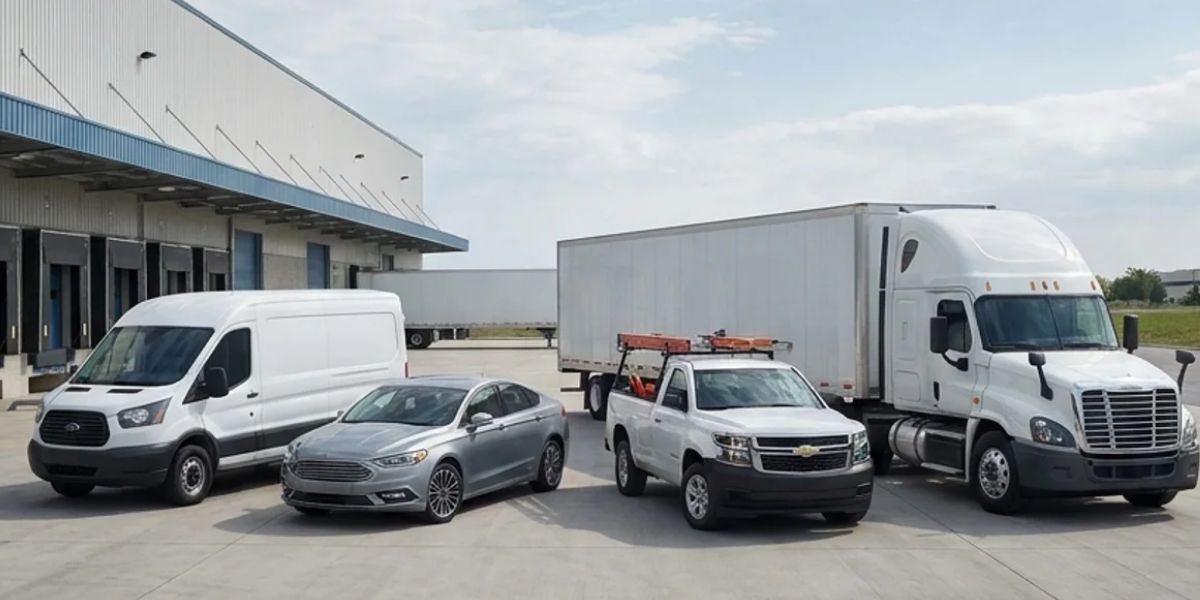


What Is a Commercial Vehicle?
Commercial vehicle is a vehicle used for business, transport, or revenue-generating activities across industries. Includes vehicles used for carrying goods, passengers, or specialized equipment based on operational needs.
Vehicles are categorized based on purpose, such as logistics, passenger transport, construction, or service operations. Category supports specific business functions and operational requirements.
Classification depends on vehicle weight, usage type, and operational purpose within the transport system. Regulatory requirements vary based on these classifications and must be followed for legal operation.
What are the types of commercial vehicles?
Commercial vehicles are categorized based on size, load capacity, and operational purpose, selecting the right vehicle type improves cost control and overall performance.
1. Light Commercial Vehicles (LCV)
Light commercial vehicles include vans, pickups, and small delivery trucks used for short-distance transport; vehicles support last-mile delivery and urban logistics operations. Low operating costs and flexibility make LCVs suitable for small businesses, commonly used for retail distribution and service operations.
2. Medium Commercial Vehicles (MCV)
Medium commercial vehicles include larger trucks used for regional transport. MCVs are suitable for intercity logistics and bulk delivery operations and offer better load handling compared to light vehicles.
3. Heavy Commercial Vehicles (HCV)
Heavy commercial vehicles include large trucks, trailers, and tankers used for long-distance transport, vehicles that carry high-volume loads across regions. HCVs support large-scale logistics, construction, and industrial operations, essential for freight movement and supply chain.
4. Special Purpose Vehicles (SPV)
Special-purpose commercial vehicles are designed for specific tasks such as refrigeration, towing, construction, or emergency services. Vehicles support niche operational requirements, including vehicles like refrigerated trucks, tow trucks, and utility service vehicles to improve in specialized industries and operations.
How to Choose the Right Commercial Vehicle?
Understanding key factors such as usage type, capacity, cost, and compliance ensures that the vehicle supports daily operations effectively. Evaluating these aspects carefully allows businesses to invest in vehicles that deliver reliability, performance, and scalability over time.
Define Business Needs
Identifying the primary purpose of the vehicle, whether it is for goods transportation, passenger movement, or specialized operations. Business directly influences the kind of vehicle required for performance; clearly defined needs help to narrow down suitable options and avoid unnecessary investments.
Evaluate Load Capacity
Assess the weight and volume of goods or passengers the vehicle needs to handle regularly. Choosing the right load capacity ensures safe operations and prevents overloading, which can lead to legal issues and increased wear and tear.
Consider Operating Costs
Look beyond the purchase price and evaluate ongoing costs such as fuel consumption, maintenance, insurance, and repairs. Vehicles with better fuel and lower maintenance needs can significantly reduce long-term expenses; a cost-effective choice supports better financial planning and profitability.
Check Compliance Requirements
Ensure the vehicle meets all legal and regulatory requirements, including licensing, permits, safety standards, and load regulations. Compliance is essential for avoiding penalties and ensuring smooth operations across regions; selecting a compliant vehicle reduces operational risks and supports business continuity.
Assess Performance Features
Evaluate key features such as engine performance, durability, safety systems, and technology integration. Vehicles with strong performance and advanced safety features provide better reliability; choosing the right features ensures long-term value and improved overall performance.
What are the legal requirements for commercial vehicles?
Legal requirements for commercial vehicles ensure safe, compliant, and operations across industries. Following legal requirements helps avoid penalties, improves safety, and supports smooth business operations.
- Driver Licensing: Drivers must hold a valid commercial driving license based on vehicle type and usage. Licensing ensures that drivers are qualified to handle heavy or specialized vehicles.
- Vehicle Registration: All commercial vehicles must be properly registered with transport authorities and carry valid documentation. Maintaining updated documents ensures compliance during inspections and avoids legal penalties.
- Insurance Requirements: Commercial vehicles must have valid insurance coverage to protect against accidents, damages, and liabilities. Insurance is a mandatory requirement for legal road operation.
- Load Regulations: Vehicles must follow specified weight limits and load distribution standards set by authorities. Overloading is strictly restricted due to safety risks; load management ensures vehicle stability and reduces wear and tear.
- Inspection Standards: Must meet safety standards through regular inspections and maintenance checks. Regular inspections ensure roadworthiness and reduce accident risks; compliance with safety standards improves reliability.
What are the business uses of commercial vehicles?
Commercial vehicles are widely used across industries to support transportation and business growth by enabling the movement of goods, equipment, and personnel.
Logistics and Freight Transportation
Commercial vehicles are widely used in the logistics industry to transport goods between warehouses, distribution centers, and customer locations. They support supply chain operations by ensuring products are delivered efficiently and on schedule.
Construction and Material Transportation
Construction companies use commercial vehicles to move raw materials, machinery, and equipment between project sites. Reliable transportation helps maintain project timelines and supports smooth construction operations.
Retail Product Distribution
Retail businesses depend on commercial vehicles to deliver products to stores, fulfillment centers, and customers. Efficient transportation ensures inventory availability and supports timely order fulfillment.
Passenger Transportation Services
Commercial vehicles are used to transport passengers for business, public transit, tourism, and shuttle services. They provide safe and efficient mobility solutions while supporting various transportation needs.
Field Service and Mobile Operations
Service-based businesses use commercial vehicles to transport technicians, tools, and equipment to customer locations. These vehicles enable on-site service delivery, improve response times, and enhance operational efficiency.
What are the main key features of commercial vehicles?
Commercial vehicles are designed with features that support performance and safety. Features help meet business demands across different industries and transport requirements.
- Load Carrying Capacity: Commercial vehicles are designed to carry specific load capacities based on classification. Correct load distribution also helps maintain vehicle stability and reduce wear and tear.
- Durability and Performance: Vehicles are built for heavy usage and long operational hours. High-performance components also improve productivity in demanding operating conditions.
- Fuel Efficiency: Plays a key role in reducing operational costs; optimized engines improve performance and cost control. Better fuel economy also supports environmental sustainability by lowering emissions.
- Safety Features: Commercial vehicles include safety systems such as braking support and stability control; features improve driver and cargo safety. Advanced safety technologies also help minimize accident risks during operations.
- Versatility and Application: Commercial vehicles are designed for multiple uses across industries such as logistics, construction, and services; flexible configurations support different operational requirements.
Final Thoughts
Commercial vehicles play a crucial role in supporting business operations across industries such as logistics, construction, retail, and transportation. Choosing the right type of commercial vehicle reduces operational delays and supports better resource management.
Understanding the different types, features, and regulatory requirements of commercial vehicles is essential for making informed business decisions. Factors such as load capacity, safety systems, and driver qualification standards directly impact operational performance and compliance.
A structured approach to commercial vehicle management supports long-term growth, cost control, and operational reliability. Effective use of commercial vehicles ultimately strengthens business performance, enhances customer satisfaction, and supports sustainable operational success.
Frequently Asked Questions
What is the difference between a commercial vehicle and a personal vehicle?
Commercial vehicles are used for business, transportation, or revenue-generating activities, while personal vehicles are mainly used for private and non-commercial purposes.
Why is fleet management important for commercial vehicles?
Fleet management helps businesses improve vehicle utilization, reduce operating costs, monitor maintenance, and enhance safety.
How do commercial vehicles support supply chain operations?
Commercial vehicles enable the movement of goods between manufacturers, warehouses, retailers, and customers, ensuring timely delivery and smooth supply chain operations.
What factors affect the lifespan of a commercial vehicle?
Vehicle maintenance, driving conditions, load handling, operating hours, and fuel quality all influence the durability and lifespan of commercial vehicles.
Are electric commercial vehicles becoming more common?
Yes, electric commercial vehicles are increasingly used in logistics and delivery operations due to lower fuel costs, reduced emissions, and growing sustainability initiatives.