Matrack ELD is the best FMCSA-approved ELD device in 2026. It offers the highest reliability, free hardware, automated HOS tracking, and real-time GPS monitoring with lifetime warranty and no contracts.
FMCSA-approved ELD devices record driving time, engine data, and duty status automatically to maintain compliance with federal Hours-of-Service regulations. These devices eliminate manual logs, prevent violations, and ensure data accuracy across all vehicle types.
In 2026, the leading ELD systems meet FMCSA certification, deliver consistent uptime, and provide real-time alerts for complete operational visibility. The following list ranks the top performers based on compliance accuracy, installation speed, and total cost efficiency.
FMCSA-Approved ELD Comparison Table 2026
- Best For: Best Overall – Reliable and affordable
- Cost: $19.95 (Free device, no contract)
- Installation: Plug-and-play (5 minutes)
- Compliance: FMCSA-certified, automatic HOS, DVIR, IFTA
- Support: 24/7 live & SMS support, lifetime warranty
- Best For: Box Trucks – Rugged and verified accuracy
- Cost: $30–$35
- Installation: Hard-wired, professional setup
- Compliance: FMCSA-registered, PIT third-party verified
- Support: Dedicated support, online resources
- Best For: Simple Installation – Fast setup for small fleets
- Cost: $25.95
- Installation: Plug-and-play
- Compliance: FMCSA-compliant, HOS & DVIR
- Support: Phone and chat support, business hours
- Best For: IFTA Reporting – Deep compliance coverage
- Cost: $39–$45
- Installation: BYOD or tablet option
- Compliance: FMCSA & Transport Canada certified
- Support: 24/7 driver hotline and technical support
- Best For: Mobile App Users – App-based compliance
- Cost: $19.50
- Installation: Bluetooth pairing
- Compliance: FMCSA & Transport Canada compliant
- Support: In-app and phone support
- Best For: Large Fleets – AI-powered fleet analytics
- Cost: $33–$40
- Installation: Plug-and-play gateway
- Compliance: FMCSA-certified, AI annotations, HOS & DVIR
- Support: 24/7 enterprise-grade support
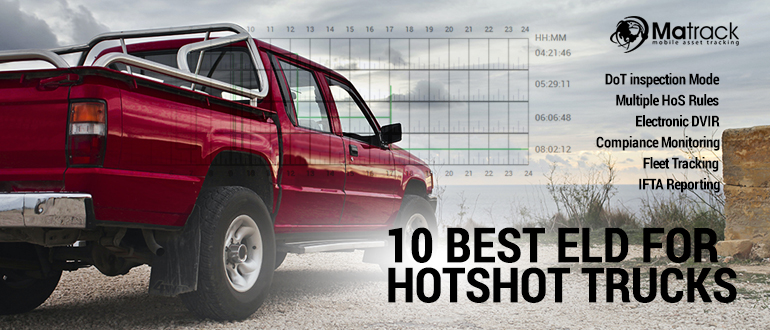
- Best For: Hotshot Fleets – High-speed logistics
- Cost: $35–$45
- Installation: Plug-and-play
- Compliance: FMCSA-certified, automated duty-state
- Support: 24/7 support with live assistance
How Did We Test FMCSA-Approved ELD Devices?
We installed each FMCSA-approved ELD on active fleet vehicles and tracked its performance during real driving hours. Testing measured sync speed, log accuracy, and GPS reliability under continuous engine activity.
Each device was evaluated across highway, regional, and delivery routes to check compliance stability and data consistency. Log edits, duty changes, and inspection transfers were timed to confirm response accuracy.
Customer support response, setup time, and reporting quality were verified through direct interaction. Every result reflects field performance, not manufacturer claims.
What Are The Best FMCSA-Approved ELD Devices In 2026?
Matrack ELD – Best Overall
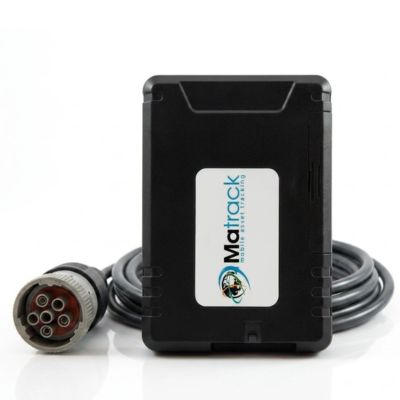
We installed the Matrack MA-ELD Classic across a few of our fleet vehicles, and the device paired with the driver app quickly enough that HOS tracking stayed aligned with every engine start and movement. That steady sync made it easier for drivers to manage duty-status changes without second-guessing whether their logs reflected real driving time.
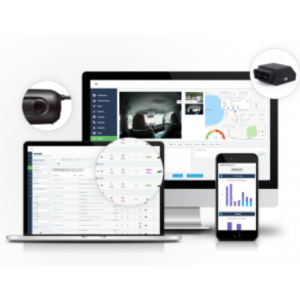
On longer routes, the GPS trail updated with enough precision to verify mileage, idle pockets, and route efficiency for dispatch, which helped tighten our scheduling workflow. The dashboard pulled HOS, IFTA, DVIR, and state-mileage records into a single view that cut down on manual checks, though its design feels more functional than refined when compared with higher-tier platforms.
The violation alerts proved helpful as drivers approached their limits, and the lifetime warranty offered reassurance when rotating hardware between trucks during busy weeks. The reporting depth isn’t as advanced as enterprise telematics suites, but Matrack’s quick setup, stable data accuracy, and contract-free pricing make it an easy compliance tool to fold into daily operations.
Pros and Cons
| Pros | Cons |
|---|---|
| ✅ Free hardware with no contract requirements | ❌ Dashboard visuals feel dated |
| ✅ Stable GPS updates on long or short routes | ❌ Limited analytics for performance-focused fleets |
| ✅ Lifetime warranty for long-term reliability | |
| ✅ Early violation warnings reduce HOS errors |
Key Features
- Plug-and-play OBD connection
- Real-time HOS cycle alerts
- Geo-fencing with vehicle-specific zones
- Automatic idle-time detection
- DVIR defect notifications for flagged issues
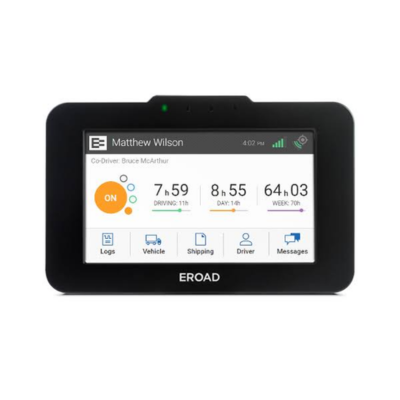
EROAD Ehubo – Best ELD for Box Trucks
The EROAD Ehubo handled our box-truck routes with a steadiness that matched the constant loading-zone stops and short repositioning hops these trucks see all day. Its rugged build and third-party PIT verification made the device feel purpose-designed for delivery trucks that spend their days weaving through tight commercial lanes.
When we pushed dense urban loops, the geofenced trail captured loading-zone dwell times and alley-to-street transitions with precision drivers could trust. The DVIR screen helped maintain consistent inspection habits, although the layered interface slowed us down when we needed fast access to less-used fleet settings.
HOS clocks held steady even during rapid dock changes, which is where lighter app systems typically fall behind. The one drawback is that the hardware’s bulk and fixed mount can feel restrictive in smaller cabs, especially when drivers want quicker repositioning between jobs.
Pros and Cons
| Pros | Cons |
|---|---|
| ✅ Rugged hardware suited for delivery environments | ❌ Multi-layer menu navigation |
| ✅ PIT-verified ELD accuracy | ❌ Fixed mount limits repositioning in tight cabs |
| ✅ Precise dwell-time tracking in loading areas | |
| ✅ Structured DVIR screen for quick inspections |
Key Features
- Hard-wired ECM tether for vibration-heavy use
- Geofenced entry/exit alerts for dock zones
- On-device DVIR prompts
- Automatic IFTA distance logging
- Speed-threshold alerts for urban routes
GPSTrackit – Best ELD with Simple Installation
GPSTrackit took only minutes to activate, which helped us rotate vehicles freely without interrupting operations. The multilingual support also proved practical for fleets with mixed language crews moving between regions.
On our regional circuits, duty-status shifts, mileage, and idle detection updated consistently enough to guide scheduling decisions without creating unnecessary data clutter. DVIR entries were straightforward, though their limited diagnostic depth meant we still relied on separate tools for mechanical insight.
The alerts for approaching violations triggered early enough to adjust breaks and routes with confidence. Its simplicity is a strength, but the lack of customizable performance metrics can leave managers wishing for more granular reporting during high-volume seasons.
Pros and Cons
| Pros | Cons |
|---|---|
| ✅ Fast setup for rotating fleet vehicles | ❌ Shallow diagnostic data |
| ✅ Multilingual driver support | ❌ No advanced performance metric customization |
| ✅ Clean log timestamps reduce corrections | |
| ✅ Smooth DVIR submissions for basic checks |
Key Features
- Universal app compatibility
- Early HOS-limit notifications
- Idle-time alerts tied to cost thresholds
- Stop-duration updates for route delays
- Mileage summaries stored automatically
J. J. Keller ELD – Best ELD with IFTA Reporting
During long hauls across U.S. and Canadian territory, the J. J. Keller VT100 held a stable Bluetooth connection even in areas with minimal signal, keeping HOS data clean across changing rule sets. The Roadside Inspection Hotline helped our drivers navigate checkpoints without second-guessing their logs.
IFTA summaries aligned accurately with our recorded mileage, and automated state separation reduced hours of tax prep. The platform’s behavior-monitoring tools uncovered coaching opportunities quickly, but the sheer number of submenus slowed us down until we built a repeat workflow.
The BYOD flexibility worked smoothly, and the optional Compliance Tablet created a controlled environment free from personal-device distractions. Its depth is unmatched for audit-heavy operations, yet the volume of compliance features can feel excessive for fleets that simply need streamlined HOS and fuel tracking.
Pros and Cons
| Pros | Cons |
|---|---|
| ✅ Strong Bluetooth stability on long hauls | ❌ Complex interface for new users |
| ✅ Roadside Inspection Hotline assistance | ❌ Too feature-dense for smaller fleets |
| ✅ Highly accurate IFTA state-line tracking | |
| ✅ Deep behavior monitoring for coaching |
Key Features
- Compliance Tablet option for controlled use
- Automated fuel-tax mapping
- Behavior alerts for braking and acceleration
- Border-rule notifications for U.S./Canada shifts
- SmartAssign event-cleanup engine
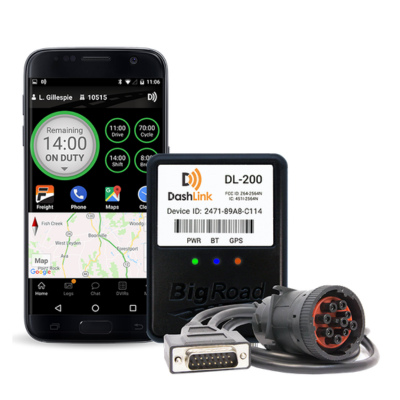
BigRoad Dashlink – Best ELD with a Mobile App
BigRoad Dashlink paired effortlessly with our drivers’ personal phones, giving them a familiar interface for logs, DVIRs, and edits without relying on dedicated hardware. Transport Canada compliance also made border transitions smoother during short-notice load shifts.
On urban and regional runs, the app handled HOS and certification tasks cleanly enough to prevent back-office corrections. The integrated load board helped fill driver downtime, but the GPS trail struggled to capture fine movement during tight yard maneuvers where accuracy matters.
Messaging stayed responsive during dense traffic, keeping dispatch aware of delays in real time. The trade-off is that heavy phone usage—navigation, calls, messaging, logging—can occasionally slow the app on older devices, which isn’t ideal for drivers running multiple apps at once.
Pros and Cons
| Pros | Cons |
|---|---|
| ✅ Phone-based workflow drivers adapt to quickly | ❌ Lower GPS precision in tight yards |
| ✅ Transport Canada compliant | ❌ Older phones may slow during heavy use |
| ✅ Integrated load board to fill downtime | |
| ✅ Reliable in-app messaging |
Key Features
- Bluetooth module for fast truck pairing
- Movement-triggered duty-status prompts
- Log-certification reminders
- Yard-move notifications
- Speed alerts set to custom thresholds
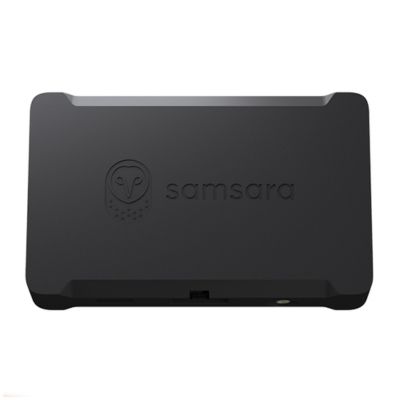
Samsara – Best ELD for Trucks
Samsara’s Vehicle Gateway captured diagnostics, HOS data, and route changes with the immediacy needed for long-haul planning across unpredictable terrain. AI-powered annotations cleaned up ambiguous events before they hit the log queue, reducing end-of-shift corrections.
Real-time insights gave us early warnings on route inefficiencies and emerging driver fatigue, which helped eliminate avoidable violations. The platform’s 200+ integrations tied ELD data to cameras, maintenance tools, and dispatch systems, though unlocking everything requires a learning curve for teams moving from simpler products.
Roadside inspections were quick thanks to organized log-transfer tools, and the hotspot kept the system stable where coverage thinned. The only friction comes from the platform’s scale—its depth is great for enterprise trucking, but mid-sized fleets may find themselves configuring more features than they actually need.
Pros and Cons
| Pros | Cons |
|---|---|
| ✅ Fast diagnostic capture supports maintenance | ❌ Learning curve for teams new to large platforms |
| ✅ AI-driven log annotations | ❌ More features than mid-sized fleets often need |
| ✅ Strong fatigue and routing insight tools | |
| ✅ Hotspot keeps devices connected anywhere |
Key Features
- 200+ integration ecosystem
- AI driving-event alerts
- Real-time detour and inefficiency warnings
- Automatic duty-state corrections
- Predictive maintenance prompts
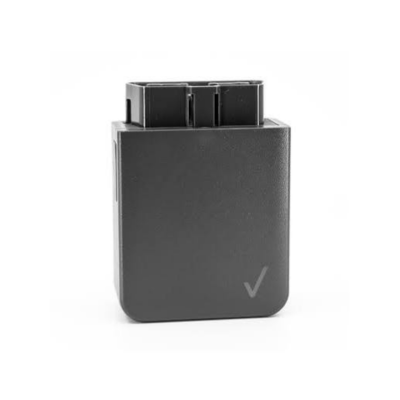
Verizon Connect – Best ELD for Hotshot Trucks
Verizon Connect fit the fast-moving pace of hotshot work by updating duty-status changes automatically with each movement or stop. Its 24/7 support responded quickly when we tested late-night routing changes on a tight deadline.
On long interstate hauls, GPS detail helped dispatch make accurate arrival predictions and reroute loads before drivers reached bottlenecks. DVIR syncing supported timely repairs, though the historical maintenance logs required multiple clicks to filter, which slowed us down when reviewing backlogged issues.
The logs transferred cleanly during inspections, and Verizon’s uptime gave us confidence on high-priority loads. The only drawback is that its broader telematics suite introduces more functions than a lean hotshot team may want to manage during fast turnarounds.
Pros and Cons
| Pros | Cons |
|---|---|
| ✅ Auto duty-status shifts fit hotshot workflows | ❌ Older maintenance logs require extra filtering |
| ✅ 24/7 support for time-critical loads | ❌ Broad system may exceed small-team needs |
| ✅ GPS detail strengthens ETA accuracy | |
| ✅ Smooth DVIR-to-maintenance syncing |
Key Features
- Network-backed data integrity
- Real-time reroute alerts for time-sensitive jobs
- DVIR-based repair notifications
- Speed-variance alerts for highway corridors
- Movement-triggered duty-state prompts
Key Factors to Consider Before Buying an ELD
Installation and Compatibility
Choose plug-and-play devices for faster setup and wider vehicle support. Verify compatibility with light, medium, and heavy-duty trucks.Pricing and Contract Terms
Check for hidden fees, hardware costs, and contract requirements. Select subscription plans that include updates and full support.Compliance and Reporting Features
Ensure automatic HOS recording, DVIR tools, and IFTA reporting. Devices must meet FMCSA technical standards and allow secure data transfer.Customer Support and Warranty
Pick providers offering 24/7 live assistance and long-term hardware coverage. Consistent support ensures minimal downtime and quicker issue resolution.Who Needs Which ELD Device?
Matrack ELD
Matrack ELD fits fleets that want a reliable, low-cost, and fully automated compliance tool. Its free hardware, quick installation, and lifetime warranty make it ideal for owner-operators and multi-vehicle fleets seeking maximum value.EROAD Ehubo
EROAD Ehubo suits fleets operating in dense city routes with frequent stops. Its rugged build, verified accuracy, and precise geofencing ensure dependable tracking during short-distance and high-frequency operations.GPSTrackit
GPSTrackit works best for small or rotating fleets needing fast deployment. Its plug-and-play design and multilingual interface make it practical for teams with varied routes and driver backgrounds.J. J. Keller ELD
- J. Keller ELD serves fleets running across U.S. and Canadian territories that need deep compliance tracking. Its IFTA automation, border-rule updates, and audit-ready reports support carriers managing complex regulations.
BigRoad Dashlink
BigRoad Dashlink fits owner-operators and small teams relying on personal devices. Its phone-based setup, easy log management, and built-in load board simplify daily compliance without extra hardware.Samsara ELD
Samsara ELD suits large carriers needing full operational visibility and integrated data systems. Its AI-driven insights, predictive alerts, and 200+ integrations make it a strong choice for fleets scaling nationwide.Verizon Connect
Verizon Connect supports hotshot operations and time-sensitive deliveries requiring continuous uptime. Its automatic duty-state changes, accurate GPS tracking, and 24/7 assistance keep fast-moving loads compliant and on schedule.Frequently Asked Questions
What is an FMCSA-Approved ELD Device?
An FMCSA-approved ELD is a certified electronic logging device listed on the FMCSA registry. It automatically records driving hours, engine data, and duty status to maintain Hours-of-Service compliance.
How Do I Check If an ELD Is FMCSA Approved?
You can confirm approval by visiting the official FMCSA ELD registry. Only listed devices are verified to meet federal technical and compliance standards.
Which ELD Is the best overall in 2026?
Most of these trackers, like Matrack ELD is the best overall, offer plug-and-play options for quick and simple installation.
What Features Are Most Important in an ELD?
The most critical features include automatic HOS recording, real-time GPS tracking, DVIR support, IFTA automation, and secure DOT inspection transfer options.
How Long Does ELD Installation Take?
Plug-and-play ELDs such as Matrack and GPSTrackit install in under five minutes using standard diagnostic ports, requiring no technical expertise.
Do Small Fleets and Owner-Operators Need ELDs?
Yes, all commercial drivers operating under FMCSA Hours-of-Service rules must use an approved ELD unless they meet exemption criteria like short-haul or driveaway-towaway operations.
Final Verdict
Matrack ELD stands as the best overall FMCSA-approved device in 2026 for reliability, cost efficiency, and compliance accuracy. Its free hardware, no-contract pricing, and lifetime warranty make it the most practical solution for fleets that need consistent uptime and automated reporting without extra costs.
Each ELD tested in this comparison delivers unique advantages suited to specific fleet types and operational demands. From EROAD’s rugged precision for box trucks to Samsara’s enterprise-level data integration, the range of options allows fleets to choose based on scale, route type, and compliance needs.
For most carriers, a dependable ELD must provide stable GPS data, fast log syncing, and responsive support to avoid costly violations. Matrack ELD meets all these benchmarks, making it the top choice for fleets prioritizing accuracy, simplicity, and long-term value.