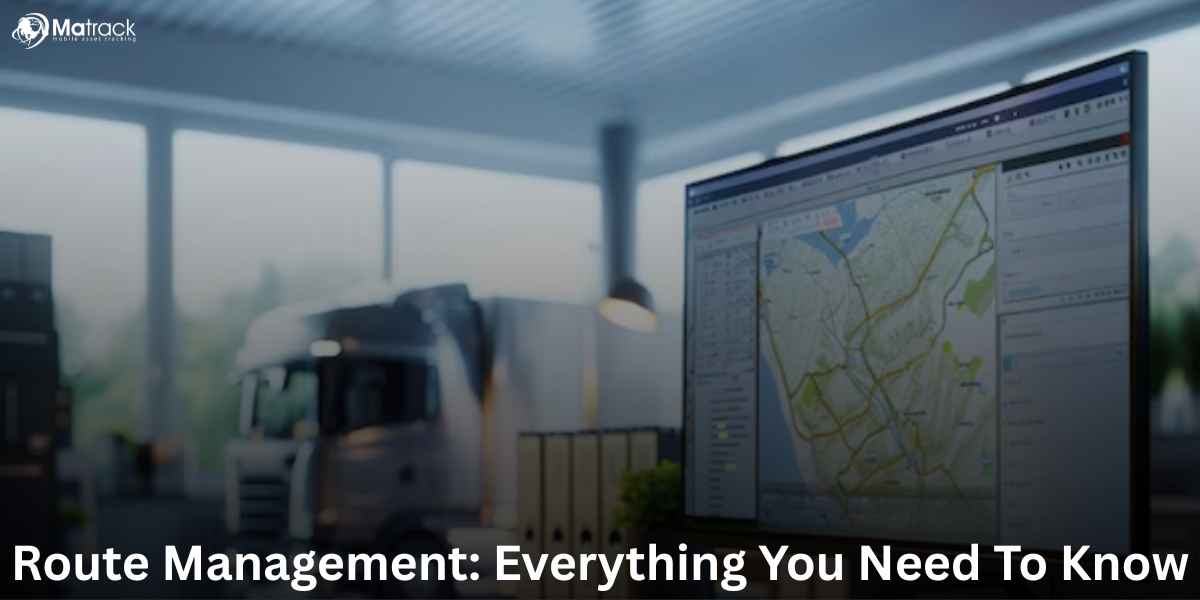


What Is Meant by Route Management?
Route management refers to the process of planning, organizing, monitoring, and improving routes for deliveries, service visits, or sales operations. It combines route planning, scheduling, dispatching, and optimization to manage movement across fleets and locations.
Routing involves more than selecting the shortest path between two points. It includes assigning drivers, balancing vehicle capacity, meeting delivery windows, and adapting to traffic patterns and operational constraints.
Businesses across logistics, field service, and last-mile delivery rely on route management to maintain efficiency and control. Manual planning methods often struggle with complexity, which is why route management software is widely used to handle scaling operations.
Why Is Route Management Important?
Route management is important because it affects delivery timelines, operating costs, and fleet productivity across daily operations. Poor route planning can result in delays, higher fuel use, and missed service commitments that weaken both revenue and customer trust.
Rising delivery volumes and complex routing requirements increase the need for precise planning across fleets. Structured route management supports consistency through accurate scheduling, coordinated driver assignment, and reliable service execution.
Pressure on logistics networks continues to grow as businesses handle larger freight volumes and faster delivery expectations. According to the U.S. Department of Transportation, efficient freight routing is expected to help manage a projected 40% increase in total freight tonnage by 2045, a trend that remains a top priority for infrastructure resilience in early 2026.
How Does Route Management Work?
Route management works through transforming order data into structured routes, assigning them to drivers, tracking execution in real time, then refining future plans using performance data.
Route Planning
Route planning begins with collecting inputs such as delivery locations, service requests, time windows, and vehicle capacity. Systems organize this data to create initial route paths that align with operational constraints.
Stop Sequencing
Stop sequencing arranges locations in the most logical order to reduce travel distance and avoid unnecessary movement. Algorithms calculate optimal sequences based on distance, timing, and route dependencies.
Driver Assignment
Driver assignment links planned routes with available drivers based on schedules, workload, and route complexity. Proper allocation ensures balanced distribution of tasks across the fleet.
GPS Tracking
GPS tracking monitors vehicle movement during route execution using live location data. Dispatch teams gain visibility into progress, delays, and completed stops as routes unfold.
Route Adjustments
Route adjustments modify active routes in response to traffic conditions, delays, or unexpected changes. Systems update routes dynamically to maintain delivery timelines and reduce disruptions.
Performance Reporting
Performance reporting analyzes completed routes using metrics such as travel time, fuel usage, and delivery accuracy. Insights from reports help improve future route planning and operational decisions.
What Are the Key Components of a Route Management System?
Core components within route management software help businesses organize routes, monitor vehicles, respond to operational changes, and measure performance across daily activities.
Route Optimization
Route optimization analyzes distance, traffic patterns, stop order, and delivery windows to build practical travel paths. This helps reduce unnecessary mileage, control fuel use, and support accurate route execution.
Real-Time Tracking
Real-time tracking provides live visibility into vehicle location during active trips. Dispatch teams use that visibility to monitor route progress, update customers, and respond faster to delays.
Dynamic Re-Routing
Dynamic re-routing updates travel paths as traffic conditions, stop priorities, or road issues shift during the day. Route changes made in real time help maintain delivery schedules across changing conditions.
Geofencing
Geofencing creates virtual boundaries around selected locations and sends alerts once vehicles enter or exit those areas. Security monitoring, compliance checks, and route control all benefit from that added visibility.
Analytics
Analytics turns route activity into measurable data tied to travel time, stop completion, fuel use, and route trends. Managers review those insights to spot recurring issues and evaluate overall route performance.
Reporting
Reporting presents route data in a structured format that supports planning reviews and operational decisions. Performance summaries help teams compare results, identify gaps, and refine future route strategies
What Are the Types of Route Management?
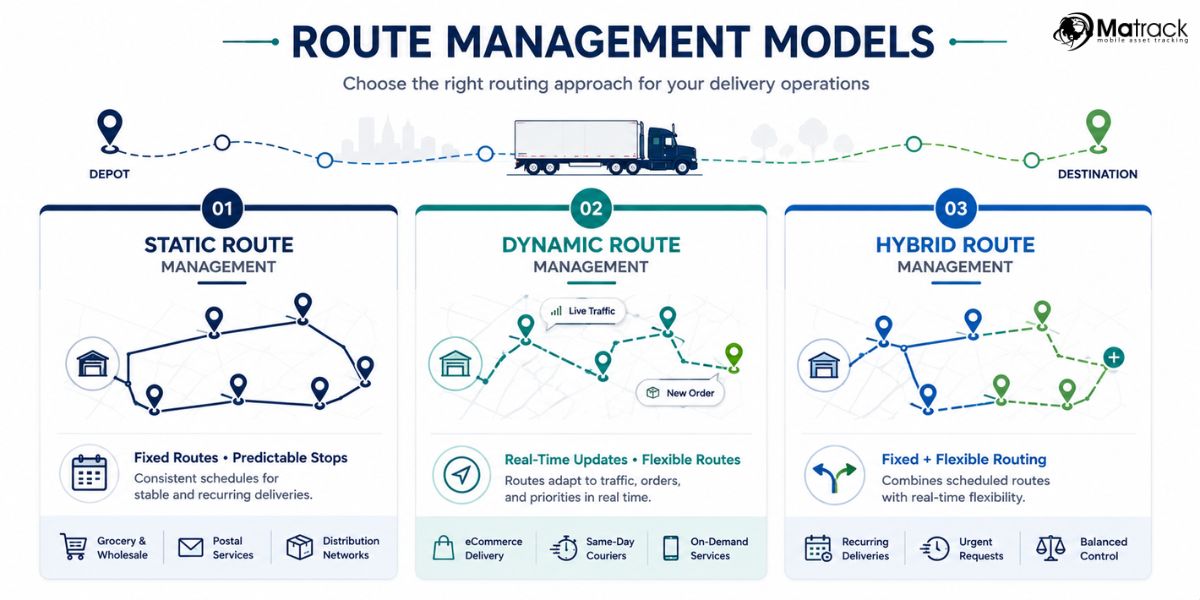
Different route management types support different operational needs based on delivery frequency, route stability, and day-to-day service variation.
1. Static Route Management
Static route management uses fixed routes that remain unchanged over long periods. Businesses with stable demand and predictable delivery schedules often adopt this model to maintain routine operations.
Grocery wholesalers, postal services, and recurring distribution networks often rely on static route structures. Fixed stop patterns make scheduling simpler and support regular service coverage.
2. Dynamic Route Management
Dynamic route management builds routes based on current orders, traffic conditions, and delivery priorities. Operations with changing demand patterns often rely on this model to manage route variation across the day.
eCommerce delivery providers, same-day couriers, and on-demand service businesses often use dynamic route structures. Real-time route updates support faster responses to shifting operational needs.
3. Hybrid Route Management
Hybrid route management combines fixed route structures with flexible route adjustments. Businesses using recurring deliveries alongside urgent or variable requests often benefit from this model.
Regular service routes can remain scheduled while additional stops are added based on real-time demand. Balanced route control supports both consistency and operational flexibility.
What Are the Benefits of Route Management?
Businesses use route management to improve cost control, delivery performance, and daily operational coordination.
- Cost Savings: Lowers fuel use, reduces overtime, and limits unnecessary mileage across delivery or service operations. It also helps reduce vehicle wear and ongoing maintenance expenses.
- Driver Productivity: Supports balanced workloads through logical stop sequences and reduced travel waste. Drivers can complete more tasks within scheduled hours without excessive overlap.
- Timely Deliveries: Improves stop accuracy and supports reliable service across scheduled delivery windows. Organized routing also reduces delays caused by weak sequencing or missed priorities.
- Customer Satisfaction: Strengthens the customer experience through accurate ETAs and smoother service execution. Reliable route coordination helps maintain trust through predictable delivery outcomes.
- Fleet Utilization: Helps managers use vehicles more effectively through proper alignment of route volume with available capacity. Proper allocation prevents underused assets in one area and overloaded schedules in another.
- Sustainability Impact: Cuts excess travel distance, which lowers emissions across daily operations. Reduced fuel use also supports long-term environmental goals tied to transportation performance.
What Challenges Does Manual Route Planning Create?
Manual route planning creates problems in businesses that handle multiple stops, tight schedules, and changing route conditions without automated support.
- Time Delays: Manual route setup takes longer as teams sort stops, review maps, and adjust schedules on their own. Extra planning time can slow dispatch operations and reduce daily route capacity.
- Limited Visibility: Manual methods do not provide live tracking or instant route updates during active trips. Teams often struggle to respond quickly to delays, missed stops, or traffic disruptions.
- Higher Error Risk: Human planning increases the chance of incorrect stop order, missed delivery windows, or uneven driver workloads. Small mistakes in route setup can affect service quality across the day.
- Scaling Issues: Manual systems become harder to manage as stop volume, fleet size, and delivery complexity increase. Growing operations need structured tools that can handle larger route demands without adding planning pressure.
- Weak Adaptability: Route changes become difficult once vehicles are already on the road. Unexpected orders, roadblocks, or schedule shifts require faster decisions than manual coordination usually supports.
- Data Gaps: Manual planning does not capture route performance in a structured format for reporting or analysis. Without organized data, businesses face more difficulty improving future route decisions.
What Are Route Optimization Strategies?
Route optimization strategies focus on improving route structure, reducing travel distance, and maintaining stable delivery performance across operations.
Multi-Stop Optimization
Multi-stop optimization arranges delivery or service locations in the most logical order. Proper sequencing reduces unnecessary travel and supports smoother route completion across multiple stops.
Real-Time Traffic Routing
Real-time traffic routing adjusts paths based on live road conditions, congestion, or delays. Updated routing decisions help maintain schedules and reduce time lost in high-traffic areas.
Load Balancing
Load balancing distributes tasks evenly across drivers and vehicles. Balanced allocation prevents route overload in one area and supports better use of available fleet capacity.
Time Window Planning
Time window planning aligns routes with specific delivery or service commitments. Structured timing ensures stops are completed within assigned schedules without disrupting overall flow.
Territory-Based Routing
Territory-based routing divides service areas into defined geographic zones. Clear zone allocation reduces route overlap and improves control over regional operations.
Vehicle Capacity Planning
Vehicle capacity planning matches delivery volume with available vehicle space and load limits. Proper allocation prevents overloading and ensures smoother route execution.
Continuous Route Improvement
Continuous route improvement uses historical route data to refine future planning decisions. Performance insights help adjust route structure, reduce delays, and support long-term operational consistency.
How Matrack GPS Fleet Tracking Helps You in Route Management?
Matrack GPS Fleet Tracking supports route management through real-time visibility, route control, and structured fleet monitoring. Live location tracking and instant alerts help teams stay connected with vehicles throughout the entire route cycle.
Route planning improves through access to GPS data, dispatch tools, and accurate ETAs that support better scheduling decisions. Built-in route optimization and job assignment features allow dispatchers to organize stops, reduce delays, and maintain route flow.
Operational control becomes stronger through analytics, reporting, and AI-driven fuel insights that highlight cost-saving opportunities. Performance data, geofencing alerts, and driver activity tracking support continuous route improvement across daily operations.
Frequently Asked Questions
How Much Does Route Management Software Cost?
Route management software typically costs between $10 to $50 per vehicle per month, depending on features such as GPS tracking, route optimization, and analytics. Enterprise-level platforms with advanced capabilities like AI insights, integrations, and compliance tools can increase overall pricing based on fleet size and usage.
Which Industries Use Route Management Systems?
Route management systems are widely used in logistics, eCommerce delivery, field service, utilities, transportation, and food distribution. Any industry that depends on scheduled stops, mobile teams, or multi-location operations benefits from structured route planning.
What to Look for in Route Management Software?
Route optimization accuracy, real-time tracking, reporting capabilities, and ease of use are key features to evaluate. Integration with dispatch systems, mobile access, and scalability also play an important role in long-term usability.
How Does Route Management Reduce Fuel Costs?
Route management reduces fuel costs by minimizing unnecessary travel distance and improving stop sequencing across routes. Better planning also reduces idle time and avoids inefficient driving patterns that increase fuel consumption.
What Is Geofencing in Route Management?
Geofencing creates virtual boundaries around specific locations and triggers alerts when vehicles enter or exit those areas. This feature helps monitor route compliance, track stop activity, and improve overall operational control.
How Does Real-Time Tracking Help Route Management?
Real-time tracking provides live visibility into vehicle location and route progress throughout the day. Dispatch teams can respond quickly to delays, adjust routes, and maintain accurate delivery updates.
What Metrics Are Used in Route Management?
Key metrics include route completion time, fuel usage, on-time delivery rate, idle time, and stop accuracy. These indicators help measure performance and identify areas for route improvement.
Can Route Management Improve Delivery Time?
Route management improves delivery time through optimized routing, better scheduling, and reduced travel delays. Structured route execution helps ensure deliveries are completed within planned time windows.