

What Is Cold Chain Monitoring?
Cold chain monitoring is the practice of supervising temperature-sensitive products across controlled storage and transportation environments. Its purpose is to confirm that goods remain within approved temperature conditions from the point of origin to the final destination.
Products such as vaccines, pharmaceuticals, frozen foods, dairy, seafood, and biologics rely on cold chain monitoring to preserve safety, quality, and effectiveness. Any break in required conditions can make these goods unsafe, unusable, or non-compliant.
In supply chain management, cold chain monitoring acts as a quality assurance layer for refrigerated logistics. Businesses utilize it to safeguard product integrity, minimize loss, and demonstrate that sensitive goods received appropriate handling.
How Does Cold Chain Monitoring Work?
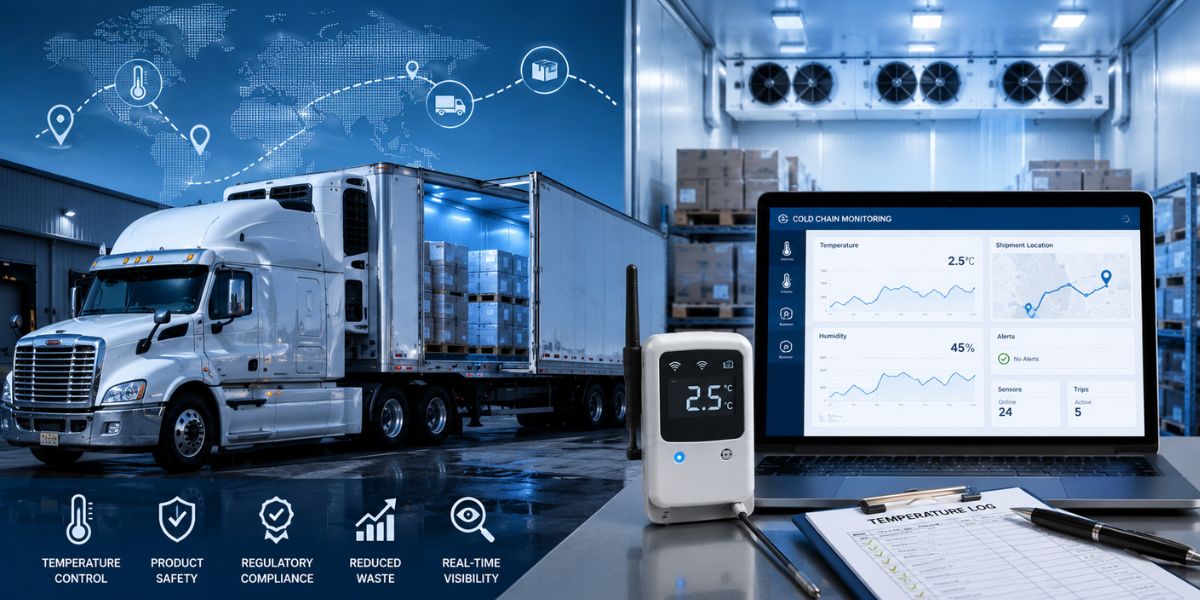
Cold chain monitoring works by connecting temperature-sensitive goods with sensors, communication networks, dashboards, alerts, and compliance records.
- Product condition: Goods such as vaccines, biologics, seafood, dairy, and frozen food must stay within approved temperature and humidity ranges during storage and transit.
- Sensor layer: IoT sensors and data loggers measure temperature, humidity, door activity, and refrigeration status inside containers, cold rooms, and refrigerated vehicles.
- Data transmission: Cellular, Wi-Fi, Bluetooth, or GPS-enabled devices send condition data from the shipment environment to a cloud monitoring platform.
- Live visibility: Dashboards show current temperature, location, route status, and equipment performance so teams can compare real conditions with required thresholds.
- Exception alerts: Notifications are triggered when temperature excursions, open doors, delays, or refrigeration failures create risk for the shipment.
- Compliance record: Reports store temperature history, alert logs, and handling records to support audits, delivery acceptance, and product integrity verification.
Why Is Cold Chain Monitoring Important?
Temperature-sensitive products can lose safety, quality, and effectiveness when exposed to unstable conditions, which makes cold chain monitoring essential. Many vaccines lose potency outside the 2°C to 8°C range, and nearly 50% of vaccines are wasted globally each year due to improper temperature management.
Product loss is not limited to healthcare, since food supply chains face similar risks during storage, transportation, and delivery. Research from RTS in early 2026 estimates the total value of food wasted in the U.S. at approximately $218 billion annually, equal to roughly 130 billion meals.
Consistent monitoring helps businesses detect temperature excursions before products become unsafe, spoiled, or non-compliant. For pharmaceuticals, food, biologics, and refrigerated goods, this visibility protects product integrity, reduces waste, and supports safer supply chain decisions.
What Are the Main Components of a Cold Chain Monitoring System?
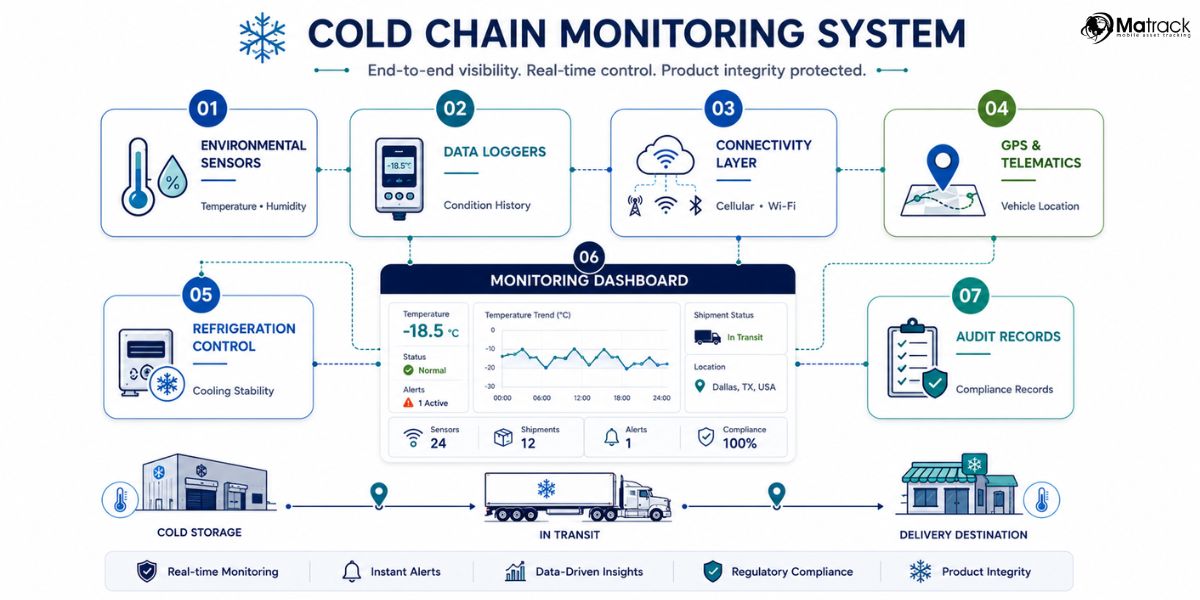
Hardware, connectivity, software, and documentation tools work together to maintain controlled conditions across storage and transportation.
Environmental Sensors
Environmental sensors track temperature, humidity, light exposure, and shock inside controlled spaces. Risk becomes easier to detect when condition changes are measured close to the product.
Data Loggers
Data loggers create a continuous history of environmental changes during storage or transit. Shipment reviews, delivery checks, and audits rely on these records to verify product handling.
Connectivity Layer
Connectivity tools transfer readings to digital platforms through cellular networks, Wi-Fi, Bluetooth, or similar communication methods. Reliable transmission reduces manual checks and keeps condition data accessible.
GPS Tracking & Telematics Devices
GPS and telematics devices track the location, route, and movement of refrigerated vehicles and containers. Location data helps correlate temperature deviations with delays, route changes, or unauthorized stops.
Refrigeration Control
Refrigeration control systems maintain stable internal conditions inside cold rooms, trailers, and containers. Equipment status data can reveal cooling failures before sensitive goods are affected.
Monitoring Dashboard
Monitoring dashboards organize live readings, shipment status, performance, and exception alerts in one interface. Managers can review risks quickly and coordinate corrective action from a central view.
Audit Records
Audit records document condition history, alerts, corrective actions, and delivery status. Internal quality checks, customer verification, and regulatory reviews depend on this proof.
Which Industries Use Cold Chain Monitoring?
Temperature-controlled environments are essential across industries where product stability depends on consistent storage and transport conditions.
Pharmaceuticals
Pharmaceutical operations depend on controlled temperature conditions to maintain the stability of medicines, vaccines, and biologics. Exposure to unsuitable environments can reduce effectiveness and create compliance risks.
Food Supply Chains
Food supply chains rely on temperature control to preserve freshness and prevent spoilage across distribution stages. Perishable goods such as dairy, meat, seafood, and frozen products require stable conditions from storage to delivery.
Healthcare Systems
Healthcare facilities manage sensitive materials such as blood samples, diagnostic reagents, and lab specimens under controlled environments. Condition stability directly affects testing accuracy and patient safety.
Chemical Products
Certain chemicals, coatings, and specialty materials require regulated storage conditions to maintain performance. Environmental fluctuations can lead to degradation, instability, and safety concerns.
Agriculture Products
Fresh produce, fruits, vegetables, and flowers depend on controlled environments to maintain freshness and shelf life. Improper conditions during transport can lead to rapid deterioration and increased waste.
Cosmetic Products
Cosmetic formulations and personal care items require stable temperature conditions to preserve composition integrity. Heat or humidity exposure can alter texture, effectiveness, and shelf stability.
What Happens When Cold Chain Monitoring Fails?
Products can become unsafe, ineffective, rejected, or non-compliant when cold chain monitoring fails during storage or transportation.
- Product spoilage: Perishable goods can lose freshness when temperature conditions are not controlled. Food products may become unsafe before visible damage appears.
- Reduced effectiveness: Temperature-sensitive medicines, vaccines, and biologics can lose potency after exposure to unstable conditions. Product appearance may remain normal, but therapeutic value can decline.
- Shipment rejection: Buyers may reject deliveries when temperature records show unsafe exposure, missing logs, or uncontrolled handling. Rejection creates delays, replacement costs, and wasted transport effort.
- Compliance violations: Regulated industries need proof that sensitive goods were stored and transported under approved conditions. Incomplete records can create audit failures, penalties, or recall risks.
- Inventory loss: Damaged goods often cannot be recovered once temperature limits are crossed. Businesses may lose product value, freight expenses, and customer orders.
- Trust damage: Repeated failures can weaken relationships with customers, distributors, and regulatory partners. Reliable monitoring helps prove that product quality was protected from origin to delivery.
How Does Cold Chain Monitoring Support Compliance?
Compliance depends on proof that temperature-sensitive goods were stored, handled, and transported under approved conditions. Cold chain monitoring creates continuous records of temperature, humidity, location, and handling events.
Quality teams use these records to verify whether products stayed within required limits throughout the supply chain. Deviation history, corrective actions, and delivery condition reports also make audits easier to manage.
Regulated industries such as pharmaceuticals, healthcare, and food logistics rely on this documentation to reduce recall risks and compliance failures. Shipment data becomes evidence that product integrity was protected from origin to destination.
What Should You Look for in a Cold Chain Monitoring Solution?
Selecting the right solution means checking whether it can protect product condition, support quick decisions, and create usable records across storage and transportation.
Tracking Accuracy
Accurate tracking starts with sensors that measure conditions close to the product, not just the vehicle or storage space. Precise temperature, humidity, and condition readings help teams identify risk before quality, safety, or shelf life is affected.
Real-Time Visibility
Live visibility shows what is happening during storage, transit, loading, and delivery. Managers can compare current conditions with approved limits and respond before a delay, equipment issue, or handling problem becomes a product loss.
Custom Alerts
Custom alerts matter because every product has different risk thresholds. Notifications for temperature changes, door openings, long stops, or refrigeration issues help teams take corrective action at the right time.
Reporting Capabilities
Reporting tools should turn condition data into clear shipment history, deviation logs, and delivery proof. Quality teams can use these records for audits, customer claims, compliance checks, and internal reviews.
System Integration
Integration connects monitoring data with fleet, warehouse, and logistics systems. Linking product condition with route status, asset location, and delivery activity gives teams a complete view of cold chain performance.
How Can Fleet Tracking Improve Cold Chain Monitoring?
Fleet tracking improves cold chain monitoring by linking shipment condition with vehicle location, route progress, and delivery activity. This helps managers see whether temperature risks are connected to delays, route changes, long stops, or missed delivery windows.
Real-time GPS visibility, geofencing, accurate ETAs, and instant alerts support faster decisions during refrigerated transport. A system like Matrack GPS Fleet Tracking can help teams monitor vehicle movement, optimize routes, and respond quickly when a shipment moves off-route or stays idle too long.
Combining fleet data with cold chain records gives businesses a clearer view of what happened during transit. This improves delivery control, reduces preventable product loss, and supports stronger accountability across temperature-sensitive logistics.
Frequently Asked Questions
What is a temperature excursion in cold chain monitoring?
A temperature excursion occurs when product conditions move outside the defined safe range during storage or transit. Even short exposure can affect product quality depending on sensitivity and duration.
How often should cold chain data be monitored?
Monitoring frequency depends on product sensitivity and risk level, but real-time or near real-time tracking is preferred. Continuous monitoring reduces the chance of unnoticed temperature deviations.
Can cold chain monitoring work without internet connectivity?
Yes, many systems use data loggers to store readings offline and sync once connectivity is restored. This ensures condition data is not lost during network interruptions.
What is the difference between active and passive monitoring?
Active monitoring uses real-time sensors that transmit data continuously, while passive monitoring relies on stored data reviewed after delivery. Active systems provide faster response to risks.
How does packaging affect cold chain monitoring?
Insulated packaging helps maintain internal temperature but does not replace monitoring systems. Sensors are still needed to confirm whether conditions stayed within safe limits.
What factors can disrupt cold chain conditions?
Delays, equipment failure, door openings, poor handling, and extreme external temperatures can affect product conditions. Monitoring systems help detect these risks before they cause damage.