

What Does Vehicle Upfitting Mean?
Vehicle upfitting means modifying a standard vehicle by adding equipment, storage systems, or technology to support a specific job function. Commercial vans and trucks are commonly upfitted to meet job-specific requirements across industries.
Standard vehicles come with basic factory configurations that may not support real-world work requirements. Upfitting adjusts the vehicle layout so tools, cargo, and systems align with daily tasks and workflows.
For example, a service van may include shelving, partitions, and tool storage, while a delivery vehicle may use cargo systems and GPS tracking. These modifications turn vehicles into efficient mobile workspaces designed for productivity and safety.
How Does Vehicle Upfitting Work?
Vehicle upfitting works by converting job requirements into a practical layout that supports storage, safety, access, and field performance.
- Workflow Mapping: Fleet managers define daily routes, driver tasks, cargo movement, tool access, and jobsite conditions. Mapping prevents random add-ons and keeps every modification tied to a real business purpose.
- Capacity Planning: Payload limits, storage zones, interior space, and safety needs are reviewed before equipment is selected. Planning helps the setup fit the model’s structure without reducing usability.
- System Installation: Shelving, racks, partitions, lighting, toolboxes, communication devices, or GPS units are installed according to the approved layout. Secure placement protects cargo, improves access, and supports jobsite readiness.
- Safety Validation: Final checks confirm stability, visibility, weight balance, electrical function, and driver comfort. Approved units enter service as purpose-built mobile workspaces.
What Are the Main Types of Vehicle Upfitting?
Different modification categories support cargo needs, worker safety, field work, fleet visibility, and specific vehicle functions through customized vehicle upfitting.
Interior Systems
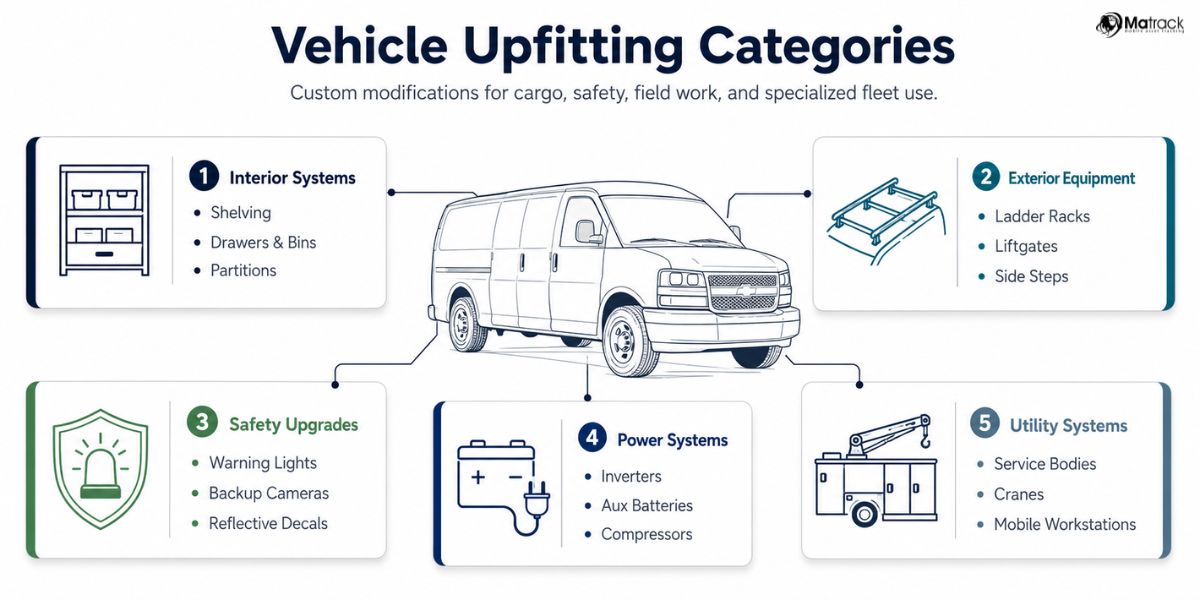
Interior systems include shelving, drawers, bins, partitions, cargo barriers, and tie-down points. Commercial fleets use interior layouts to organize tools, secure parts, and reduce cargo movement during transit.
Exterior Equipment
Exterior equipment includes ladder racks, roof racks, side steps, grab handles, liftgates, and utility bodies. Field teams rely on exterior additions to load equipment safely and access tools without disrupting interior space.
Safety Upgrades
Safety upgrades include warning lights, backup cameras, sensors, reflective decals, protective partitions, and emergency equipment. Safety-focused modifications help protect drivers, cargo, pedestrians, and nearby workers during daily use.
Power Systems
Power systems include generators, inverters, auxiliary batteries, air compressors, refrigeration units, and power outlets. Service vehicles use power equipment to run tools, support mobile repairs, or protect temperature-sensitive cargo.
Utility Systems
Utility systems include service bodies, liftgates, cranes, compressors, cooling units, and mobile workstations. Utility-focused modifications help vehicles support specialized jobs in construction, HVAC, delivery, and field repair.
Telematics Systems
Telematics systems include GPS trackers, fleet monitoring devices, two-way radios, mobile terminals, dash cameras, and antennas. Fleet operators use connected technology to improve route visibility, dispatcher communication, and driver performance monitoring.
Why Is Vehicle Upfitting Important for Fleets?
Proper fleet configuration helps businesses improve daily work through safer storage, faster access, and more consistent vehicle use.
Operational Efficiency
Organized layouts reduce time spent searching for tools, parts, and job materials. Drivers can complete service calls faster because equipment stays accessible during daily routes.
Fleet Standardization
Standardized configurations give every unit a similar setup across the fleet. Drivers can switch between vehicles with less confusion, fewer delays, and smoother task execution.
Driver Safety
Secured storage, partitions, lighting, and visibility upgrades reduce risks during travel or jobsite activity. Safer layouts also limit loose cargo movement inside the vehicle.
Asset Protection
Proper storage protects tools, equipment, and inventory from damage during transit. Secure compartments also reduce loss, theft, and unnecessary replacement costs.
Job Readiness
Purpose-built units help workers arrive prepared with the right equipment in the right place. Reliable job readiness improves response time, customer service, and daily productivity.
How Much Does Vehicle Upfitting Cost?
Vehicle upfitting usually costs $1,500 to $5,000 for basic commercial van or truck setups. Simple additions such as shelving, partitions, ladder racks, drawers, and cargo barriers usually fall in this range when no heavy electrical or custom fabrication work is required.
Mid-level upfitting often costs $5,000 to $15,000 when businesses add lighting, tool storage, safety equipment, GPS tracking, telematics, power outlets, or trade-specific layouts. Price increases when the setup needs professional wiring, reinforced mounting, custom storage, or multiple equipment categories in the same vehicle.
Advanced vehicle upfitting can cost $15,000 to $50,000 or more for service bodies, liftgates, refrigeration units, cranes, compressors, generators, or EV-specific configurations. Final cost depends on vehicle size, equipment quality, labor, payload planning, installation complexity, and long-term fleet requirements.
What Is the Difference Between Upfitting, Outfitting, and Customization?
Upfitting, outfitting, and customization differ mainly by level of modification, business purpose, installation depth, and impact on vehicle performance.
| Difference Area | Upfitting | Outfitting | Customization |
| Primary Intent | Focuses on turning a vehicle into a job-specific work unit. | Focuses on adding useful gear or accessories for general readiness. | Focuses on personal preference, comfort, branding, or appearance. |
| Modification Depth | Usually involves structural, storage, utility, electrical, or technology-based changes. | Usually involves lighter additions that may not change the vehicle’s core layout. | May involve visual, comfort, or identity-based changes rather than work-function changes. |
| Business Impact | Directly affects productivity, safety, workflow, payload use, and field performance. | Supports convenience and preparedness but may not significantly impact daily vehicle use. | Improves recognition, user experience, or brand presentation rather than productivity. |
| Installation Requirement | Often needs professional planning, mounting, wiring, or compliance review. | May be installed with minimal technical work, depending on the accessory. | Can range from simple decals to more detailed interior or exterior changes. |
| Fleet Relevance | Most important for commercial fleets because it changes how vehicles perform on the job. | Useful for supporting drivers with tools, kits, or basic accessories. | Helpful for company branding or driver comfort, but usually secondary to work function. |
How Does Vehicle Upfitting Impact Electric Vehicles?
Electric vehicle upfitting needs careful planning because added systems can influence range, payload, charging frequency, battery access, and daily route performance.
- Range Efficiency: Added storage, racks, service bodies, or utility systems increase energy demand during operation. Lightweight materials and balanced layouts help preserve mileage across daily routes.
- Payload Capacity: EV payload ratings must account for passengers, tools, cargo, and installed components. Staying within limits protects braking, handling, tire life, and driver safety.
- Battery Access: Installation should avoid blocking battery packs, charging ports, wiring paths, and service panels. Open access supports easier maintenance and reduces repair complexity.
- Power Usage: Refrigeration units, compressors, lighting, inverters, and mobile workstations may draw energy from onboard systems. EV-compatible components help control unnecessary power drain during field work.
- Charging Strategy: Heavier builds or power-intensive applications may require shorter routes, depot charging, or scheduled charging stops. Upfit planning should match route distance, workload, and available charging infrastructure.
What Should You Consider Before Upfitting a Vehicle?
Accurate planning helps businesses avoid poor layouts, unnecessary costs, payload issues, and equipment choices that fail during daily use.
- Job Purpose: Start by defining the exact role of the vehicle, such as delivery, field service, utility work, construction, or emergency response. Clear use-case planning keeps every modification connected to real business needs.
- Vehicle Fit: Review the model, cargo space, roof height, wheelbase, payload rating, and mounting points before selecting any system. Correct fitment prevents layout problems and protects long-term usability.
- Weight Balance: Installed components, tools, cargo, and passengers must stay within safe load limits. Balanced placement supports braking, handling, tire life, and driver control.
- Storage Access: Tools, parts, and supplies should be placed where workers can reach them without wasted movement. Efficient access improves service speed and reduces strain during repetitive tasks.
- Safety Needs: Partitions, tie-downs, lighting, cameras, and secure compartments should support driver protection and cargo control. Safety-focused planning also reduces damage, theft risk, and jobsite hazards.
- Technology Use: GPS tracking, telematics, dash cameras, radios, and mobile terminals should be considered early in the layout. Early planning helps wiring, device placement, and fleet monitoring work smoothly with the physical upfit.
- Future Growth: Fleet needs may change as routes, team size, service areas, or cargo requirements expand. Flexible layouts make future upgrades easier without rebuilding the entire vehicle setup.
What Are the Steps in the Vehicle Upfitting Process?
A planned upfitting process moves from requirement review to inspection so the final build supports safe use, organized storage, and field-ready performance.
1. Requirement Review
Requirement review defines the vehicle’s role, driver tasks, cargo type, tool needs, and jobsite conditions. Clear requirements prevent unnecessary additions and keep the build focused on real business use.
2. Layout Planning
Layout planning maps storage zones, access points, weight placement, and system locations before installation begins. Careful planning keeps the interior organized without reducing cargo space or driver comfort.
3. Equipment Selection
Equipment selection covers shelves, racks, partitions, lighting, power systems, safety devices, and telematics tools. Selected components should match vehicle size, payload capacity, daily workload, and long-term fleet needs.
4. Installation Work
Installation work includes mounting, wiring, securing, and fitting the approved systems into the vehicle structure. Professional installation protects balance, visibility, durability, and worker safety.
5. Quality Check
Quality check reviews equipment stability, electrical function, storage access, weight distribution, and safety features before deployment. Final inspection confirms the vehicle is ready for daily fleet use.
OEM vs. Aftermarket Upfitting: What’s the Difference?
OEM and aftermarket upfitting differ by installer type, build stage, factory alignment, warranty protection, and customization flexibility.
| OEM Upfitting | Aftermarket Upfitting |
| Completed through the vehicle manufacturer or an approved factory network. | Completed by third-party specialists after vehicle purchase or delivery. |
| Usually arranged before delivery, so the vehicle arrives ready for work use. | Usually added after purchase, lease, or fleet assignment. |
| Follows manufacturer specifications, approved parts, and factory installation guidelines. | Depends on installer skill, selected components, and compatibility with the vehicle model. |
| Often limited to approved packages, standard layouts, or manufacturer-supported options. | Allows broader flexibility for trade-specific layouts, custom storage, electronics, and specialty builds. |
| Usually offers stronger warranty protection under manufacturer-approved programs. | May affect warranty coverage if installation interferes with factory systems or guidelines. |
| Suits fleets needing consistency, predictable quality, and simplified ordering. | Suits businesses needing specialized layouts, unique equipment, or modifications outside manufacturer packages. |
How Does Matrack Telematics Improve Vehicle Upfitting?
Matrack telematics adds live visibility to upfitted vehicles equipped with racks, storage, power systems, safety tools, or service equipment. GPS tracking, geofencing, driver scoring, trip history, and maintenance reminders show how every modified unit performs in daily fleet use.
Upfitted vehicles often carry expensive tools, parts, equipment, and job materials, so location tracking and geofence alerts improve asset security. Live alerts also show zone movement, speeding, idling, and upcoming maintenance needs before minor issues turn into costly downtime.
Matrack connects physical vehicle modifications with digital fleet control through mobile apps, reports, dashcam telematics, fuel monitoring, and ELD/DOT compliance tools. These insights improve routing, protect drivers, reduce waste, and guide smarter future upfit decisions.