

LTL and TL freight shipping differ mainly in how trailer space is used. LTL, or less-than-truckload shipping, combines freight from multiple shippers in one trailer, while TL, or truckload shipping, gives the full trailer to one shipment.
That difference affects cost, transit time, handling, damage risk, and scheduling control. LTL is usually better for smaller freight volumes, while TL is often the better choice for large, urgent, fragile, or high-value shipments.
Learning these differences helps businesses select the right shipping method for each load. Choosing correctly can reduce transportation costs, improve delivery timelines, and protect freight quality across the supply chain.
What Is Less Than Truckload (LTL) Shipping?
Less-than-truckload shipping is a freight method used when cargo does not fill an entire trailer. It is commonly used for palletized freight, boxed goods, and commercial shipments that are too large for parcel delivery.
Here, multiple shipments from different businesses are consolidated into one truck. Shippers pay only for the trailer space their freight uses, making LTL a practical option for smaller freight volumes.
Because freight is shared, LTL shipments often pass through terminals before final delivery. That network keeps costs lower, but it can add transit time and increase handling.
How Does LTL Shipping Work?
LTL shipping uses a consolidation model, where smaller shipments are grouped together and routed through a shared carrier network.
Pickup and Entry
The carrier collects freight from the shipper’s location and moves it to a nearby terminal. Before pickup, the shipment should be palletized, labeled, measured, and matched to accurate shipping documents.
Terminal Sorting
At the terminal, freight from multiple customers is unloaded and sorted by destination, route, and service level. Dock teams scan, stage, and prepare shipments for the next leg of transportation.
Consolidated Movement
Shipments heading in similar directions are loaded into the same trailer. This shared movement helps carriers use trailer space efficiently and allows shippers to avoid paying for unused capacity.
Final Delivery
Freight may transfer through one or more terminals before reaching the destination area. Once it arrives at the final terminal, a local delivery truck completes the shipment.
When Is LTL Shipping Used?
LTL shipping is used when freight is too large for parcel service but too small to fill a full trailer.
- Smaller loads: Shipments with a few pallets or moderate weight often fit LTL better than TL.
- Recurring freight: Retail replenishment, B2B deliveries, and regional distribution often use LTL for regular smaller shipments.
- Flexible timing: LTL works best when delivery does not require the fastest direct route.
- Cost control: Shippers avoid paying for empty trailer space when freight volume is limited.
- Standard cargo: Durable, well-packaged freight that can handle terminal transfers is a strong fit for LTL.
What Are the Main Benefits of LTL Shipping?
For smaller freight loads, LTL shipping helps businesses control transportation costs without paying for unused trailer space.
- Lower cost: Shippers pay only for the trailer space their freight uses.
- Flexible capacity: Businesses can ship smaller loads as needed instead of waiting to fill a trailer.
- Network access: LTL carriers connect freight through regional and national terminal networks.
- Better inventory flow: Smaller, more frequent shipments can reduce storage pressure.
- Recurring support: Regular palletized deliveries, retail replenishment, and B2B freight fit well into LTL networks.
- Less wasted space: Shared capacity helps avoid paying for unused truck space.
What Is Truckload (TL) Freight Shipping?
Truckload freight shipping, also called TL or FTL shipping, gives one shipper a full trailer. The shipment does not share space with freight from other businesses.
Most TL freight moves directly from pickup to delivery. Fewer transfers can shorten transit time, reduce handling, and give shippers more control over the shipment.
Large shipments often use truckload service because they fill most or all available trailer space. Fragile, high-value, urgent, or sensitive cargo may also move by TL even when a trailer is not completely full.
How Does TL Shipping Work?
Truckload shipping works by assigning one truck and trailer to a single shipper’s freight, usually with direct movement from pickup to delivery.
Truck Assignment
A carrier reserves dedicated truck capacity for one shipment instead of combining freight from multiple shippers. Full trailer use gives the shipper more control, whether the space is completely filled or reserved for speed, safety, or handling needs.
Freight Pickup
Drivers collect shipment from a warehouse, facility, or distribution center. Once loaded into the trailer, goods are secured based on weight, size, and handling requirements.
Direct Transport
After pickup, shipment usually moves straight toward its delivery location with few or no terminal transfers. Since it is not sorted through a shared LTL network, transit is often faster and more predictable.
Final Delivery
Delivery is completed at the consignee’s location according to the planned window. Fewer handling points reduce the risk of damage, loss, delay, or misrouting compared with shared freight movement.
When Is TL Shipping Used?
TL shipping is used when freight needs reserved capacity, faster transit, or fewer handling points.
- Large loads: Cargo that fills most or all available space usually fits TL because a reserved truck becomes more practical.
- Urgent freight: Time-sensitive shipments often use TL because direct routing reduces terminal delays and extra transfers.
- Fragile cargo: Items that can be damaged by repeated handling are better protected when they remain on the same truck.
- High-value freight: Expensive or sensitive shipments may need dedicated space to reduce exposure to loss, damage, or misrouting.
- Bulk movement: Manufacturing loads, retail distribution, industrial freight, and large inventory transfers often move by truckload.
- Tighter scheduling: Businesses use TL when pickup and delivery windows must be planned with more control.
What Are the Main Benefits of TL Shipping?
Here businesses benefit with faster and more controlled freight movement for large, urgent, or sensitive shipments.
- Faster Transit: Freight usually moves directly from pickup to delivery with fewer stops.
- Less Handling: Shipments stay on the same trailer, reducing loading and unloading.
- Lower Risk: Fewer touchpoints reduce the chance of damage, loss, or misrouting.
- Schedule Control: Businesses get better control over pickup and delivery windows.
- Bulk Efficiency: Large shipments can be more cost-effective on a per-unit basis.
What is the Main Difference Between LTL and TL Freight Shipping
The main difference between LTL and TL freight shipping is whether trailer space is shared or dedicated.
| Factor | LTL Freight Shipping | TL Freight Shipping |
| Trailer Use | Shared with freight from multiple shippers | Dedicated to one shipper |
| Best For | Small or mid-sized shipments | Large or full-trailer shipments |
| Cost Structure | Pay for the space used | Pay for the full truck |
| Transit Time | Usually slower due to terminal transfers | Usually faster with direct routing |
| Handling | More handling points | Fewer handling points |
| Damage Risk | Higher if freight is poorly packaged | Lower due to less handling |
| Flexibility | Good for smaller recurring shipments | Better for urgent or high-volume freight |
LTL works well when the shipment does not justify a full trailer. TL makes more sense when freight volume, speed, value, or handling requirements justify dedicated capacity.
What Should Businesses Consider Before Choosing a Freight Shipping Method?
Before choosing between LTL and TL freight shipping, businesses should compare shipment size, cost, delivery speed, and freight risk together. Key factors to consider include:
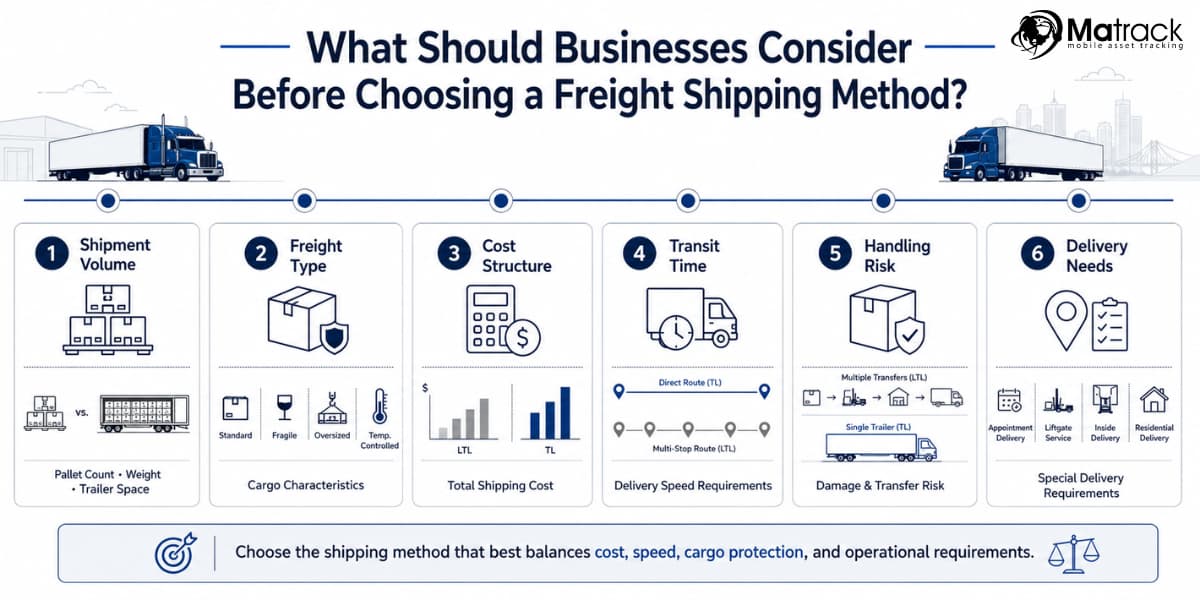
- Shipment Volume: Review pallet count, trailer space, and total weight first. Smaller loads usually fit LTL, larger loads often justify TL.
- Freight Type: Consider whether the cargo is standard, fragile, high-value, oversized, or temperature-sensitive. Sensitive freight often needs fewer handling points.
- Cost Structure: Compare the full landed cost, not just the base rate. LTL may include accessorial fees, TL may offer better per-unit value for larger loads.
- Transit Time: Check how quickly the freight must arrive. TL is usually better for direct and time-sensitive delivery, LTL works when timelines are more flexible.
- Handling Risk: Match the shipping method to the freight’s damage tolerance. LTL involves more transfers, TL usually keeps freight on the same trailer.
- Delivery Needs: Account for appointment delivery, liftgate service, inside delivery, or residential delivery. Mentioned requirements can affect pricing and carrier availability.
Final Thoughts
Knowing key differences between LTL and TL freight shipping helps businesses make better logistics decisions based on real shipment needs. Factors like cost structure, transit time, handling frequency, and shipment size all play a direct role in determining which option performs better.
Instead of relying on a single method, efficient shipping strategies use both LTL and TL where they fit best. Smaller, flexible shipments align with LTL, while larger, time-sensitive, or high-value freight benefits from TL.
Applying the right method to the right shipment leads to better cost control, fewer delivery issues, and a more reliable supply chain overall.
Frequently Asked Questions
Is LTL cheaper than TL shipping?
For smaller shipments, less-than-truckload service usually costs less because pricing is based on shared capacity. Truckload becomes more cost-effective when a load takes up most available space or requires dedicated equipment.
Is TL shipping faster than LTL shipping?
A full truckload shipment is usually faster because it moves directly from pickup to delivery with fewer stops. Less-than-truckload freight may take longer because it is consolidated, sorted, and transferred through terminals.
What does LTL stand for in freight shipping?
Less-than-truckload refers to freight that does not require an entire trailer. Shipment shares truck space with freight from other shippers.
What does TL mean in freight shipping?
Truckload means one shipper reserves dedicated capacity for a single shipment. The space may be fully used or held for urgent, fragile, or high-value cargo that needs more control.
Which option is better for fragile freight?
Truckload service is usually better for fragile, high-value, or sensitive goods because there are fewer handling points. In many TL moves, cargo stays on the same vehicle from origin to destination.
What affects LTL shipping cost?
LTL pricing is affected by freight class, shipment weight, distance, density, and accessorial services. Liftgate delivery, inside delivery, or residential delivery can increase the final cost.