

What Is a Dry Van Trailer?
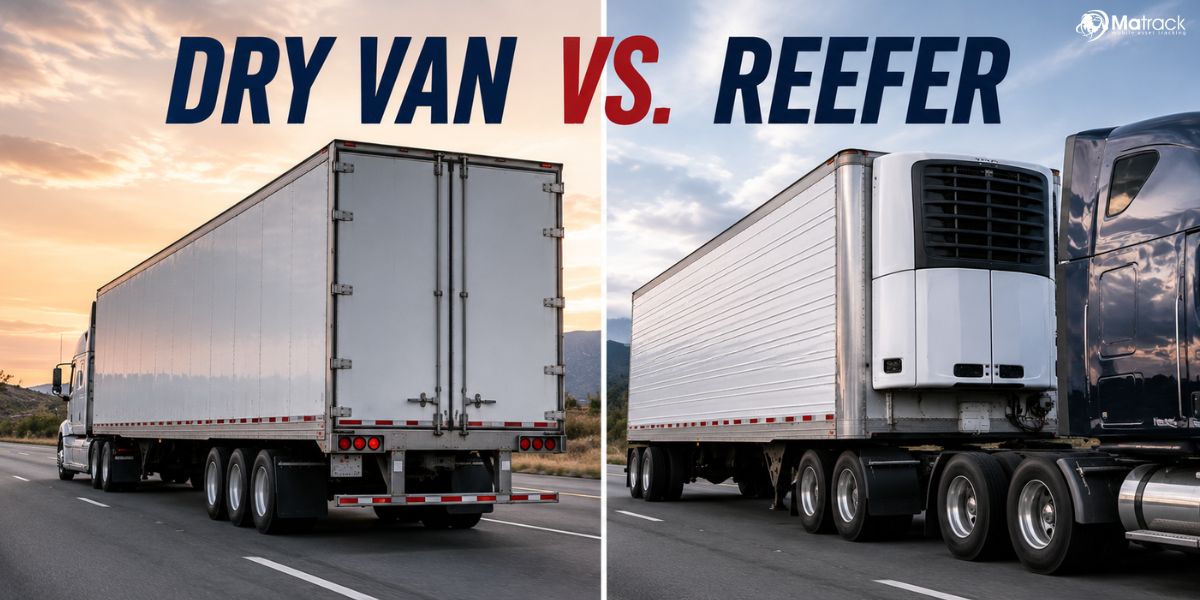
A dry van trailer is a freight trailer used to transport non-perishable goods in a covered space. Solid sidewalls and a roof protect cargo from weather, dust, and road debris during transit.
Shippers use dry vans for freight that needs protection without temperature control. Typical loads include palletized products, boxed goods, furniture, paper items, and retail inventory.
Use across trucking and logistics comes from moving standard freight on local, regional, and long-haul routes. Practical design and broad freight compatibility make dry vans one of the most common trailer types in the industry.
What Is a Reefer Trailer?
A reefer trailer is a refrigerated freight trailer used to transport cargo that must remain within a specific temperature range. Internal cooling equipment keeps conditions stable during transit so sensitive goods arrive without spoilage or temperature damage.
Shippers rely on reefer trailers for freight such as produce, dairy, meat, frozen food, pharmaceuticals, and other temperature-sensitive products. Cargo in these loads depends on controlled conditions, not just physical coverage from the outside environment.
Requirement makes reefer trailers a key part of cold-chain transportation across regional and long-distance routes. Value comes from preserving product quality from pickup to drop-off, especially as freight cannot tolerate temperature shifts.
What Is the Main Difference Between Dry Van and Reefer Trailers?
The main difference between dry van and reefer trailers comes from the freight conditions they are designed to support.
Temperature Range
Dry vans carry loads without regulating internal climate, so cargo remains at ambient conditions during transit. Reefer trailers keep freight within a defined temperature range, which is necessary for chilled, frozen, or heat-sensitive shipments.
Type of Cargo
Merchandise, retail inventory, furniture, and paper goods usually move in dry vans. Produce, dairy, meat, pharmaceuticals, and frozen products require reefer trailers to maintain cargo integrity.
Purpose in Freight Movement
The role of a dry van is centered on protected transport for standard shipments. Reefer trailers serve a different function by supporting cold-chain movement where temperature stability is part of delivery requirements.
Trailer Setup
Only a covered trailer body is needed for dry van freight since physical protection is the main concern. Reefer units use insulation and refrigeration equipment to preserve internal conditions across changing weather and route conditions.
Load Handling
Shipping dry freight usually involves standard pickup, transit, and delivery procedures. Handling reefer cargo often includes temperature checks, pre-cooling, and closer coordination during loading and unloading.
Operating Demands
Lower equipment complexity keeps dry van operations more straightforward in most freight networks. Added cooling systems, fuel use, and maintenance responsibilities make reefer transport more demanding on a daily basis.
What Types of Freight Do Dry Vans and Reefers Carry?
Freight type is one of the most direct factors that separates dry van trailers from reefer trailers in real-world operations.
Non-Perishable Goods
Dry vans carry freight that does not depend on temperature control during transit. Retail inventory, electronics, furniture, textiles, and packaged goods move through standard shipping lanes using this trailer type.
Perishable Goods
Reefer trailers transport cargo that can spoil or degrade if exposed to temperature changes. Fresh produce, dairy, meat, frozen food, and pharmaceuticals require controlled conditions to maintain quality.
Temperature-Sensitive Cargo
Some goods are not fully perishable yet still react to heat or cold during transit. Reefer trailers handle these loads as temperature stability is required to prevent damage or product loss.
Standardized Shipments
Palletized and boxed freight moving through warehouses and distribution centers typically goes into dry vans. Compatibility with loading docks and forklifts makes them efficient for high-volume logistics.
Agricultural Loads
Farm produce and seasonal harvest shipments depend on refrigeration to reach markets without spoilage. Reefer trailers play a key role in transporting these goods across long distances.
Cargo-Based Decision
Freight requirements often determine the trailer without further comparison. Non-perishable cargo fits dry vans, while temperature-dependent loads require reefer transport.
Is a Reefer More Versatile Than a Dry Van?
A reefer is generally more versatile than a dry van because it can transport temperature-sensitive freight as well as standard cargo. Switching between refrigerated and non-refrigerated loads gives carriers more flexibility across routes and changing market demand.
Broader freight access helps reduce empty miles and improves backhaul opportunities if cold loads are unavailable. Dry vans, by comparison, are limited to non-perishable cargo and rely on standard freight availability.
Higher versatility, however, brings added cost and operational pressure. Extra fuel use, maintenance needs, and refrigeration requirements can reduce efficiency in operations focused mainly on standard freight.
Which Costs More to Operate: Dry Van or Reefer?
Reefer trailers cost more to operate than dry vans because refrigeration adds fuel consumption, maintenance, and temperature-control expenses. Lower operating requirements make dry vans more cost-efficient for freight that does not need climate regulation.
Fuel usage increases in reefer operations due to continuous cooling during transit. Maintenance demands also rise with refrigeration units that require servicing and monitoring.
Long-term costs grow further with cleaning, inspections, and temperature-sensitive handling requirements. Carriers moving non-perishable freight usually rely on dry vans to keep overall operating expenses lower.
How Do Payload, Space, and Loading Efficiency Compare?
Payload, interior space, and loading efficiency vary between dry vans and reefer trailers due to differences in weight and equipment.
| Factor | Dry Van | Reefer |
| Payload Capacity | Higher capacity since no refrigeration system adds extra weight | Lower capacity due to added weight from insulation and cooling unit |
| Interior Space | More usable cargo space inside the trailer | Slightly reduced space because insulated walls take up room |
| Trailer Weight | Lighter overall structure | Heavier due to refrigeration equipment and insulation |
| Loading Speed | Faster loading with standard warehouse processes | Slower handling when temperature checks are required |
| Turnaround Time | Supports quick drop-and-hook operations | May take longer due to monitoring and controlled handling |
| Best Fit | High-volume general freight and palletized loads | Temperature-sensitive and perishable freight requiring control |
Can You Use a Reefer as a Dry Van?
A reefer can be used as a dry van, but doing so depends on cost, efficiency, and load requirements rather than just capability.
Refrigeration can remain off during standard freight moves, allowing reefer trailers to carry dry loads as needed. Many carriers follow this approach on backhauls to avoid empty miles and improve route utilization.
Operational trade-offs still apply during non-perishable cargo moves. Added trailer weight, reduced space, and higher running costs can make reefer use less suitable compared to a dedicated dry van.
Which Is More Profitable for Owner-Operators and Fleets?
Profitability depends on freight type, operating cost, and how efficiently the trailer is used across routes.
Dry vans tend to deliver stable margins through lower fuel use, minimal maintenance, and faster turnaround across standard freight lanes. Reefer trailers can generate higher revenue per load, but added costs from fuel, maintenance, and temperature management affect overall profit.
The final outcome depends on balancing revenue potential with operating expenses and load consistency. Operations focused on standard freight often favor dry vans, while access to high-paying temperature-sensitive loads can make reefers more profitable.
How Do You Choose Between a Dry Van and a Reefer?
Choosing between a dry van and a reefer starts with the type of freight your operation plans to move.
Cargo Type
Perishable and temperature-sensitive freight requires a reefer to maintain product condition during transit. Non-perishable goods usually move more efficiently in a dry van since protection is needed, not refrigeration.
Operating Cost
Dry vans usually involve lower fuel use, fewer maintenance demands, and simpler day-to-day operations. Reefer trailers add cooling equipment, service needs, and higher running costs that affect long-term profitability.
Freight Market
Freight markets support dry van use across a wide range of lanes and load types. Cold-chain demand drives reefer use where shippers need temperature control for food, pharmaceuticals, or other sensitive cargo.
Route Planning
Local, regional, and long-haul routes can work with either trailer, but route conditions affect efficiency differently. Reefer operations often benefit more from lanes with reliable refrigerated demand and stronger backhaul options.
Workload Level
Dry van operations are usually more straightforward because freight only needs secure transport in a covered trailer. Reefer operations require closer monitoring, temperature checks, and more involvement during handling and transit.
Business Goal
Dry vans suit operations focused on stable freight and lower operating complexity. Reefers fit businesses handling temperature-sensitive loads, offering broader load flexibility and access to specialized shipping markets.
Final Thoughts
Dry van and reefer trailers serve different purposes based on how freight needs to be handled during transit. Selection depends on whether cargo requires basic protection or controlled temperature conditions.
General freight operations often rely on dry vans due to lower costs, simpler handling, and faster turnaround across standard routes. Temperature-sensitive supply chains depend on reefer trailers to maintain product quality across varying distances and climates.
Profitability and efficiency come from aligning trailer type with freight demand, operating cost, and route consistency. Right equipment choice supports steady loads, better utilization, and long-term operational stability