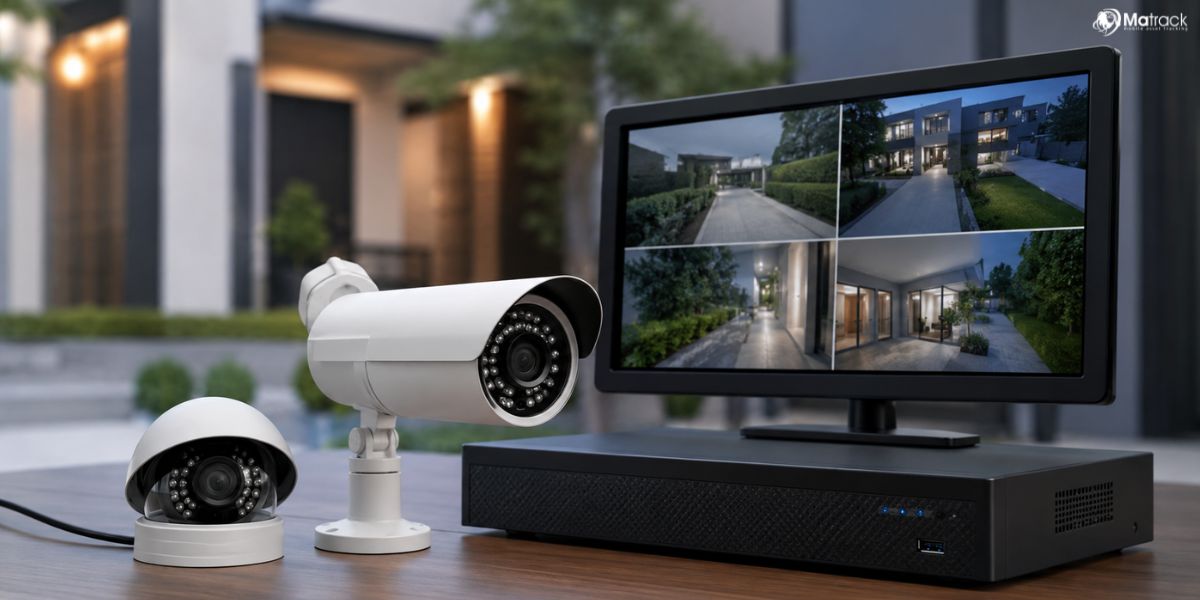


What Does an NVR Camera System Mean?
NVR stands for Network Video Recorder, a system designed to manage and store video captured through IP-based surveillance devices. Digital encoding takes place within cameras, enabling direct transmission of high-resolution footage without analog conversion.
System structure includes interconnected elements such as IP cameras, Ethernet wiring, PoE switches, and local network frameworks. Data flows digitally across these components, supporting formats like 1080p, 4MP, and 4K for detailed image clarity.
Recording infrastructure relies on internal drives, compression protocols like H.264 or H.265, and software platforms that organize and control video output. Expansion capability allows additional channels, application-based control, and integration with remote viewing platforms.
How Does an NVR Camera System Work?
NVR camera systems work through a sequence where cameras generate visual data, networks transfer that information, recording units handle incoming streams, and interfaces present footage for user interaction.
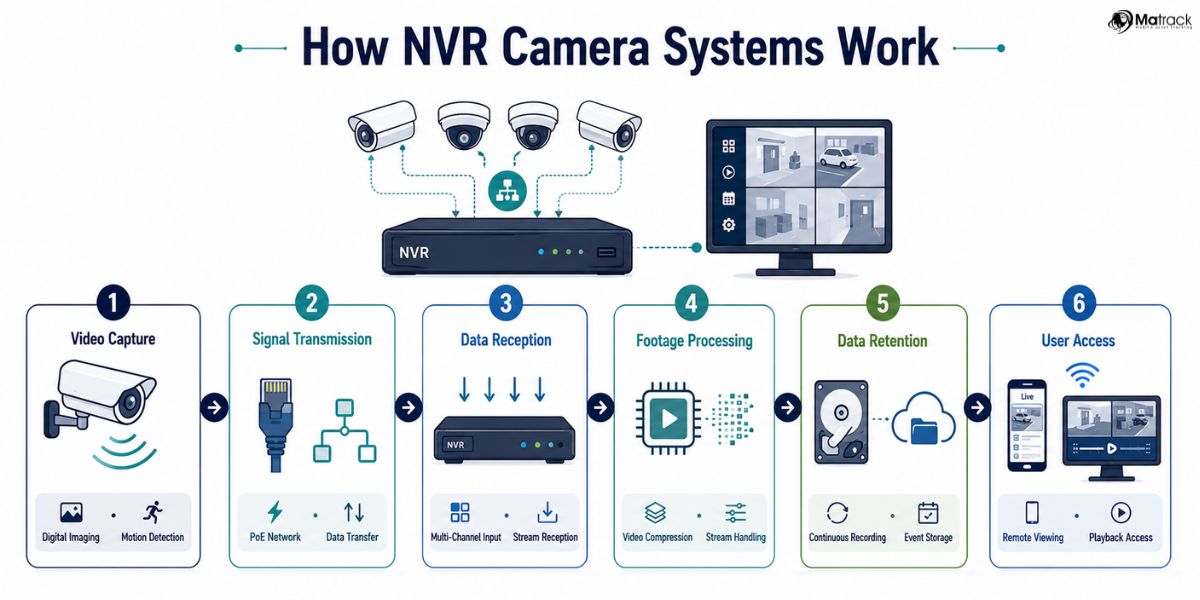
- Video Capture: Image sensors inside cameras detect movement and visuals, converting them into digital signals instantly. On-device processing prepares the footage for direct transmission across connected systems.
- Signal Transmission: Ethernet pathways or PoE-enabled links transfer video data across a defined network environment. Combined power and data delivery reduces wiring complexity and supports stable communication.
- Data Reception: Recording units accept multiple incoming streams at once without signal degradation. Internal mechanisms arrange incoming content using time logs or motion-triggered markers.
- Footage Processing: Compression algorithms optimize file size while maintaining visual integrity for higher resolutions. Stream handling supports smooth performance even with multiple active channels.
- Data Retention: Installed drives maintain stored recordings based on configured duration and recording modes. Recording patterns vary between continuous capture, scheduled timing, and event-triggered storage.
- User Access: Interface platforms provide control over live viewing and playback functions across connected devices. Remote connectivity enables monitoring through smartphones, desktops, or dedicated applications.
What Features Do NVR Camera Systems Offer?
Modern surveillance setups include advanced capabilities that enhance monitoring, detection accuracy, and remote accessibility across different environments.
- Real-Time Recording: Live video feeds are captured continuously or based on configured schedules. Footage becomes available instantly for viewing without delays in processing.
- Motion Detection Alerts: Built-in detection identifies movement within defined areas and triggers notifications. Alert systems send updates through mobile apps or connected platforms for immediate awareness.
- Night Vision Capability: Infrared technology allows cameras to capture clear footage in low-light or complete darkness. Visibility remains consistent across day and night conditions.
- Remote Viewing Access: Users can monitor live feeds and recorded clips through internet-connected devices. Access is supported through dedicated applications available on smartphones, tablets, and computers.
- AI-Based Detection: Intelligent algorithms identify specific objects such as humans or vehicles within the frame. Filtering reduces false alerts caused by irrelevant motion like shadows or animals.
- High-Resolution Output: Video clarity supports detailed image capture suitable for identification and evidence purposes. Advanced formats enable sharper visuals compared to older surveillance setups.
What Are the Types of NVR Camera Systems?
Multiple configurations are available based on installation style, connectivity method, and storage approach used in surveillance environments.
Wired Setup
Physical cabling connects imaging devices directly to the recording unit, ensuring consistent data transfer without signal fluctuation. Installation requires structured routing of cables across the property, which suits long-term fixed deployments.
Wireless Configuration
Wi-Fi-based communication allows video data to be transmitted without direct cable connections between devices. Placement becomes more flexible, although performance depends on signal strength and network stability.
PoE Configuration
Single-cable solutions deliver both power and data through compatible networking hardware connected to imaging devices. Reduced wiring complexity simplifies installation compared to setups that require separate power sources.
Standalone Deployment
Local recording takes place within the hardware without reliance on external cloud platforms or subscriptions. Footage remains stored on internal drives, making it suitable for environments with limited internet availability.
Hybrid Cloud Integration
Combined architecture stores recordings locally while maintaining backup copies on cloud-based platforms. Data redundancy improves reliability and supports remote access even during hardware-related issues.
What Are the Benefits of Using an NVR Camera System?
Advanced surveillance solutions provide measurable advantages in monitoring accuracy, accessibility, and long-term reliability across different environments.
Superior Image Quality
Digital video capture enables sharp and detailed visuals that support accurate identification of faces, objects, and events. Clear footage improves reliability during incident review and evidence collection.
Scalable Architecture
Additional surveillance points can be added without redesigning the entire setup. Expanding coverage becomes practical for growing residential or commercial environments.
Remote Viewing Capability
Live feeds and recorded clips remain accessible through internet-enabled platforms from different locations. Continuous visibility improves awareness and response time in critical situations.
Structured Data Organization
Recorded footage is arranged based on time, activity, or predefined schedules. Organized storage simplifies searching and retrieving specific video segments.
Reduced Wiring Complexity
Modern installation methods minimize the need for multiple cables compared to legacy analog setups. Simplified deployment saves time and supports cleaner infrastructure planning.
Enhanced Threat Detection
Intelligent monitoring improves recognition of unusual movement or unauthorized access. Timely alerts support faster action and risk reduction.
Flexible Recording Options
Recording modes can be configured for continuous capture, scheduled timing, or event-based triggers. Customization allows better storage usage and targeted monitoring.
Long-Term Cost Efficiency
Initial investment delivers value over time through reduced maintenance and scalable expansion. Lower dependency on frequent upgrades helps manage operational expenses effectively.
NVR vs. DVR: Key Differences
NVR and DVR systems differ in video processing methods, camera compatibility, installation approach, and overall performance in modern surveillance environments.
| Feature | NVR System | DVR System |
| Camera Type | IP Cameras (Digital) | Analog Cameras |
| Video Quality | Up to 4K | Lower (720p – 1080p) |
| Connection Type | Ethernet/Wi-Fi | Coaxial Cables |
| Storage | Hard Drive/Cloud | Hard Drive Only |
| Remote Access | Yes (Cloud & App) | Limited |
| Installation | Easier (PoE) | Complex Wiring |
How to Implement an NVR Camera System?
Deployment requires structured planning, proper installation, configuration setup, and validation to ensure reliable surveillance performance.
Site Assessment
Property layout must be evaluated to identify critical monitoring zones such as entrances, exits, and blind spots. Environmental factors like lighting conditions and distance influence placement decisions.
Camera Positioning
Mounting locations should provide wide coverage without obstruction from walls or objects. Angle and height adjustments improve visibility and reduce chances of missed activity.
Wiring Arrangement
Cabling must be routed between devices using appropriate connectors to maintain stable communication. Organized installation prevents signal interruption and supports long-term reliability.
Power Distribution
Electrical supply needs to be arranged for all connected hardware to maintain uninterrupted operation. Backup options such as power protection devices help prevent data loss during outages.
Network Setup
Local connectivity must be configured to allow communication between all devices within the setup. Proper IP assignment ensures smooth data exchange across the environment.
System Configuration
Initial setup includes registering devices, assigning channels, and defining recording preferences. Settings such as motion triggers and recording schedules determine how footage is captured.
Remote Access Enablement
External connectivity allows viewing through mobile or desktop platforms outside the local environment. Secure authentication ensures safe access to live feeds and stored recordings.
Final Thoughts
NVR camera systems have become a preferred choice for modern surveillance due to their ability to handle digital video with clarity and precision. Reliable performance across different environments makes them suitable for both residential and commercial security needs.
Proper setup and configuration play a major role in how effectively the system performs over time. Strategic placement, stable connectivity, and correct settings ensure consistent monitoring without disruptions.
Long-term value comes from combining high-quality recording, flexible expansion, and remote accessibility within a single setup. Choosing the right configuration allows users to maintain better visibility, improve security awareness, and adapt to changing surveillance requirements.
Frequently Asked Questions
Do NVR cameras work without the internet?
Yes, NVR systems work on a local network. However, internet access is required for remote viewing and cloud storage.
How long can an NVR store footage?
Storage duration depends on hard drive size, camera resolution, and recording settings. A 4TB drive can store 15-30 days of 1080p footage from 4 cameras.
Can I add more cameras to an existing NVR system?
Yes, but the NVR must support the total number of channels (e.g., an 8-channel NVR can support up to 8 cameras).
Can NVR systems be accessed remotely?
Remote viewing is possible through applications designed for smartphones, tablets, or desktop platforms. Secure login credentials ensure that only authorized users can access live or recorded footage.
Are NVR camera systems secure from unauthorized access?
Security depends on proper configuration, including strong passwords and updated firmware. Encrypted connections and restricted access settings help protect video data from external threats.