

What Does Drayage Mean in Trucking?
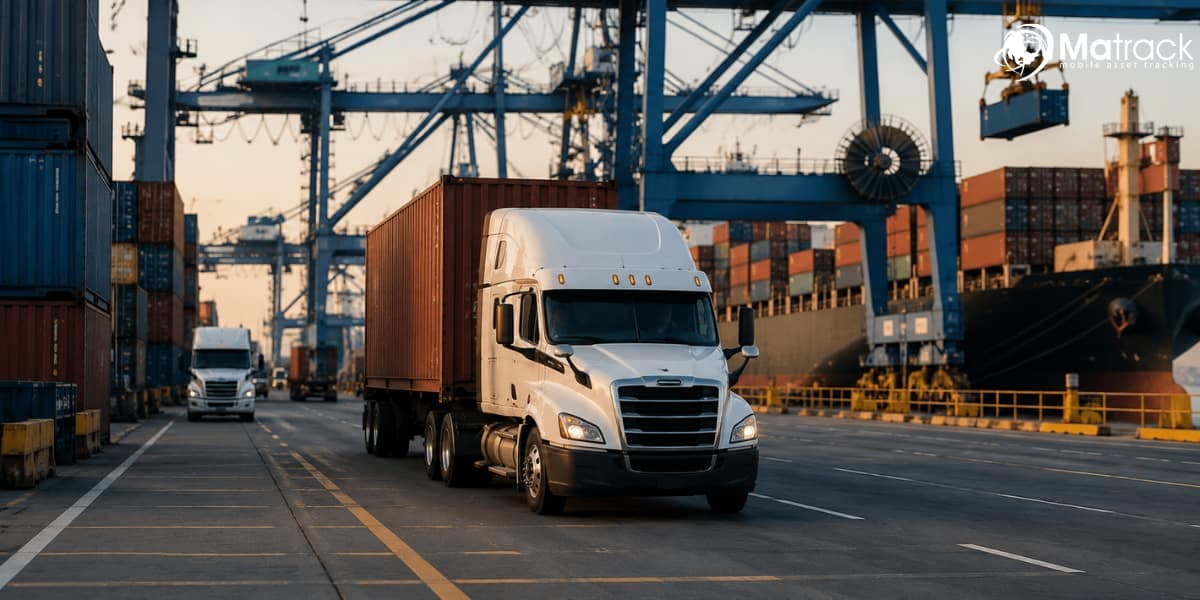
Drayage in trucking means moving shipping containers over short distances between ports, rail terminals, warehouses, and nearby logistics facilities. It usually covers the local container moves that connect one stage of the freight journey to the next.
In intermodal transportation, drayage keeps cargo moving between ocean shipping, rail, and long-haul trucking without unloading the goods inside the container. For example, when a shipment arrives at a port, a drayage truck may take it to a rail yard, distribution center, or warehouse so the shipment can continue through the supply chain.
First-mile and last-mile movement often depends on drayage because delays at this stage can slow the entire freight process. Retail goods, industrial materials, refrigerated cargo, and other containerized shipments all rely on fast, reliable short-distance transport.
How Does Drayage Work in Logistics?
Shipping container moves over a short distance as part of a larger freight journey, usually between a port, rail terminal, warehouse, or distribution center. By ensuring cargo transitions smoothly between transportation modes without delays or unloading goods from the container, that’s how drayage works.
Container Arrival at Port
Process begins when a freight arrives at a port and is unloaded from a vessel. It must clear customs, documentation, and terminal processing before it becomes available for pickup.
Pickup by Drayage Truck
A drayage truck is assigned to collect the loaded unit from the terminal using a chassis. Driver follows scheduled appointments and completes the gate-out process before leaving the port or rail yard.
Transport to Rail
The shipment is then moved to its next location, such as a rail terminal, warehouse, or distribution center. Short-distance movement keeps the shipment aligned with its overall logistics plan.
Return of Empty Container
After the cargo is unloaded, the empty unit must be returned to the designated terminal or depot within a specific time frame. Timely return helps avoid additional charges and keeps equipment in circulation.
What Are the Different Types of Drayage Services?
Container movement in trucking is classified by how freight moves between ports, rail terminals, carriers, warehouses, and final delivery points. All types of drayage solves a specific logistics need, such as transferring cargo between carriers, easing congestion, or completing local delivery efficiently.
Pier Drayage
Once cargo is unloaded from a vessel, pier drayage moves the container from the port to a nearby rail terminal, warehouse, or logistics facility. Imported freight can then enter the inland transportation network quickly.
Inter-Carrier Drayage
When freight changes responsibility between two transportation providers, inter-carrier drayage transfers the shipment from one carrier to another. Moving cargo from an ocean carrier terminal to a rail provider is a common example.
Intra-Carrier Drayage
Within the same carrier network, intra-carrier drayage shifts containers between terminals, yards, or facilities operated by one provider. Freight or equipment can be repositioned without involving another company.
Shuttle Drayage
During port or terminal congestion, shuttle drayage relocates containers to temporary storage or an overflow yard. Cargo avoids blocked areas while space remains available for incoming freight.
Expedited Drayage
Urgent shipments use expedited drayage when freight must move faster than standard schedules. Retail inventory, production materials, perishables, and other time-sensitive cargo often need this service.
Door-to-Door Drayage
Nearby final destinations often use door-to-door drayage to move containers directly from the port or terminal to the customer’s warehouse, store, or facility. Extra handling is reduced when no additional transfer is needed.
What Equipment and Components Are Used in Drayage Trucking?
Equipment and infrastructure used in drayage trucking enable containers to move efficiently between ports, rail terminals, warehouses, and distribution centers. The system forms the physical and operational foundation required for short-distance container transport within intermodal logistics.
Coordination between trucks, containers, chassis, and terminals ensures that cargo moves without delays or unnecessary handling. Delay in chassis availability or terminal access can disrupt the entire drayage process.
For fleets managing container chassis, trailer tracking can also help monitor equipment location and reduce misplaced asset risk. Together, this connected system supports fast transfers, reduces congestion, and maintains supply chain continuity.
How Much Does Drayage Cost in 2026?
In 2026, drayage costs typically range from $300 to $800 per container for short local moves, while more complex or congested routes can reach $800 to $1,500 or more per container, depending on port conditions, distance, equipment availability, and delays. Common drayage cost components include:
- Base transportation rate: Core charge for moving the container locally, usually based on distance and lane demand.
- Fuel surcharge: Variable fee adjusted based on diesel prices and route conditions.
- Chassis fee: Daily or per-use cost for container chassis, especially in high-demand ports.
- Wait time: Charges applied when drivers are delayed at ports, terminals, or warehouses beyond free time.
- Demurrage: Daily penalty, often $75 to $300+ per day, when containers remain at terminals too long.
- Detention: Daily charge when containers are not returned on time after pickup.
- Congestion surcharge: Additional fees during peak port traffic or labor shortages.
What Is the Difference Between Drayage, Intermodal, and Cartage?
Intermodal, drayage and cartage all involve freight movement, but they differ in scope, distance, and role within the supply chain. Short-distance container transport belongs to drayage, while intermodal covers the full journey using multiple transport modes, and cartage refers to local delivery of goods, often without containers.
| Aspect | Drayage | Intermodal Transportation | Cartage |
| Definition | Short-distance container movement between ports, rail terminals, and warehouses | Freight movement using multiple transport modes (ship, rail, truck) without unloading cargo | Local transport of goods, often non-containerized |
| Distance | Very short (local or regional) | Long-distance (domestic or international) | Short-distance (local delivery) |
| Role in Supply Chain | Connects different transport modes | Covers the entire freight journey | Handles final or local delivery |
| Cargo Type | Mostly containerized freight | Containerized freight across modes | Can include loose or palletized goods |
| Example | Port to nearby warehouse | Ocean shipping to rail to truck delivery | Warehouse to retail store delivery |
What Are Demurrage and Detention in Drayage?
Demurrage and detention are penalty charges in drayage that apply when containers are not moved or returned within the allowed free time. Ports and carriers use these fees to keep equipment moving and prevent terminal space from staying occupied too long..
Demurrage applies when a loaded unit remains at the port or terminal beyond the permitted free time before pickup. Customs delays, missing paperwork, or scheduling issues often lead to these charges, which usually increase each day until the freight is removed.
Detention applies after the container has been picked up but is not returned to the terminal or depot within the allowed period. Slow unloading, warehouse delays, or poor coordination can trigger detention fees, making timely return important for controlling drayage costs.
Why Is Drayage Important in the Supply Chain?
Short-distance container movement is important in the supply chain because drayage enables freight to move between ports, rail terminals, warehouses, and distribution centers without breaking the flow of goods. Taking this transport step ensures shipments transition smoothly between modes and continue toward the final destination without delays.
Efficient drayage operations help reduce port congestion, improve turnaround time, and keep inventory moving on schedule. The 2026 U.S. Bureau of Transportation Statistics Port Performance Freight Statistics Annual Report states that waterborne transportation and its support activities employed 164,900 people in the United States in 2024, with a total annual payroll of $13.5 billion, showing the scale of port-linked logistics that depend on smooth freight movement.
Strong coordination in drayage supports industries that depend on timely shipments, including retail, manufacturing, and e-commerce. Reliable container movement at this stage ensures better cost control, faster delivery cycles, and improved supply chain visibility.
How to Choose the Right Drayage Provider
Right drayage provider can move containers on time, manage port or rail terminal requirements, and prevent avoidable charges like demurrage, detention, and wait time. Look for these factors before booking drayage:
- Terminal Coverage: Choose a provider with regular service near your pickup and delivery points.
- Port Experience: Work with a carrier that understands gate appointments, port rules, documentation, and release requirements.
- Equipment Access: Confirm access to trucks, chassis, and container-handling support before the move.
- Cost Clarity: Ask for a clear breakdown of base rates, fuel surcharges, wait time, chassis fees, detention, demurrage, and congestion fees.
- Empty Return Management: Make sure the provider can return empty equipment within the allowed free time.
- Real-Time Tracking: Use a provider that offers shipment visibility, location updates, and delay alerts.
- Freight Fit: Match the provider with your cargo type, especially for refrigerated, high-value, oversized, or time-sensitive shipments.
How Fleet Tracking Improves Drayage Efficiency
Fleet tracking improves drayage by giving dispatchers real-time visibility into trucks, containers, routes, and driver movement. Helping teams respond faster to terminal delays, traffic, missed appointments, and warehouse schedule changes.
Telematics can support geofencing around ports, route monitoring, idle-time reduction, and proof of arrival for drayage carriers. Insights from this data help reduce wasted time and improve container turnaround.
Matrack GPS Fleet Tracking can support drayage operations by helping fleet managers monitor vehicle location, driver activity, and trip progress from one dashboard. In short-distance logistics, this visibility helps prevent small delays from becoming costly supply chain disruptions.
Frequently Asked Questions
What is drayage in simple terms?
Local trucking of shipping containers between ports, rail yards, warehouses, and nearby facilities is called drayage. This service connects local container movement with larger ocean, rail, or long-haul transportation.
How long does drayage take?
Many drayage moves are completed within the same day when the warehouse or rail terminal is nearby. Port congestion, chassis shortages, customs delays, appointment issues, or unloading delays can extend the timeline.
Why is drayage expensive?
Container moves over short distances can become expensive because the final price includes more than mileage. Fuel surcharges, wait time, chassis fees, detention, demurrage, and congestion charges can raise the total cost.
What industries rely on drayage?
Retail, manufacturing, automotive, food and beverage, pharmaceuticals, construction, and e-commerce all rely on drayage. Any industry that imports, exports, or moves containerized freight through ports or rail terminals may need service.
Is drayage part of last-mile delivery?
Local container transport can support last-mile delivery, but the final delivery step is not always handled through drayage. Containers usually move between logistics hubs before cargo is unloaded, sorted, and sent to the final customer, store, or facility.