

Fleet expenses can rise quietly through fuel waste, idle time, delayed maintenance, poor routing, and unsafe driving habits. Small inefficiencies across vehicles, drivers, and daily routes can turn into serious operating losses over time.
Cost control in fleet management depends on knowing where money is leaking before it affects delivery schedules, compliance, or vehicle uptime. Fuel monitoring, preventive maintenance, route planning, driver coaching, and utilization tracking all help operators reduce avoidable spend.
Fleet management software brings those cost areas into one view so managers can act on real data instead of scattered reports. From GPS tracking to maintenance alerts and driver behavior insights, a data-driven approach helps fleets lower expenses and run with greater consistency.
Why Do Fleet Management Costs Increase in 2026?
Fleet management costs refer to the total expenses involved in operating vehicles, including fuel, maintenance, driver wages, insurance, compliance, and depreciation. Reducing these costs in 2026 depends on controlling key drivers like fuel consumption, downtime, and unorganized fleet utilization through data-driven strategies.
Budget pressure is even more important in 2026 because cost volatility is still real. The U.S. Bureau of Transportation Statistics reported the average U.S. diesel price at $3.62 per gallon in December 2025, while the U.S. Department of Energy notes that idling alone can burn roughly a quarter to half a gallon of fuel per hour, which turns small issues into measurable operating losses over time.
Factors like poor route planning, excessive idling, unsafe driving behavior, and delayed maintenance further increase overall incompetence. Understanding these cost drivers is essential, as each of the following strategies directly targets one or more of these expense areas to improve overall fleet profitability.
What Are 10 Proven Strategies to Reduce Fleet Management Costs?
Day-to-day savings usually come from tightening fuel use, maintenance schedules, driver behavior, routing, compliance tasks, and the fleet management decisions behind them.
1. Fuel Management
As the largest variable fleet expense, fuel is the first place many fleet operators look for avoidable waste. Telematics-based fuel monitoring helps detect issues such as route deviations, fuel theft, excessive idling, and unusual consumption patterns.
Pairing fuel tracking with route optimization and driver behavior analysis helps vehicles run more efficiently. Better mileage, less waste, and faster cost savings follow across the fleet.
2. Preventive Maintenance
Unplanned breakdowns lead to expensive repairs, towing costs, and service delays. Regular servicing reduces these risks by keeping vehicles maintained before failures occur.
Scheduled service intervals and vehicle health data also help extend asset lifespan and protect performance. Over time, fewer major repairs and downtime-related losses make preventive maintenance essential.
3. Driver Behavior
Behind-the-wheel habits directly affect fuel consumption, accident risk, and vehicle wear. Harsh braking, speeding, and rapid acceleration can increase both fuel costs and maintenance expenses.
Monitoring driver behavior gives managers the data needed to coach safer, more economical driving. Fewer accidents, lower insurance claims, and stronger fuel economy are the direct outcomes.
4. Route Optimization
Ineffective routing increases mileage, fuel usage, and delivery time. Route optimization helps vehicles follow shorter, faster, and more practical routes based on traffic, job schedules, and road conditions.
Using real-time data and AI-based routing tools reduces unnecessary travel and improves delivery efficiency. Cleaner route planning reduces fuel costs and improves fleet productivity.
5. Fleet Telematics
Limited visibility into fleet activity often allows small inefficiencies to become recurring costs. Telematics systems provide real-time data on vehicle location, usage, driver activity, and performance.
Centralized dashboards and analytics help fleet managers identify cost leaks and take corrective action quickly. Better visibility reduces waste across fuel, maintenance, safety, routing, and utilization.
6. Idle Reduction
Excessive idling wastes fuel and accelerates engine wear without contributing to productivity. Small amounts of idle time, when multiplied across a fleet, result in significant cost losses.
Idle monitoring systems and alerts help enforce idle policies and reduce unnecessary engine runtime. Less idling reduces fuel consumption and maintenance-related expenses.
7. Fleet Utilization
Underutilized vehicles increase ownership, maintenance, and administrative costs without generating value. Proper utilization ensures that each vehicle contributes effectively to business.
Analyzing usage data helps identify excess vehicles and optimize asset allocation. Reduced fleet size where needed improves overall value for money.
8. Predictive Maintenance
Reactive maintenance leads to higher repair costs and unexpected downtime. Predictive maintenance uses data from sensors and diagnostics to identify issues before they become critical.
Intervention helps fleets avoid major failures and reduce emergency repair costs. Greater vehicle reliability keeps operations running smoothly.
9. Cost Per Mile
Per mile is a key metric that measures how efficiently a fleet performs. Fuel, maintenance, labor, and other expenses are combined into a single performance indicator through this metric.
Tracking cost per mile helps identify high-cost vehicles, indirect routes, and spending gaps. Financial control and improved profitability come from optimizing this number.
10. Compliance Safety
Regulatory non-compliance leads to fines, penalties, and increased insurance premiums. Poor safety practices also result in accidents, which add direct and indirect costs.
Compliance systems and safety programs help reduce legal exposure and prevent avoidable disruptions. Safer, more compliant fleet practices protect performance while keeping unnecessary costs under control.
Where Fleet Management Software Reduces Operating Costs
Fleet management software reduces costs by centralizing vehicle, fuel, driver, maintenance, and compliance data. Key ways fleet management software reduces costs:
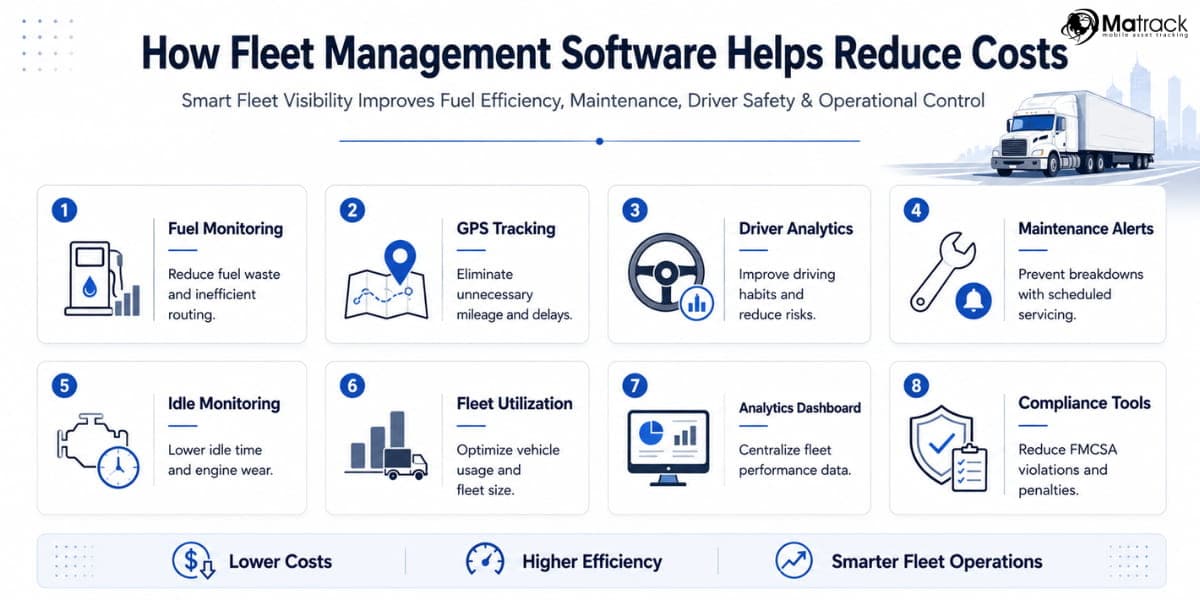
- Consumption monitoring tools: Track fuel usage, detect anomalies, and reduce waste caused by idling, theft, or wrong routes. Lower fuel usage directly reduces the largest variable expense in fleet operations.
- Real-Time GPS Tracking: Monitor vehicle location and route activity to eliminate unnecessary mileage and delays. Improved route visibility leads to better dispatch decisions and reduced fuel costs.
- Behavior Analytics: Analyze speeding, harsh braking, and acceleration patterns to improve driving habits. Safer driving reduces accident-related expenses, insurance costs, and vehicle wear.
- Service Alerts & Scheduling: Automate service reminders based on mileage or engine data to prevent breakdowns. Timely maintenance reduces repair costs and minimizes downtime.
- Idle Time Monitoring: Detects excessive idling and enforce idle reduction policies. Cuts in idle time reduce fuel consumption and engine wear.
- Utilization Reporting: analyzes vehicle usage to identify underused assets and optimize fleet size. Smart utilization reduces ownership and costs.
- Centralized Analytics Dashboard: Combine fuel, maintenance, driver, and route data into one platform. Data-driven insights help identify cost leaks and improve overall efficiency.
- Compliance Management Tools: Track regulatory requirements such as ELD logs and inspections. Improved compliance reduces fines, penalties, and legal risks.
What Is Total Cost of Ownership in Fleet Management?
Total Cost of Ownership in fleet management is the full cost of running a vehicle over its usable life, not just the purchase price. Including acquisition, fuel, maintenance, repairs, insurance, compliance, downtime, depreciation, and resale value, which is why TCO gives fleet managers a more accurate basis for cost decisions than upfront price alone.
For most fleets, TCO matters because a cheaper vehicle can become more expensive over time if it burns more fuel, breaks down more often, or loses value faster. U.S. EPA reported in its 2025 Automotive Trends Report, published in February 2026, that average new vehicle real-world fuel economy reached a record 27.2 mpg in model year 2024, while preliminary model year 2025 data suggest fuel economy will continue to increase, which makes operating efficiency a current and relevant part of long-term fleet cost planning.
Practical TCO review helps answer the questions fleet operators actually care about which vehicles cost the least to run, when replacement makes financial sense, and where savings are being lost across fuel, maintenance, and utilization. Looking at TCO in this way helps businesses choose better vehicles, reduce lifecycle waste, and align cost-reduction strategies with real data instead of assumptions.
What Should You Consider When Choosing a Fleet Cost Optimization Solution?
Choosing the right fleet solution requires evaluating key features that directly impact cost control.
- Fuel Monitoring Capabilities: Because fuel is one of the biggest fleet cost drivers, this feature is highly relevant. A solution should help track fuel consumption, detect waste, and reduce losses from idling or long routing.
- Maintenance Management: Service planning directly affects repair costs, downtime, and vehicle lifespan. Automated service reminders and diagnostics help prevent breakdowns and control long-term running costs.
- Driver Behavior Insights: Driver behavior affects fuel usage, accident risk, and vehicle wear. Monitoring speeding, harsh braking, and acceleration helps reduce insurance, fuel, and maintenance expenses.
- Tracking Accuracy: Accurate GPS tracking is essential for route visibility, dispatch efficiency, and vehicle usage monitoring. Accurate location data supports faster decisions and helps eliminate unnecessary mileage.
- Asset-use analytics: Show whether vehicles are used efficiently or sitting underused. This helps businesses right-size the fleet and reduce ownership and operational waste.
How Matrack GPS Fleet Tracking Helps Reduce Fleet Management Costs
Matrack GPS fleet tracking provides real-time visibility into vehicle location, movement, fuel usage, and driver behavior. Clearer fleet visibility helps managers identify cost leaks caused by wrong routes, excessive idling, or underused vehicles.
Route tracking and live location data help teams reduce unnecessary mileage and improve dispatch decisions. Cost control improves when idle time, trip activity, and usage patterns become easier to monitor and correct.
Preventive-care reminders and driver behavior insights add another layer of cost control by helping prevent breakdowns, unsafe driving, and avoidable vehicle wear. In practical terms, Matrack supports cost reduction by giving fleet operators clearer data to manage fuel, maintenance, and day-to-day productivity more consistently.
Frequently Asked Questions
How can small fleets reduce operational costs?
Small fleets can lower operating costs by managing fuel use, scheduling preventive maintenance, and planning better routes. Affordable telematics systems can also improve visibility and day-to-day control.
What is the biggest expense in fleet management?
For most fleets, fuel is typically the largest expense, followed by maintenance and driver-related costs. Managing fuel consumption is key to reducing overall expenses.
How much can telematics reduce fleet costs?
A telematics system can cut costs by reducing idle time, improving route decisions, and catching maintenance issues before they become expensive breakdowns. Actual savings vary by fleet size, vehicle type, and how consistently teams use the data.
Is predictive maintenance worth the investment?
Yes, predictive maintenance helps prevent costly breakdowns and reduces downtime. It improves vehicle reliability and lowers long-term maintenance costs.
What is a good cost per mile for a fleet?
A good cost per mile depends on the industry, vehicle type, routes, and operating model. Tracking this metric over time gives fleet managers a clearer view of where expenses are rising and where changes are working.