

What Is a Flatbed Truck?
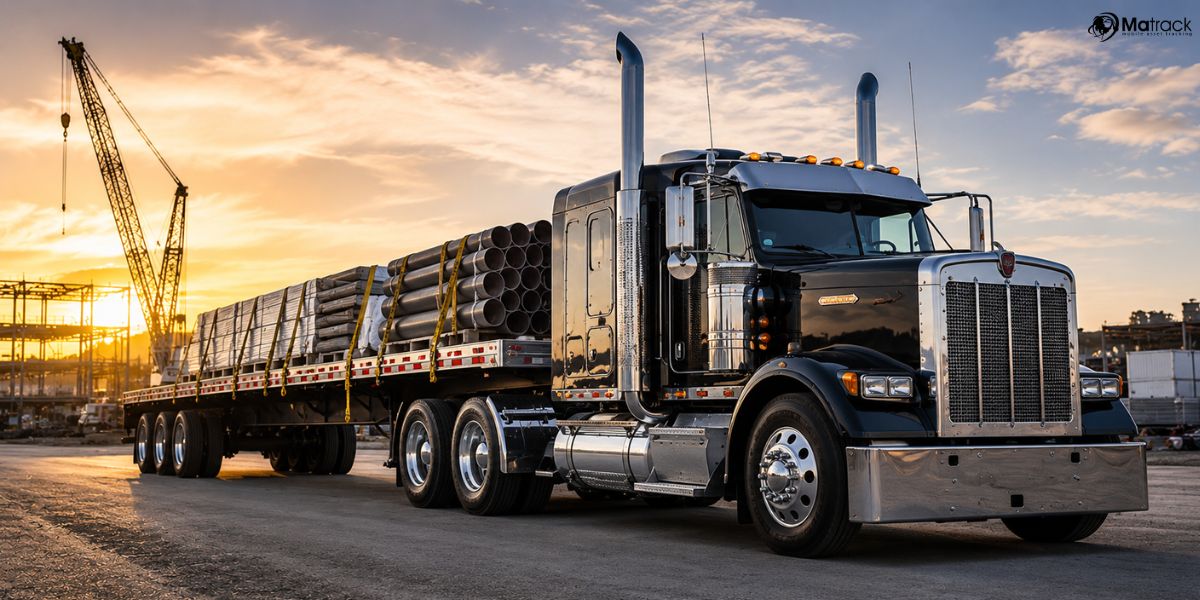
A flatbed truck is a commercial vehicle equipped with a flatbed trailer, designed to transport oversized and irregular cargo that cannot fit within enclosed trailers. Absence of side walls or a roof allows freight to extend beyond standard dimensions without structural limitations.
Semi-trucks typically connect with flatbed trailers to form tractor-trailer units used across freight transportation and logistics operations. Such configurations support movement of heavy equipment, construction materials, and large industrial components.
Growing demand appears in scenarios where enclosed trailers cannot accommodate cargo size or shape. Logistics networks rely on these vehicles to manage non-standard shipments efficiently across regional and long-distance routes.
What Are the Main Types of Flatbed Trucks and Trailers?
Flatbed trucks come in multiple configurations, each designed to handle specific cargo dimensions, weight limits, and loading requirements across transportation and logistics operations.
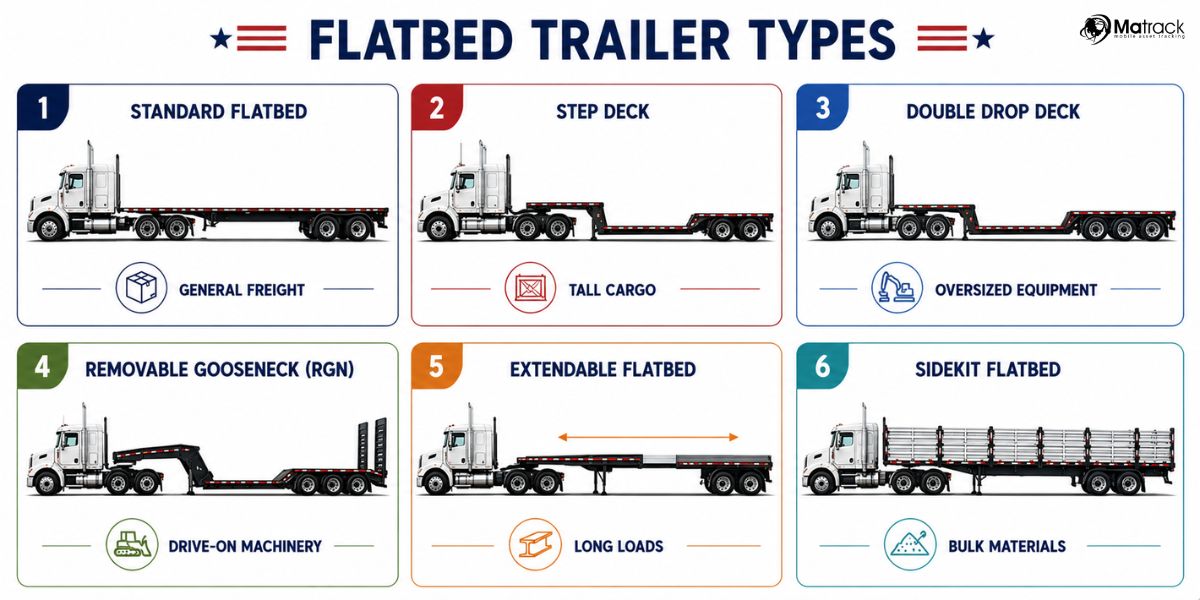
1. Standard Flatbed
General freight that fits within standard transport limits often moves on this platform without requiring structural adjustments. An open deck makes it suitable for materials that can be placed quickly and secured without specialized handling conditions.
Warehouses, construction sites, and manufacturing hubs frequently rely on this type during routine shipping cycles. Continuous loading from different angles keeps operations fluid, especially where time-sensitive dispatch is involved.
Specifications
| Attribute | Details |
| Deck Configuration | Single continuous deck |
| Deck Length | 48 to 53 feet |
| Deck Width | 8.5 feet |
| Deck Height | 60 inches from the ground |
| Cargo Height Capacity | Up to 8.5 feet |
| Max Freight Weight | 48,000 pounds |
| Best Used For | Lumber, steel pipes, packaged freight |
2. Step Deck (Drop Deck)
Height restrictions on highways and bridges often create limitations for transporting tall cargo. A lowered rear deck provides the additional clearance needed to move such loads without exceeding legal limits.
Machinery that cannot be dismantled into smaller parts typically requires this configuration. Avoiding route restrictions and special permits becomes possible when vertical space is managed effectively.
Specifications
| Attribute | Details |
| Upper Deck Length | 10 to 11 feet |
| Lower Deck Length | 37 to 43 feet |
| Deck Width | 8.5 feet |
| Upper Deck Height | 58 to 60 inches |
| Lower Deck Height | 38 to 42 inches |
| Cargo Height Capacity | Up to 10 feet |
| Max Freight Weight | 46,000 pounds |
| Best Used For | Tall machinery, crates, heavy palletized loads |
3. Double Drop Deck
Transporting extremely tall equipment introduces challenges that standard or step deck trailers cannot resolve. A deep center well creates a space where oversized components can sit lower, keeping total height within transport limits.
Power infrastructure projects and heavy engineering operations frequently depend on this design. Equipment such as transformers or large generators often leaves no alternative due to its scale and shape.
Specifications
| Attribute | Details |
| Front Deck Length | 10 to 12 feet |
| Center Well Length | 25 to 29 feet |
| Rear Deck Length | 8 to 10 feet |
| Deck Width | 8.5 feet |
| Center Well Height | 18 to 22 inches |
| Cargo Height Capacity | Up to 11.5 feet |
| Max Freight Weight | 45,000 pounds |
| Best Used For | Transformers, generators, tall construction equipment |
4. Removable Gooseneck (RGN)
Loading limitations become a major concern when dealing with heavy, self-propelled equipment. The detachable front section transforms the trailer into a ramp, allowing machinery to be driven directly onto the deck.
Construction fleets and mining operations rely on this approach when cranes are unavailable or inefficient. Direct drive-on access simplifies handling of equipment that would otherwise require complex lifting arrangements.
Specifications
| Attribute | Details |
| Gooseneck Front Length | 8 to 10 feet |
| Center Well Length | 25 to 29 feet |
| Rear Deck Length | 8 to 10 feet |
| Deck Width | 8.5 feet |
| Center Well Height | 18 inches |
| Cargo Height Capacity | Up to 11.5 feet |
| Max Freight Weight | 42,000 to 80,000 pounds (depending on axles) |
| Best Used For | Drive-on equipment, construction and mining machines |
5. Extendable Flatbed
Length becomes the primary constraint when transporting oversized structural components. Sliding deck mechanism allows the trailer to expand, accommodating cargo that would otherwise extend beyond safe limits.
Projects involving bridge construction, wind energy, or large-scale fabrication frequently require uninterrupted support across long distances. Splitting such loads is rarely practical, making extension capability essential.
Specifications
| Attribute | Details |
| Collapsed Deck Length | 48 feet |
| Extended Deck Length | Up to 80 feet |
| Deck Width | 8.5 feet |
| Deck Height | 60 inches |
| Cargo Height Capacity | Up to 8.5 feet |
| Max Freight Weight | 43,000 pounds |
| Best Used For | Beams, windmill blades, construction trusses |
6. Sidekit Flatbed
Loose or bulk materials introduce a different challenge where containment becomes necessary during transit. Removable side panels combined with tarping systems help prevent spillage while maintaining flexibility of a flatbed structure.
Agricultural transport and recycling operations often depend on this setup to move materials like grains, scrap, or bagged goods. Partial enclosure offers protection from environmental exposure without converting to a fully enclosed trailer.
Specifications
| Attribute | Details |
| Deck Configuration | Single deck with side posts and tarp |
| Deck Length | 48 to 53 feet |
| Deck Width | 8.5 feet |
| Deck Height | 60 inches |
| Cargo Height Capacity | 8.5 feet under tarp |
| Max Freight Weight | 45,000 pounds |
| Best Used For | Agricultural goods, gravel bags, scrap material |
What Types of Cargo Are Transported Using Flatbed Trucks?
Construction materials, heavy equipment, oversized freight, industrial components, and bulk commodities are transported using flatbed trucks due to their size, shape, or loading requirements.
Construction Materials
Construction materials such as steel beams, lumber, concrete blocks, and pipes frequently rely on flatbed trucks due to their size and handling requirements. Direct unloading at job sites allows cranes or forklifts to place materials precisely where needed, reducing extra movement across the site.
Heavy Equipment
Heavy equipment including excavators, bulldozers, and loaders requires flatbed transportation because of its weight and structure. Movement often depends on specialized trailers like RGN, allowing machines to be driven or positioned without dismantling components.
Oversized Freight
Oversized freight involves cargo that exceeds standard legal dimensions, making enclosed trailers unsuitable for transport. Items like wind turbine parts, large pipes, and prefabricated structures depend on flatbed trailers to accommodate extended length or unusual shapes safely.
Industrial Components
Industrial components such as generators, tanks, and fabricated units are commonly transported between manufacturing facilities using flatbed trucks. Production systems rely on consistent delivery of these parts to maintain workflow without delays caused by complex handling requirements.
Bulk Commodities
Bulk commodities like grains, scrap metal, and bagged goods are transported using flatbed variations that provide partial containment. Sidekit configurations help prevent material loss during transit while maintaining accessibility for loading and unloading operations.
What Are the Legal Regulations for Flatbed Trucking?
Legal regulations for flatbed trucking include FMCSA load securement rules, DOT inspections, dimension limits, driver certification, and permit requirements for oversized freight.
FMCSA Load Securement Rules
Federal guidelines define how cargo must be restrained during transit, including the number and strength of tie-downs required for different load types. Improper securement can lead to shifting loads, which is one of the leading causes of roadway incidents involving flatbed trucks.
Height Limits
Bridge clearances and roadway infrastructure determine how tall a load can legally travel without restrictions. Cargo exceeding 13.5 feet typically requires route adjustments and special permits to avoid collisions with overhead structures.
Width Limits
Lane spacing and traffic safety standards restrict vehicle width to 8.5 feet under normal conditions. Wider loads introduce risks to surrounding traffic, which is why escort vehicles or warning systems are often required.
DOT Inspections
Routine inspections are conducted to verify that trucks meet operational safety standards before and during transit. Roadside checks can result in immediate out-of-service orders if issues are found in braking systems, tires, or load securement equipment.
Driver Certification
Handling heavy flatbed loads requires specialized training backed by a Commercial Driver’s License for vehicles exceeding 26,001 pounds. Additional endorsements become necessary when transporting hazardous materials or operating complex trailer configurations.
Oversize Permit Requirements
Movement of oversized freight is controlled through permits that define when, where, and how a load can travel. Restrictions may include limited travel hours, designated routes, and mandatory escort vehicles depending on load dimensions.
What Are the Benefits vs. Challenges of Flatbed Trucks?
Flexibility in cargo handling and efficiency in loading make these trucks valuable in transportation, while exposure to weather, safety risks, and regulatory requirements create operational challenges.
| Benefits of Flatbed Trucks | Challenges of Flatbed Trucks |
| Can carry oversized, heavy, and irregularly shaped loads without structural restrictions | Requires careful planning to match the right trailer type with cargo |
| Open design allows loading from all sides using cranes or forklifts | Improper loading can lead to imbalance or shifting during transit |
| Faster loading and unloading reduces turnaround time in logistics operations | Securing cargo takes additional time and expertise |
| Suitable for multiple industries such as construction, manufacturing, and energy | Not ideal for fragile or weather-sensitive goods |
| Enables direct transport of large items without dismantling | Oversized loads may require permits and route restrictions |
| Reduces handling costs by minimizing loading complexity | Additional costs for permits, escorts, and securing equipment |
| Open structure allows easy handling in outdoor environments | Exposure to rain, wind, and debris can damage cargo |
| Strong securing methods ensure stable transport when done correctly | Higher risk if load securement rules are not followed properly |
When Should You Use a Flatbed Truck Instead of an Enclosed Trailer?
Selection between flatbed and enclosed trailers depends on cargo dimensions, loading requirements, and the level of protection needed during transport.
Oversized Cargo Requirements
Flatbed trucks are preferred for cargo that exceeds standard height, width, or length limits of enclosed trailers. Large structures or extended loads can be transported without dismantling, which helps maintain structural integrity.
Loading Accessibility Needs
Operations involving cranes or forklifts benefit from open trailer access available with flatbeds. Limited entry points in enclosed trailers can slow down loading processes in high-volume environments.
Heavy Equipment Transport
Machinery such as excavators, loaders, and industrial units often requires flatbed configurations for proper placement. Drive-on or top-loading methods are easier to manage compared to enclosed trailer restrictions.
Time-Sensitive Deliveries
Projects with strict deadlines rely on faster loading and unloading processes provided by flatbed trucks. Reduced handling steps help maintain efficiency across construction and industrial workflows.
Cargo Protection Consideration
Enclosed trailers become more suitable for goods that require protection from weather or external exposure. Flatbed options may use tarps, but they do not offer the same level of security for sensitive materials.
Final Thoughts
Flatbed trucks remain essential in transportation for moving oversized, heavy, and irregular cargo that cannot be handled by enclosed trailers. Open design combined with multiple trailer configurations allows industries to manage complex freight requirements with greater flexibility.
Logistics operations benefit from faster loading, reduced handling constraints, and the ability to transport large items without dismantling. At the same time, proper planning, load securement, and compliance with regulations are necessary to ensure safe and efficient movement.
Choosing the right flatbed setup depends on cargo dimensions, weight, and delivery conditions across different projects. Understanding these factors helps businesses improve efficiency, reduce risks, and maintain reliable transportation across supply chains.
Frequently Asked Questions
What is the difference between a flatbed trailer and a step deck trailer?
Flatbed trailers have a single-level deck, while step deck trailers include a lower rear section to accommodate taller cargo. Additional height clearance allows step decks to transport loads that would exceed legal limits on standard flatbeds.
How is cargo secured on a flatbed truck?
Cargo is secured using chains, straps, binders, and tarps based on load type and weight. Proper securement prevents shifting during transit and ensures compliance with FMCSA safety regulations.
Are flatbed trucks suitable for long-distance transport?
Flatbed trucks are widely used for long-distance transport, especially for heavy and oversized freight. Stability depends on correct load distribution and securement throughout the journey.
What industries rely most on flatbed transportation?
Industries such as construction, manufacturing, energy, and agriculture frequently depend on flatbed trucks. Large equipment, raw materials, and structural components often require open transport solutions.
Do flatbed trucks require special permits?
Special permits are required if cargo exceeds legal height, width, or weight limits. Regulations may also include route restrictions, escort vehicles, and controlled travel schedules.
What is the maximum weight a flatbed truck can carry?
Maximum weight typically depends on axle configuration and regional regulations, with standard loads around 48,000 pounds. Heavier loads may be transported using specialized trailers with additional axles.