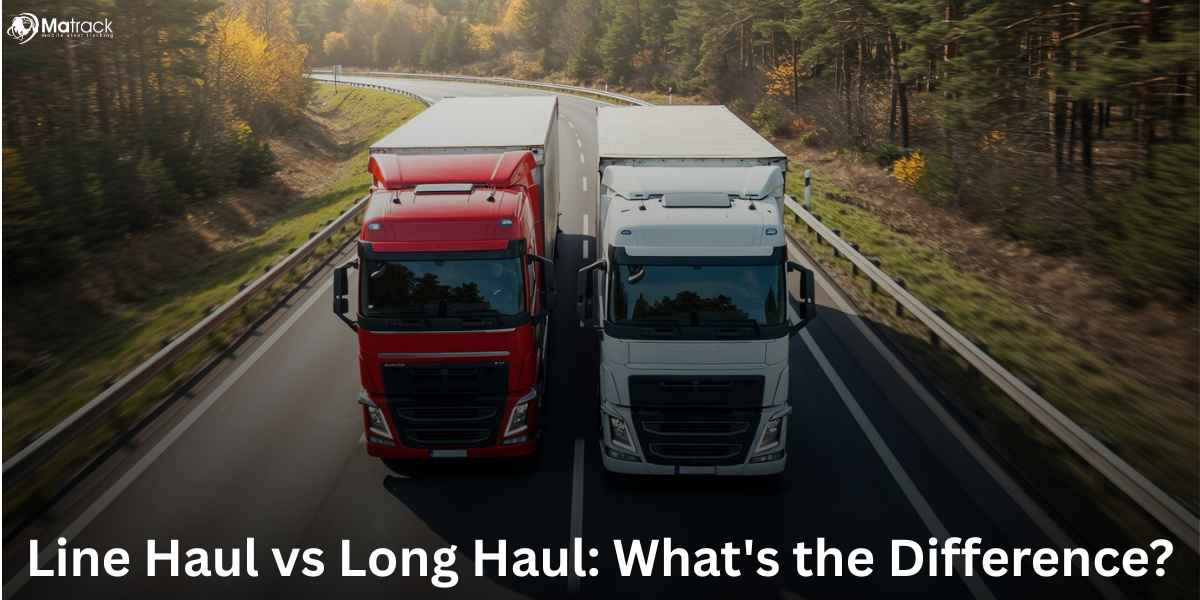


Line haul connects terminals, warehouses, and distribution centers through fixed lanes designed for repeat movement between logistics hubs. Long haul trucking moves goods across states, regions, and national delivery corridors where mileage, travel time, and road coordination play a larger role.
Regional distribution systems often depend on line haul networks to transfer loads between facilities before local delivery begins. Cross-country shipping relies on long-distance trucking to connect suppliers, retailers, manufacturers, ports, and fulfillment centers across wider markets.
American Trucking Associations reported that trucks moved roughly 72.7% of the nation’s freight by weight in 2024. Rising commercial demand continues to increase the importance of vehicle visibility, driver coordination, load monitoring, and cost control across modern logistics systems.
What Is Line Haul Transportation?
Line haul transportation is the movement of freight between fixed hubs, terminals, warehouses, or distribution centers through scheduled transportation routes. Logistics companies rely on line haul operations to move large shipment volumes across regional or national networks.
Structured lanes help companies maintain predictable arrival timing and organized trailer transfers between facilities. Sorting centers also rely on line haul activity to keep inventory flowing across connected supply chain systems.
Retail businesses, courier services, manufacturers, and eCommerce operations commonly rely on line haul shipping for continuous inventory movement between logistics hubs. Repeated lane structures can also reduce empty miles, improve trailer usage, and support fuel savings across fleet activity.
What Does a Line Haul Driver Do?
Fixed hub-to-hub lanes make this role centered around moving inventory between terminals, sorting facilities, warehouses, and distribution centers within planned arrival windows.
- Hub Transfers: Moves inventory between logistics facilities before it continues toward local distribution areas.
- Lane Assignments: Follows Planned driving lanes with planned departure times, arrival windows, and designated terminals.
- Trailer Swaps: Connects, disconnects, exchanges, or transfers loaded trailers between facilities.
- Load Verification: Reviews paperwork, trailer numbers, inventory details, and transfer records during pickup and drop-off.
- Safety Inspection: Checks tires, brakes, lights, trailer connections, mirrors, and fluid levels before departure.
- Timing Control: Maintains arrival timing to support smooth movement between connected facilities.
- Dispatch Communication: Shares arrival updates, delays, and lane information with dispatch teams and terminal staff.
What Is Long Haul Trucking?
Long haul trucking is the transportation of freight across long distances, often between states, regions, or countries through over-the-road shipping routes. Freight carriers use long-haul operations to move cargo across national supply chains and large distribution networks.
Fuel usage, arrival timing, driver availability, maintenance checks, and Hours of Service rules all play an important role during cross-country operations. Trip coordination also becomes more complex once weather conditions, road restrictions, traffic patterns, tolls, and overnight stops affect the drive.
Manufacturers, wholesalers, retailers, and logistics companies depend on long-distance trucking to connect distant suppliers, fulfillment centers, ports, and retail markets. National supply chains rely on this model to keep products flowing across wider commercial regions.
What Does a Long Haul Driver Do?
Multi-day driving routes place long haul drivers in charge of moving inventory between distant pickup and destination points while handling safety checks, trip coordination, arrival timing, and compliance requirements.
- Pre-Trip Inspection: Reviews tires, brakes, mirrors, lights, trailer connections, fluid levels, and safety equipment before departure.
- Load Security: Confirms goods are balanced, sealed, strapped, or locked properly before leaving the pickup site.
- Distance Driving: Covers interstate highways and national driving corridors that may require several days on the road.
- Log Recording: Tracks driving hours, rest periods, mileage, inspections, and duty status through Electronic Logging Devices.
- Trip Coordination: Communicates pickup schedules, arrival appointments, delays, and lane adjustments with dispatch or receiving teams.
- Vehicle Monitoring: Watches fuel levels, tire pressure, engine alerts, reefer temperatures, and maintenance conditions throughout the trip.
- Compliance Duties: Follows weight restrictions, road regulations, rest requirements, and company safety procedures during travel.
What Is the Main Difference Between Line Haul and Long Haul?
Line haul supports repeat hub-to-hub inventory flow through fixed lanes, whereas long haul focuses on moving products across wider regions where travel distance, road coordination, and driver time become major operating factors.
Network Role
Line haul mainly links terminals, warehouses, sorting facilities, and distribution centers before local delivery begins. Long-distance trucking connects distant suppliers, ports, manufacturers, fulfillment centers, retailers, and commercial markets across broader supply chains.
Route Structure
Recurring lanes give line haul teams a repeatable system for dispatch timing, trailer allocation, and facility coordination. Longer trips require flexible routing since fuel stops, weather changes, traffic patterns, toll roads, and customer delivery windows can alter the trip.
Driver Routine
Regional lane activity usually gives line haul drivers more predictable shifts and frequent home time. Cross-country assignments often keep long haul drivers away for several days while managing overnight stops and Hours of Service limits.
Inventory Flow
Consolidated inventory commonly passes through line haul networks before entering local distribution systems or regional delivery areas. Direct long-distance movement becomes more practical once products need to move between faraway pickup and destination points.
Operating Costs
Repeat lane activity helps line haul operations manage fuel usage, labor planning, trailer allocation, and vehicle utilization more efficiently. Higher mileage in long-distance trucking can increase expenses through maintenance, tolls, lodging, compliance tracking, and driver compensation.
Which Model Works Best for Businesses?
Regional distribution systems often benefit more from line haul activity because fixed lanes simplify timing, hub coordination, and trailer transfers between facilities. Businesses handling repeated inventory movement between the same locations may also gain stronger vehicle utilization and lower operating costs.
Long-distance trucking becomes more practical once products need to move across states, regions, or national supply chains without relying heavily on repeated hub transfers. Manufacturers, wholesalers, retailers, and large fulfillment operations commonly depend on this model for broader market coverage.
Vehicle visibility, lane monitoring, fuel management, compliance tracking, and dispatch coordination play an important role in both systems. GPS tracking platforms, telematics tools, and Electronic Logging Devices help logistics teams monitor fleet activity, driver hours, arrival timing, and inventory movement more efficiently.
Final Thoughts
Long haul and line haul operations serve different logistics goals through separate driving patterns, lane structures, and coverage areas. Hub-based inventory flow supports regional distribution efficiency, whereas long-distance trucking keeps products moving across larger commercial markets.
Recurring lane activity usually works best for businesses moving inventory between connected facilities on a regular basis. Cross-country shipping becomes more useful once products must travel farther distances between suppliers, warehouses, fulfillment centers, retailers, or customers.
Vehicle visibility, driver coordination, inventory tracking, fuel monitoring, and compliance management continue to shape modern fleet performance across both models. Choosing between line haul and long haul ultimately depends on travel distance, inventory flow, operating costs, and overall supply chain requirements.