

What Is a Dash Cam?
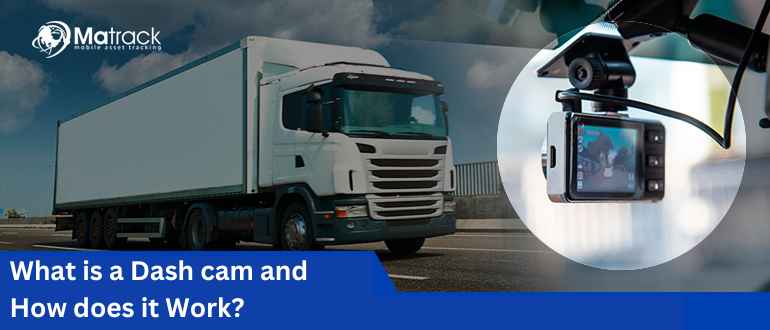
A dash cam is a compact video recording device installed inside a vehicle to capture road activity, traffic events, and driving incidents in real time. Most systems mount near the windshield and automatically record footage once the vehicle starts moving.
Drivers, rideshare operators, trucking companies, and commercial fleets use dash cams to maintain visual evidence during accidents, insurance disputes, and roadside incidents. Recorded footage also supports vehicle security, driver accountability, and theft prevention across personal and business transportation environments.
Modern dash cams include technologies such as GPS tracking, parking surveillance, cloud storage, and AI-powered safety monitoring for expanded vehicle visibility. Rising demand for connected vehicle systems has increased dash cam adoption across fleet management, logistics operations, and everyday driving applications.
How Does a Dash Cam Work?
Dash cams work by continuously recording road footage through onboard cameras connected to sensors, storage systems, and vehicle power sources.
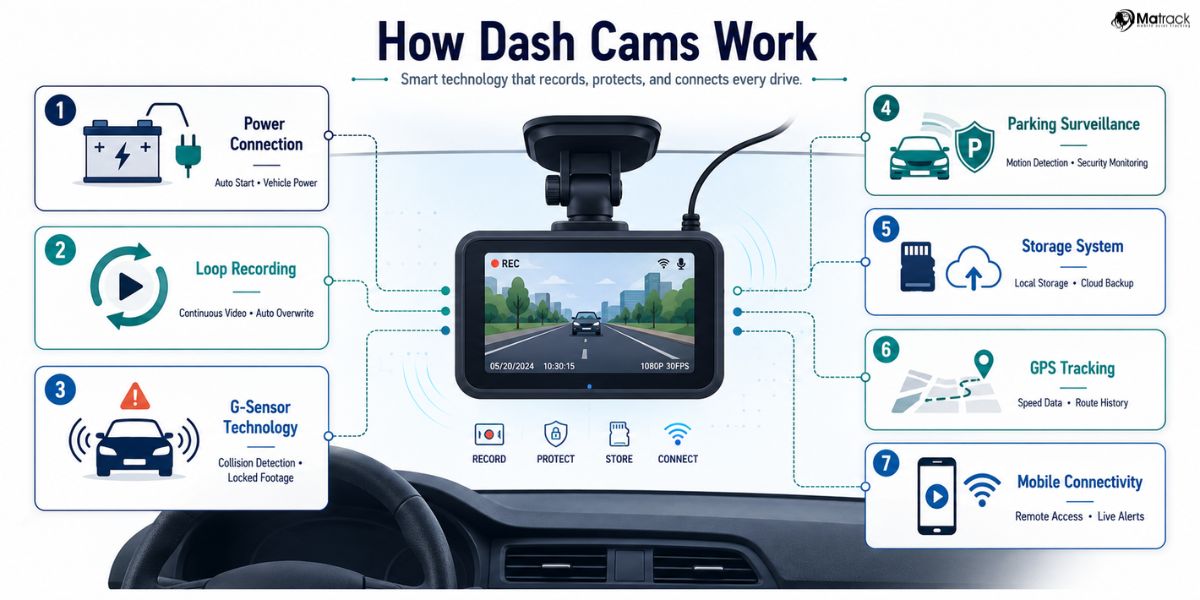
- Power Connection: Recording begins automatically once the dash cam receives power from the vehicle battery, USB port, or hardwired installation setup. Automatic startup allows continuous monitoring without requiring manual activation from the driver.
- Loop Recording: Video footage saves in short clips that automatically overwrite older files once storage space becomes full. Continuous recording ensures uninterrupted video capture during long trips and daily driving operations.
- G-Sensor Technology: Built-in motion sensors detect sudden braking, collisions, or sharp vehicle movement during accidents and emergency situations. Triggered recordings remain locked to prevent important footage from being deleted during overwrite cycles.
- Parking Surveillance: Parking mode activates recording after detecting motion, vibration, or impact activity around a parked vehicle. Security monitoring during inactive hours helps capture vandalism, theft attempts, and hit-and-run incidents.
- Storage System: Dash cams store footage locally through MicroSD cards or remotely through cloud-connected platforms depending on the device configuration. Higher storage capacity supports longer video retention and larger recording files.
- GPS Tracking: Integrated GPS modules record vehicle speed, travel routes, and location history alongside video footage. Timestamped location data improves accident documentation and fleet monitoring visibility.
- Mobile Connectivity: Wi-Fi and cloud-enabled dash cams allow drivers or fleet managers to access footage remotely through smartphone applications. Real-time notifications and live video access improve vehicle monitoring across personal and commercial transportation environments.
What Are the Main Components of a Dash Cam?
Multiple internal components work together inside a dash cam system to capture, process, store, and manage driving footage efficiently.
Camera Lens
Wide-angle camera lenses capture road activity, nearby vehicles, traffic signals, and surrounding movement during trips. Broader viewing angles improve visibility across multiple lanes and help record incidents from different directions.
Image Sensor
Digital image sensors convert incoming light into video footage for recording and playback purposes. High-performance sensors improve video clarity during nighttime driving, rain, tunnels, and low-visibility road conditions.
G-Sensor Module
Built-in G-sensors detect sudden impact activity, rapid braking, or sharp directional movement during accidents or emergency situations. Locked emergency recordings remain protected from automatic deletion after collision detection occurs.
GPS System
Vehicle speed, route history, travel location, and timestamped driving activity are recorded through integrated GPS tracking modules. Detailed route information supports insurance investigations, fleet visibility, and driver accountability reporting.
Storage Device
Video footage remains stored through MicroSD cards or cloud-connected storage systems depending on the dash cam model. Larger storage capacity supports extended recording hours and higher-resolution video retention.
Power Supply
Backup power systems use lithium batteries or capacitors to maintain recording stability during power interruptions or engine shutdowns. Commercial fleet vehicles often prefer capacitor-based systems due to improved heat resistance and durability.
Wi-Fi Connectivity
Wireless connectivity features allow footage transfer, live streaming, and remote video access through smartphone applications or cloud dashboards. Remote monitoring capabilities improve convenience for personal drivers and fleet management teams.
Microphone System
Interior microphones capture in-cabin conversations, road sounds, and surrounding audio during vehicle operation. Audio recordings may assist during insurance claims, passenger monitoring, or incident investigations depending on regional privacy laws.
What Features Should You Look for in a Dash Cam?
Recording performance, driving safety tools, and monitoring capabilities significantly influence dash cam usability across personal vehicles and commercial fleets.
Video Resolution
Higher video quality improves visibility of license plates, traffic signs, nearby vehicles, and roadside activity during incidents. Most modern systems support 1080p, 2K, or 4K recording for sharper and more detailed footage capture.
Night Vision
Low-light recording technology improves visibility during nighttime driving, underground parking, and poor weather conditions. Infrared support and HDR imaging help reduce glare from headlights and streetlights after dark.
Wide-Angle Coverage
Broader viewing angles capture surrounding traffic movement across multiple lanes and nearby road areas. Expanded visibility increases the chances of recording accidents and side-impact incidents more accurately.
Parking Surveillance
Motion-triggered monitoring activates recording after detecting nearby movement, vibration, or impact around a parked vehicle. Continuous surveillance helps capture theft attempts, vandalism, and hit-and-run incidents during inactive hours.
AI Driver Alerts
AI-powered safety systems detect distracted driving, lane departures, collision risks, and unsafe driving behavior in real time. Driver monitoring alerts help reduce accident risks across commercial fleets and long-distance transportation operations.
Mobile App Access
Smartphone applications allow remote playback, footage downloads, live streaming, and notification management directly from mobile devices. Wireless access improves convenience for drivers reviewing recordings without removing storage devices manually.
Remote Cloud Backup
Cloud-connected platforms store important footage remotely for additional backup protection and centralized monitoring access. Remote storage prevents valuable recordings from being lost due to device theft or physical damage.
Heat Resistance
High-temperature durability protects recording systems during extended exposure to sunlight and hot vehicle interiors. Commercial fleet vehicles operating in extreme weather conditions often require heat-resistant dash cam systems for stable performance.
Dual-Channel Recording
Front and rear camera setups capture driving activity from multiple viewing angles simultaneously during trips. Expanded recording coverage improves accident documentation and vehicle monitoring visibility across surrounding traffic conditions.
What Are the Benefits of Using a Dash Cam?
Vehicle protection, driving accountability, and real-time evidence collection make dash cams valuable for both personal drivers and commercial transportation businesses.
Accident Evidence
Recorded footage provides visual proof during collisions, traffic disputes, and unexpected roadside incidents. Insurance companies and law enforcement agencies frequently use video evidence to verify accident details and determine liability.
Insurance Support
Video recordings help reduce fraudulent claims and support faster insurance investigations after accidents occur. Reliable footage also protects drivers from false allegations involving staged collisions or reckless driving accusations.
Theft Protection
Parking surveillance features capture suspicious activity, vandalism attempts, and vehicle break-ins during inactive hours. Motion-triggered recording improves vehicle security across residential parking areas and commercial fleet locations.
Driver Monitoring
Driving behavior recordings help identify speeding, distracted driving, harsh braking, and unsafe road practices during trips. Fleet managers commonly use dash cam footage to improve driver training and workplace safety standards.
Fleet Visibility
Commercial transportation businesses monitor vehicle movement, incident activity, and route operations through cloud-connected dash cam systems. Real-time visibility supports safer fleet management and operational oversight across multiple vehicles.
Passenger Security
Interior recording systems improve safety inside rideshare vehicles, taxis, school buses, and commercial transportation environments. Cabin footage may assist during passenger disputes, emergency situations, or workplace investigations.
Peace of Mind
Continuous recording provides reassurance during long-distance travel, nighttime driving, and unfamiliar road conditions. Drivers often feel more confident knowing important driving activity remains documented throughout trips.
What Types of Dash Cams Are Available?
Different dash cam types support different driving environments, recording needs, and vehicle monitoring requirements across personal and commercial transportation use cases.
Front-Facing Dash Cams
Single-camera dash cams record road activity directly ahead of the vehicle during trips and daily driving operations. Basic recording systems mainly focus on accident documentation, traffic incidents, and insurance evidence collection.
Dual Dash Cams
Front and rear camera systems capture footage from multiple vehicle angles simultaneously during driving activity. Expanded recording coverage improves visibility during rear-end collisions, parking incidents, and surrounding traffic disputes.
Interior Dash Cams
Cabin-facing cameras record passenger activity and interior vehicle movement during rideshare or commercial transportation operations. Infrared night vision support improves recording clarity inside low-light vehicle environments after dark.
Wireless Dash Cams
Wireless recording systems connect with smartphone applications through Wi-Fi or Bluetooth technology for remote access and footage transfer. Mobile connectivity improves convenience by allowing drivers to review recordings without removing storage devices manually.
Cloud-Based Dash Cams
Internet-connected dash cams upload recordings remotely through cloud storage platforms for backup protection and centralized monitoring access. Remote video availability supports fleet management teams monitoring multiple vehicles across different locations.
AI Dash Cams
Artificial intelligence systems detect distracted driving, collision risks, lane departures, and unsafe driving behavior during vehicle operation. Real-time safety alerts improve driver awareness and reduce accident risks across commercial fleet environments.
Fleet Dash Cams
Commercial fleet recording systems combine video monitoring, GPS tracking, driver analytics, and cloud connectivity for operational visibility. Transportation businesses use fleet dash cams to improve safety compliance, route monitoring, and driver accountability across daily operations.
How Do Dash Cams Help Fleet Management and Driver Safety?
Commercial fleet operations use dash cam systems to improve operational control, monitor driving activity, and reduce transportation-related risks across daily business routes.
Route Monitoring
Fleet managers track vehicle movement, route deviations, unauthorized stops, and trip activity through connected dash cam platforms. Route visibility improves dispatch efficiency and supports smoother transportation planning across multiple vehicles.
Cargo Protection
Continuous vehicle recording helps monitor cargo movement and detect suspicious activity during transportation operations. Security footage supports theft investigations involving delivery trucks, logistics fleets, and commercial transport vehicles.
Operational Oversight
Centralized fleet dashboards provide access to live vehicle footage, driver activity, and incident recordings across entire transportation networks. Operational visibility helps businesses manage large fleets more efficiently during active routes.
Compliance Reporting
Commercial transportation businesses use recorded driving data to maintain regulatory records and support fleet compliance documentation. Stored footage may also assist during safety audits, roadside inspections, and transportation investigations.
Incident Documentation
Time-stamped recordings capture accident details, road conditions, and surrounding traffic activity during fleet-related incidents. Reliable evidence improves dispute resolution involving commercial drivers and third-party insurance investigations.
Fleet Risk Reduction
Recorded driving activity helps businesses identify operational risks that may increase accident frequency or transportation losses. Long-term monitoring supports safer fleet operations and improves overall transportation accountability.
Are Dash Cams Legal?
Yes, dash cams are legal in most parts of the United States, but state laws regarding windshield placement, audio recording, and privacy regulations may differ. Drivers using dash cams should review local state laws before installing recording devices inside personal or commercial vehicles.
Windshield mounting restrictions exist in several U.S. states because traffic regulations prohibit objects that block a driver’s road visibility during vehicle operation. Placement near the rearview mirror is commonly preferred to reduce visibility obstruction and support legal installation practices.
Audio recording laws also vary across the United States, especially in states following two-party consent regulations for recorded conversations inside vehicles. Commercial fleet businesses using dash cams often notify drivers about recording policies to comply with workplace monitoring and privacy requirements.
How Much Storage Does a Dash Cam Need?
Storage requirements for a dash cam depend on video resolution, recording frequency, camera channels, and footage retention preferences during daily vehicle operation.
Higher-resolution recording such as 2K or 4K video consumes more storage space compared to standard 1080p footage. Dual-channel dash cams recording both front and rear views also require larger storage capacity due to increased video file generation.
Most drivers use MicroSD cards ranging from 32GB to 256GB depending on recording quality and trip duration requirements. Commercial fleet vehicles and long-distance drivers often prefer larger storage capacity or cloud-connected systems for extended footage retention and remote backup access.
What Should You Consider Before Buying a Dash Cam?
Recording quality, storage capacity, installation type, and monitoring features should match your driving habits and vehicle usage requirements before selecting a dash cam.
Video Quality
Higher video resolution improves visibility of license plates, road signs, nearby vehicles, and accident details during recorded incidents. Drivers frequently choose 1080p or 4K recording systems for sharper footage quality and improved evidence capture.
Storage Capacity
Longer recording duration and higher video quality require larger storage space for continuous footage retention. High-endurance memory cards generally perform more reliably during daily recording operations and extended driving hours.
Installation Method
Some dash cams use plug-and-play installation through USB power connections, while others require hardwiring for advanced recording features. Professional installation often improves cable management and long-term recording stability inside vehicles.
Night Recording Performance
Low-light recording quality plays an important role during nighttime driving, parking surveillance, and poor weather conditions. Infrared support and HDR imaging technology improve visibility after dark and reduce glare from surrounding lights.
Connectivity Options
Mobile app access, cloud storage, and remote video playback improve convenience for drivers and fleet management teams monitoring vehicles remotely. Wireless connectivity also simplifies footage transfer without removing storage devices manually.
Vehicle Compatibility
Commercial trucks, fleet vehicles, rideshare cars, and personal vehicles may require different dash cam configurations depending on operational requirements. Dual-channel recording, cloud monitoring, and AI safety systems are commonly preferred across commercial transportation environments.
How Does Matrack Fleet Dash Cam Improve Fleet Safety and Monitoring?
AI-powered monitoring, real-time visibility, and connected fleet tracking allow Matrack Fleet Dash Cam to improve operational safety and transportation oversight across commercial fleet environments.
Real-time video access helps fleet managers monitor vehicle activity, road conditions, and driver performance directly through a centralized cloud dashboard. GPS-integrated trip history and route playback also support operational tracking, dispatch visibility, and incident verification across multiple fleet vehicles.
Advanced AI safety systems detect distracted driving, mobile phone usage, fatigue, lane departure risks, and potential collisions during active trips. Instant in-cab alerts help drivers react quickly to dangerous situations, while cloud-stored event recordings support fleet investigations, CSA compliance, and long-term safety management.