

What Is Lead Time?
Lead time is the total time required for an order, shipment, or production process to move from initiation to final completion or delivery. Procurement teams, manufacturers, and logistics professionals use lead time as a core performance metric for planning timelines and meeting service expectations.
Businesses track lead time to evaluate coordination across procurement, production, inventory, and transportation. Reliable lead time control supports forecasting accuracy, operational efficiency, and customer satisfaction across manufacturing and freight-driven environments.
Manufacturing schedules, supplier response times, dispatch timing, and delivery windows all shape lead time in real operations. Trucking businesses monitor these factors closely since shipment delays, carrier availability, and route disruptions can quickly affect final delivery commitments.
How Does Lead Time Work?
Lead time works by measuring the full time required to move an order, shipment, or process from initiation to final completion.
- Pre-processing stage: Planning, procurement, order entry, and dispatch preparation take place before execution begins. Supply chain teams use this stage to organize materials, schedules, and operational readiness.
- Processing stage: Manufacturing, picking, packing, or freight movement happen during the active execution phase. Production teams and carriers directly influence how quickly work moves through this part of the timeline.
- Post-processing stage: Inspection, documentation, unloading, and delivery confirmation complete the final stage. Trucking operations affect this step through dock coordination, receiving schedules, and proof-of-delivery updates.
What Are the Main Components of Lead Time?
Main components of lead time include sourcing, production, waiting, transportation, and delivery or inspection activities that shape total process duration from start to completion.
Sourcing
Sourcing covers time required to identify, order, and receive materials or goods from vendors. Stock availability, procurement speed, and vendor reliability directly affect how quickly operations can begin.
Production
Production covers work required to manufacture goods or prepare orders for shipment. Output depends on workflow speed, machine performance, and labor coordination within the facility.
Waiting
Waiting includes idle gaps between active steps caused by approvals, shortages, scheduling conflicts, or operational bottlenecks. Delays here increase total duration without contributing to actual progress.
Transportation
Transportation measures the movement of goods between suppliers, warehouses, terminals, and final delivery points. Route conditions, carrier availability, and freight scheduling heavily influence performance in logistics and trucking operations.
Delivery and Inspection
Delivery and inspection cover unloading, verification, documentation, and final acceptance of the order. Proper execution at this stage supports shipment accuracy and reliable service performance.
What Are the Different Types of Lead Time?
Four primary types of lead time are widely used across supply chain, operations, and logistics to measure different segments of the order-to-delivery process.
1. Customer Lead Time
Customer lead time measures the duration from order placement to final delivery at the customer location. Businesses track this metric to evaluate service performance, delivery reliability, and customer satisfaction.
2. Material Lead Time
Material lead time tracks how long it takes for required inputs to arrive after a demand signal is generated. Stock levels, supplier consistency, and inbound movement conditions directly influence readiness for production or fulfillment.
3. Production Lead Time
Production lead time measures duration required to convert inputs into finished goods. Operational flow, equipment performance, and internal coordination determine how quickly output is completed.
4. Cumulative Lead Time
Cumulative lead time represents total duration from initial sourcing to final delivery. End-to-end performance across supply, conversion, and distribution determines how smoothly an organization fulfills demand.
How To Calculate Lead Time In Shipping?
Lead time in shipping is calculated by measuring the total duration from shipment readiness to final delivery.
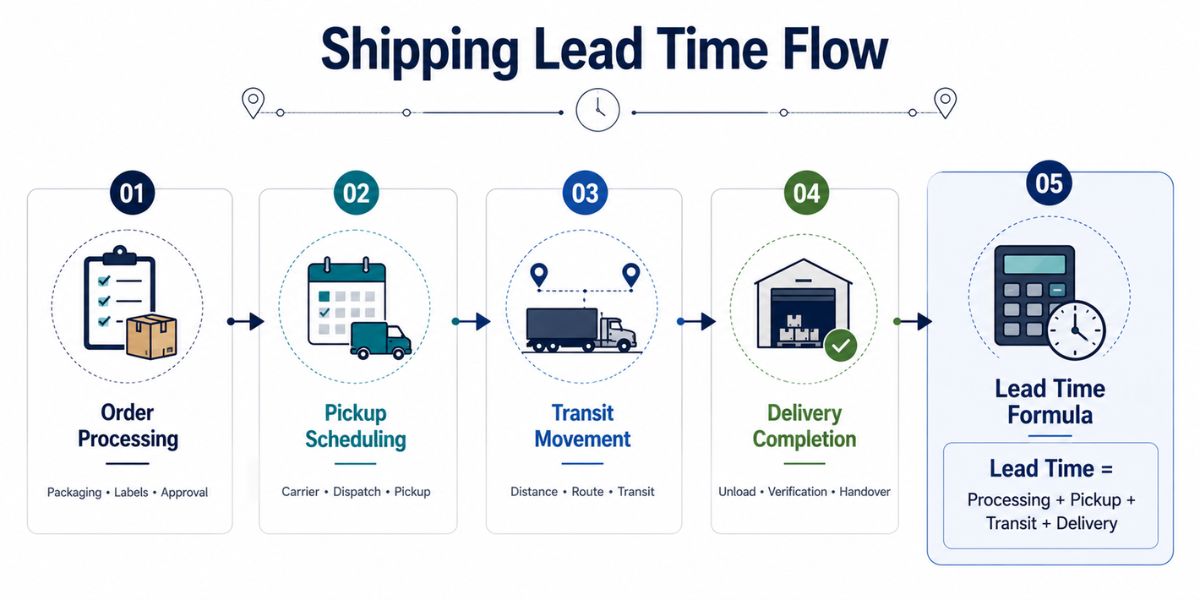
Order Processing
Order processing covers the period between order confirmation and shipment preparation. Documentation, packaging, labeling, and internal approval flow affect how quickly goods become ready for dispatch.
Pickup Scheduling
Pickup scheduling includes the duration required to assign a carrier and confirm collection from the origin point. Load availability, dispatch coordination, and carrier response directly affect movement planning.
Transit Movement
Transit movement measures how long the shipment remains in transport between origin and destination. Distance, route conditions, freight mode, and traffic patterns shape this part of the calculation.
Delivery Completion
Delivery completion covers unloading, receipt verification, and final handover at the destination. Dock access, appointment schedules, and receiving delays can extend the final portion of shipping duration.
Simple Formula
Shipping lead time = order processing + pickup scheduling + transit movement + delivery completion. Accurate calculation depends on recording actual durations at every point in the shipment lifecycle.
What Factors Affect Lead Time in Shipping?
Key factors affecting lead time in shipping include distance, transport type, carrier performance, weather conditions, customs processes, and operational congestion.
Distance
Distance directly impacts how long a shipment takes to reach its destination. Longer routes, especially across regions or countries, introduce more handling points and increase the likelihood of delays.
Transport Type
Transport type determines how quickly goods move between locations. Air freight supports faster delivery for urgent shipments, while sea, rail, and road transport are more suitable for bulk movement but require longer transit duration.
Carrier Performance
Shipment reliability and schedule adherence depend heavily on carrier performance. Stable timelines, proper cargo handling, and fewer delays improve overall delivery outcomes.
Weather Conditions
Weather conditions can disrupt planned shipping schedules without warning. Rain, storms, snow, or strong winds often slow down movement, particularly in road, air, and sea transport.
Customs Clearance
Customs clearance affects shipments moving across international borders. Incomplete documentation, inspections, or regulatory checks can delay goods for extended periods.
Congestion
Congestion at ports, warehouses, or terminals creates bottlenecks in loading and unloading operations. High shipment volume in a single location can slow down dispatch and delivery flow.
How to Reduce Lead Time in Shipping?
Lead time in shipping can be reduced by removing delays, improving shipment flow, and tightening control across dispatch, transit, and delivery activities.
Streamline Order Handling
Faster document processing and shipment preparation help goods move to dispatch without avoidable delays. Accurate labeling, organized packaging, and quicker approval flow support faster release.
Strengthen Carrier Selection
Carrier performance directly affects shipment speed and schedule reliability. Past delivery records, route experience, and steady service help reduce avoidable disruptions.
Optimize Route Planning
Route planning affects transit duration, fuel usage, and delivery consistency. Shorter and less congested routes help maintain predictable movement in trucking operations.
Minimize Idle Delays
Waiting periods between dispatch, pickup, loading, and unloading often extend the full shipping cycle. Stronger scheduling discipline helps reduce non-productive gaps across the process.
Use Real-Time Tracking
Live shipment visibility helps identify delays before they grow into larger service issues. Tracking systems also support faster route adjustments and more accurate delivery updates.
Improve Dock Scheduling
Dock coordination affects how quickly freight moves in and out of warehouses or terminals. Missed slots, overcrowded facilities, and receiving delays can increase total shipping duration.
Maintain Strong Coordination
Accurate updates between shippers, carriers, drivers, and receivers keep movement aligned across the route. Coordinated communication reduces confusion, missed appointments, and handoff delays.
How Matrack Helps Reduce Lead Time in Shipping?
Matrack helps reduce lead time in shipping by improving visibility across vehicle movement, route progress, and delivery execution. Access to live GPS tracking for trucks, trailers, and assets allows faster response when delays affect shipment flow.
Route optimization data, delivery history, and instant alerts help dispatch operations make quicker decisions during transit. Notifications for idling, route deviations, or delivery issues support timely action before disruptions extend shipping duration.
Fleet managers monitor driver status, vehicle condition, and delivery progress from one dashboard. Automated compliance support and performance reporting reduce manual delays and help maintain stable shipping schedules.
Frequently Asked Questions
What is a good lead time in shipping?
A good lead time is one that stays predictable, meets delivery commitments, and supports reliable planning. Businesses focus more on reliability than simply reducing duration.
How does lead time impact customer satisfaction?
Accurate lead time builds trust by ensuring deliveries arrive as expected. Delays or inconsistent timelines can lead to missed expectations and lower customer confidence.
Is lead time the same for every shipment?
Lead time varies depending on distance, shipment size, transport mode, and operational conditions. Changes in routing, carrier availability, or external disruptions can alter the total duration.
How do delays in one stage affect overall lead time?
A delay at any point, such as pickup or unloading, adds directly to the total duration. Since all steps are connected, one disruption can slow down the entire shipment flow.
Does technology help in managing lead time?
Technology improves lead time control by providing real-time tracking and operational visibility. Faster decisions and route adjustments help prevent small delays from becoming major issues.
How often should businesses review lead time performance?
Regular review helps identify delays, inefficiencies, and recurring patterns in operations. Ongoing monitoring supports better planning and stable delivery timelines.