

Boat theft can be prevented with layered security that protects the vessel, trailer, motor, valuables, and ownership documents together. Effective prevention combines strong marine locks, GPS tracking, alarm systems, trailer protection, secure storage, and safe key handling so thieves cannot easily access, move, or resell the boat.
Single locks or alarms are not enough because boats are often left unattended at marinas, docks, driveways, and seasonal storage yards.
Combining physical deterrents with real-time monitoring and proper documentation helps boat owners reduce theft risk and improve recovery chances if unauthorized movement occurs.
Why Is Boat Theft Prevention Important?
Preventing Boat theft is important because it protects your vessel, trailer, motor, electronics, and personal equipment from unauthorized use or resale. Since boats are often stored at docks, marinas, driveways, or seasonal storage yards, they can remain unattended for long periods and become easier targets.
FBI’s 2024 Crime in the United States data, released in 2025, includes reports on more than 14 million criminal offenses from over 16,000 law enforcement agencies, covering 95.6% of the U.S. population. Showing the scale of property-related crime reporting in the U.S. and supports the need for stronger theft prevention, especially for high-value assets like boats and trailers.
That is why boat security should focus on prevention before recovery. Physical locks, secure storage, alarms, GPS tracking, and document protection work together to reduce theft risk and improve the chances of fast action if your boat is moved without permission.
What Are the Best Ways to Prevent Boat Theft?
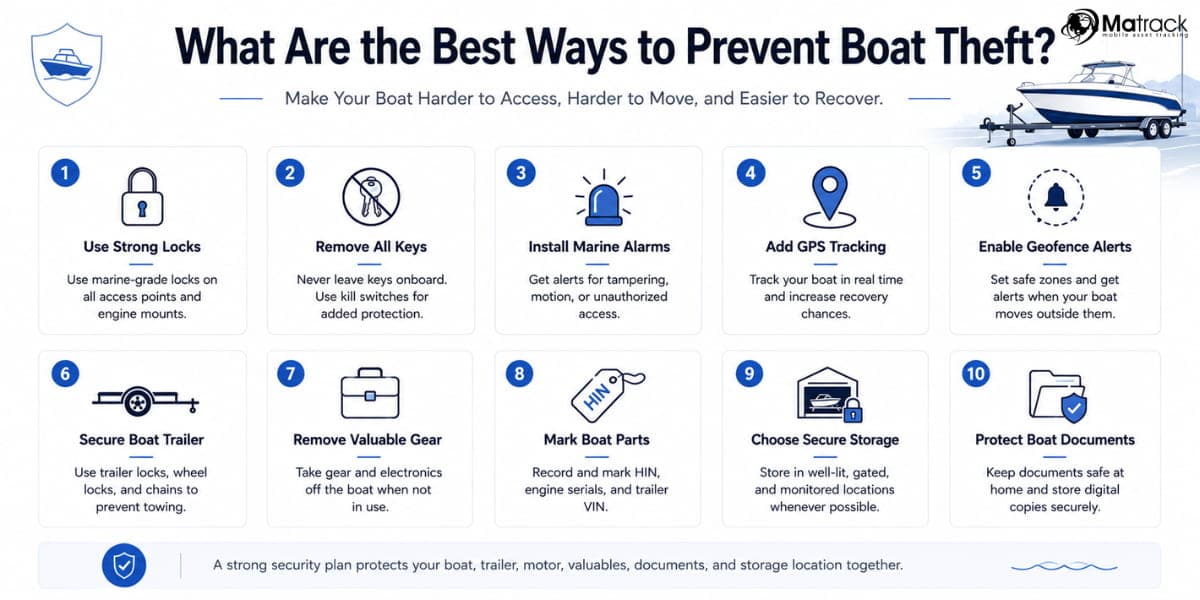
Best ways to prevent boat theft involve making the vessel harder to access, harder to move, and easier to track if stolen.
1. Use Strong Locks
Use marine-grade locks on all access points, including cabin doors, storage compartments, hatches, and engine mounts. Standard padlocks can rust, break, or be cut easily, so choose stainless steel or hardened steel locks designed for outdoor and saltwater conditions.
Dedicated outboard motor locks secure the engine clamps and prevent quick removal. Visible locking hardware also works as a deterrent because thieves usually avoid boats that require extra time and tools.
2. Remove All Keys
Never leave boat keys onboard, even inside a hidden drawer, console, glove box, or storage hatch. Experienced thieves often know the common places boat owners hide keys, and one found key can make the theft quick and quiet.
Remove spare keys from the trailer, tow vehicle, and dock storage area as well. Added protection can come from a battery disconnect switch or ignition kill switch so the boat cannot be started even after unauthorized access.
3. Install Marine Alarms
A marine alarm system alerts you when someone opens a hatch, enters the cabin, tampers with the motor, or moves the boat unexpectedly. Choose a system with motion sensors, vibration sensors, sirens, and mobile alerts for faster response.
Reliable alarms should be waterproof, battery-backed, and suitable for marine environments. Loud sirens can scare off thieves, while phone alerts help you take action even when the boat is stored away from home.
4. Add GPS Tracking
GPS boat tracker lets you monitor the vessel’s location in real time. Live location data can help law enforcement track and recover the boat faster after theft.
Place the tracker in a hidden area where it cannot be easily found or removed. Select a device with long battery life, waterproof casing, tamper alerts, and mobile app access for reliable theft recovery support.
5. Enable Geofence Alerts
Geofencing lets you create a virtual boundary around your marina, dock, driveway, or storage facility. Unauthorized movement outside that zone triggers an instant alert.
Early alerts matter because many thefts are not noticed until hours or days later. Geofence notifications help you detect unauthorized movement quickly and contact authorities before the boat is moved too far.
6. Secure Boat Trailer
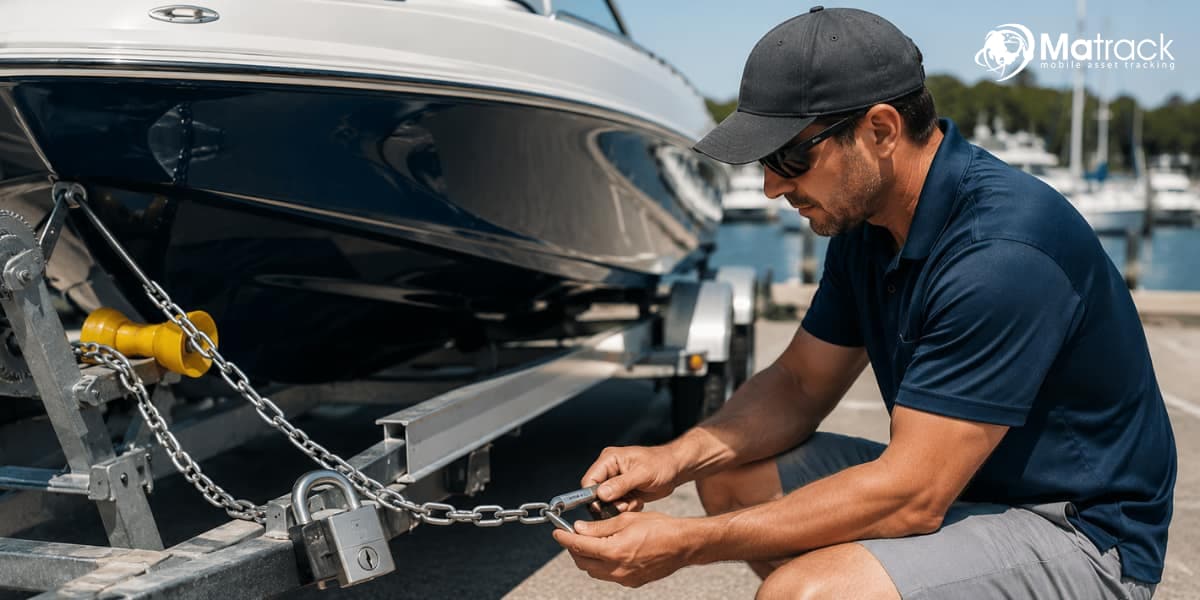
A boat trailer is one of the easiest ways to steal a boat, so it needs its own protection. Use a coupler lock, hitch lock, wheel lock, and heavy-duty chain to make towing difficult.
Park the trailer in a way that blocks easy removal, such as facing it toward a wall, fence, or another vehicle. Remove the trailer tongue or use a removable hitch system when possible for extra security.
7. Remove Valuable Gear
Take electronics, fishing equipment, tools, radios, life jackets, and personal items off the boat when it is not in use. Visible gear attracts thieves and may lead to break-ins even when they do not steal the entire boat.
Lock necessary onboard items inside secured compartments and cover windows or open areas. Keep an inventory with photos, serial numbers, and purchase receipts for insurance and police reports.
8. Mark Boat Parts
Record the Hull Identification Number, engine serial number, trailer VIN, and registration details. Unique identifiers help prove ownership and support recovery when the boat, motor, or trailer is found.
Mark expensive parts with engraved numbers, hidden labels, or UV identification markings. Permanent markings make resale harder and help authorities identify stolen components even after visible registration numbers are removed.
9. Choose Secure Storage
Store your boat in a well-lit, gated, and monitored location whenever possible. Secure marinas, indoor storage facilities, locked garages, and fenced yards are safer than open driveways or isolated docks.
Look for storage areas with surveillance cameras, controlled access, security patrols, and strong lighting. Home storage should include motion lights, cameras, locked gates, and barriers that make removal difficult.
10. Protect Boat Documents
Do not leave registration papers, insurance documents, ownership records, or title information on the boat. Stolen documents can help thieves falsely claim ownership or delay recovery.
Keep originals in a secure place at home and store digital copies in cloud storage. Maintain updated photos of the boat, trailer, engine, HIN, registration number, and any unique markings so theft reports can be filed quickly.
What Should You Do If Your Boat Gets Stolen?
Report the theft to local law enforcement immediately and provide all identifying details, including the Hull Identification Number (HIN), registration number, engine serial number, trailer VIN, and recent photos. Fast reporting increases the chances of recovery because stolen boats are often moved, altered, or separated into parts within a short time.
Notify your insurance provider, marina, and nearby boatyards right after filing the police report. Share clear details about the boat’s make, model, color, unique markings, and any installed tracking system so others in the area can watch for suspicious activity or attempted resale.
Use any available tracking data or security system alerts to support the search process. Real-time GPS location, movement history, and geofence breach alerts can help authorities track the boat more accurately and act before it is relocated or dismantled.
What to Look for in a Boat Security System?
Good boat security systems should protect the boat before theft happens and help track it quickly if it is moved without permission. Look for a system that combines GPS tracking, motion detection, geofencing, mobile alerts, tamper resistance, and marine-grade durability.
- GPS Tracking: Live location tracking through a mobile app or dashboard helps recover a stolen boat faster.
- Geofencing Alerts: Virtual boundaries around a marina, dock, driveway, or storage facility should trigger instant alerts when the boat leaves unexpectedly.
- Motion Detection: Motion, vibration, or tilt sensors can detect towing, forced entry, engine tampering, or unauthorized movement.
- Mobile Notifications: Direct phone alerts allow faster action before the boat moves too far.
- Marine-Grade Hardware: Waterproof, corrosion-resistant devices are essential for sun, saltwater, rain, and vibration.
- Backup Battery: Internal battery backup keeps the device active if the boat battery is disconnected.
- Hidden Installation: Compact, concealed placement makes the device harder for thieves to find and remove.
- Tamper Alerts: Notifications for disconnecting, removing, or disabling the device add protection when thieves target the tracker first.
- Easy App Access: Simple app controls for location, alerts, battery status, and movement history help avoid delays during emergencies.
- Reliable Support: Strong customer support, clear subscription costs, installation help, and warranty coverage keep the system dependable after purchase.
How Does Matrack Boat GPS Tracker Improve Boat Security?
Matrack Boat GPS Tracker improves boat security by keeping the vessel visible through live GPS tracking, whether it is docked at a marina, parked in a storage yard, kept near a private dock, or moved on a trailer. Boat owners can monitor location from a mobile or web dashboard and detect unauthorized movement before a missing vessel becomes a delayed recovery problem.
When the boat moves outside an approved area, geofence-based alerts and motion notifications help owners respond quickly to suspicious activity. Route history adds another layer of context by showing where the vessel has traveled, making it easier to review movement patterns and share accurate location details when support is needed.
For boats protected only by locks, alarms, or marina access controls, GPS tracking adds a remote visibility layer that works even when the owner is away. Matrack’s boat tracking system helps reduce theft risk by combining real-time location, instant alerts, geofencing, and movement history into one security workflow.
Frequently Asked Questions
What is the most effective way to prevent boat theft?
The most effective approach is layered security, combining physical deterrents with tracking technology. Strong locks, trailer security, GPS tracking, alarms, and secure storage work together to reduce both theft risk and recovery time.
Do GPS trackers really help recover stolen boats?
GPS trackers significantly improve recovery chances because they provide real-time location data. Law enforcement can use this information to track movement, identify stopping points, and act before the boat is hidden, dismantled, or resold.
Are boat trailers more at risk than boats?
Boat trailers are often targeted because they allow quick and easy transport of the entire vessel. Without a coupler lock, wheel lock, or hitch lock, a trailer can be attached and removed within minutes.
Where is the safest place to store a boat?
Secure marinas, indoor storage facilities, and gated areas with surveillance and lighting offer the highest level of protection. Home storage can also be safe if supported with cameras, motion lights, locked gates, and restricted access.
What information is needed to report a stolen boat?
Law enforcement requires key identifiers such as the Hull Identification Number (HIN), registration number, engine serial number, trailer VIN, and clear photos. Having these details ready helps verify ownership and speeds up the investigation process.