

What Is a TPMS?
Tire Pressure Monitoring System (TPMS) is a vehicle safety system designed to monitor tire pressure and notify drivers when levels fall below the recommended range. Immediate alerts appear on the dashboard, helping prevent unsafe driving conditions caused by underinflated tires.
Functionality relies on sensors or wheel speed data to track pressure changes continuously during vehicle operation. Real-time monitoring ensures any deviation from optimal pressure gets detected and communicated without delay.
Adoption across modern vehicles highlights its role in reducing tire-related failures and improving road safety standards. Federal regulations in the United States mandate its inclusion, reinforcing its importance as a core safety feature.
How Does a Tire Pressure Monitoring System Work?
TPMS works by using sensors, onboard electronics, and predefined pressure thresholds to detect low tire pressure and alert the driver instantly.
- TPMS Sensors Pressure sensors inside each tire (in Direct TPMS) measure air pressure and send real-time data through radio frequency (RF) signals.
- ABS Integration Indirect TPMS uses ABS and wheel speed sensors to detect pressure changes based on tire rotation differences.
- ECU Processing Electronic Control Unit receives sensor or ABS data and compares it against manufacturer-defined pressure thresholds.
- Threshold Detection System identifies underinflation once pressure drops below the calibrated safety limit set for the vehicle.
- Dashboard Warning TPMS warning light activates on the instrument cluster to notify the driver about low tire pressure.
- Continuous Monitoring System tracks tire pressure during driving to maintain consistent safety and performance levels.
What Are the Types of TPMS?
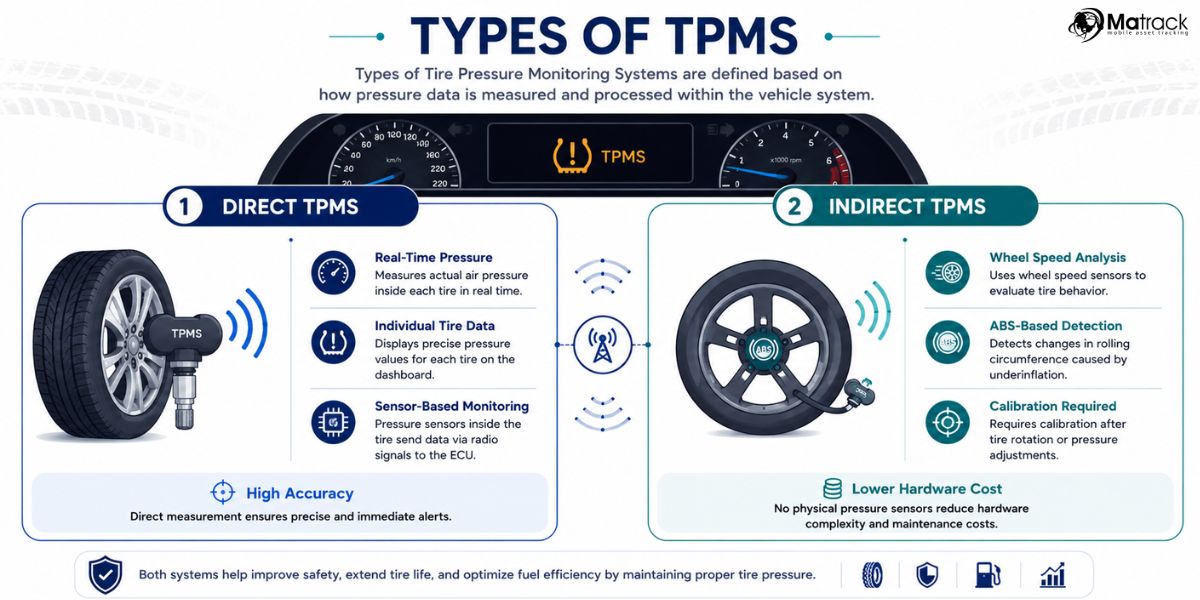
Types of tire pressure monitoring systems are defined based on how pressure data is measured and processed within the vehicle system.
1. Direct TPMS
Direct TPMS uses pressure sensors installed inside each tire to measure actual air pressure in real time. Data is transmitted through radio frequency signals to the Electronic Control Unit (ECU) for continuous monitoring.
Precise readings allow the system to display individual tire pressure values on the dashboard interface. Immediate alerts are triggered once pressure falls below the manufacturer-defined threshold.
Sensor units operate on internal batteries that typically last between 5 to 10 years depending on usage conditions. Replacement is required once battery life ends, as most sensors are sealed components.
2. Indirect TPMS
Indirect TPMS uses the Anti-lock Braking System (ABS) and wheel speed sensors to evaluate tire behavior instead of measuring pressure directly. Detection relies on changes in rolling circumference caused by underinflation.
Variation in wheel rotation speed signals a potential pressure drop, which the ECU interprets using calibrated baseline data. System accuracy depends on proper calibration after tire rotation or pressure adjustments.
Absence of physical pressure sensors reduces hardware complexity and lowers maintenance costs. However, estimated readings make the system less precise compared to direct measurement methods.
What Are the Components of a TPMS?
Core components of a tire pressure monitoring system work together to measure, process, and display tire pressure data accurately.
TPMS Sensors
TPMS sensors measure air pressure inside each tire and transmit real-time data through radio frequency signals to the vehicle system. Internal batteries power these sealed units, and replacement becomes necessary once battery life ends or physical damage occurs.
Electronic Control Unit
Electronic Control Unit (ECU) receives pressure data from sensors or wheel speed inputs and evaluates it against predefined pressure thresholds. Decision logic inside the ECU determines whether tire pressure remains within safe operating limits or requires driver attention.
ABS Sensors
ABS and wheel speed sensors support indirect TPMS and monitor rotational speed of each wheel to detect pressure-related changes. Variations in tire diameter caused from underinflation are interpreted as pressure loss through calibrated baseline comparisons.
Dashboard Display
Dashboard display provides visual alerts through a TPMS warning light that activates during low tire pressure conditions. Some systems also show individual tire pressure readings, improving driver awareness and response time.
Why Is TPMS Important for Vehicle Safety?
TPMS improves vehicle safety and performance through continuous tire pressure monitoring and early warning alerts.
- Blowout Prevention Low tire pressure increases heat buildup, which can lead to sudden tire failure during high-speed driving. Early alerts help drivers correct pressure before dangerous situations develop.
- Braking Stability Proper tire inflation ensures optimal contact with the road surface, improving braking efficiency and vehicle control. Reduced pressure can increase stopping distance and affect handling precision.
- Fuel Efficiency Underinflated tires create higher rolling resistance, causing the engine to consume more fuel. Maintaining correct pressure helps improve mileage and reduce fuel costs.
- Tire Lifespan Uneven or low pressure leads to irregular tire wear, reducing overall lifespan. Consistent monitoring helps maintain uniform wear and extends tire usability.
- Vehicle Control Balanced tire pressure supports stable steering response and overall driving performance. Pressure imbalance can affect alignment and reduce control during turns or sudden maneuvers.
- Regulatory Compliance Federal regulations in the United States require TPMS in modern vehicles to enhance road safety standards. Compliance ensures vehicles meet safety requirements set under the TREAD Act.
What Does the TPMS Warning Light Mean?
TPMS warning light indicates that tire pressure has dropped below the recommended safety level and requires immediate attention. The symbol usually appears as a horseshoe-shaped icon with an exclamation mark on the dashboard.
Pressure loss inside one or more tires commonly triggers this alert due to leaks, punctures, or natural air reduction over time. Temperature changes can also affect air pressure, especially during cold conditions, causing temporary activation.
Ignoring this warning can lead to reduced vehicle stability, increased tire wear, and higher risk of tire failure. Checking tire pressure and inflating to manufacturer-recommended levels helps restore safe driving conditions.
How Do You Reset a TPMS?
TPMS reset recalibrates the system after correcting tire pressure or making tire-related changes.
Check Pressure
Ensure all tires match the manufacturer-recommended PSI before starting the reset process. Incorrect pressure leads to faulty calibration and recurring warning signals.
Locate Reset
Find the TPMS reset button under the dashboard or inside the control panel area. The vehicle manual helps identify the exact location for different models.
Press Button
Press and hold the reset button until the TPMS warning light blinks or turns off. This action signals the system to begin recalibration.
Use Settings
Access vehicle infotainment system in models that support digital reset options. On-screen instructions guide the reset process without manual controls.
Drive Vehicle
Drive for a short distance to allow the Electronic Control Unit (ECU) to relearn updated pressure values. System calibration completes automatically during normal driving conditions.
How Much Does TPMS Cost in the U.S.?
TPMS cost in the United States typically ranges from $50 to $250 per sensor, with total replacement costs reaching $200 to $800 depending on the number of tires and labor charges. Pricing varies based on vehicle type, sensor compatibility, and installation requirements.
Sensor cost depends on whether the system uses direct TPMS sensors or indirect configurations that rely on ABS components. Additional expenses may occur in vehicles that require sensor programming or relearn procedures after installation.
Battery life inside TPMS sensors usually lasts between 5 to 10 years under normal driving conditions. Complete sensor replacement becomes necessary once the battery depletes since most units are sealed.
Is TPMS Required by Law in the United States?
TPMS is legally required in the United States for all passenger vehicles manufactured after 2007 under federal safety regulations. Requirement comes from the TREAD Act, which mandates tire pressure monitoring to reduce accidents caused due to underinflated tires.
National Highway Traffic Safety Administration (NHTSA) enforces this regulation across all applicable vehicles sold in the U.S. Compliance ensures that drivers receive timely alerts about unsafe tire pressure conditions during operation.
Mandatory implementation has improved overall road safety by reducing tire-related failures and blowouts. Modern vehicles include TPMS as a standard safety feature aligned with federal vehicle safety standards.
What Should You Consider When Maintaining a TPMS?
Maintaining a TPMS involves monitoring sensors, calibration, and system accuracy to ensure reliable tire pressure detection.
Sensor Lifespan
TPMS sensors typically last between 5 to 10 years depending on driving conditions and usage patterns. Internal battery depletion requires full sensor replacement since units are sealed.
Battery Health
Battery performance directly affects data transmission from sensors to the Electronic Control Unit (ECU). Weak batteries can cause delayed readings or intermittent warning signals.
System Calibration
Calibration ensures accurate pressure detection after tire rotation or replacement. Reset or relearn procedures help align the system with updated tire conditions.
Pressure Accuracy
Regular manual checks help verify TPMS readings against actual tire pressure levels. Inconsistent readings may indicate sensor issues or calibration errors.
Seasonal Impact
Temperature changes affect tire pressure and can trigger warning alerts during cold conditions. Monitoring pressure during seasonal shifts helps maintain stable system performance.
Physical Damage
Sensor units can get damaged during tire installation or due to road impact. Inspection during tire service helps identify faults early and prevent system failure.
Final Thoughts
TPMS plays a critical role in vehicle safety through continuous tire pressure monitoring and instant warning alerts. Proper tire pressure helps maintain stability, fuel efficiency, and overall driving performance.
System accuracy depends on sensor condition, calibration, and regular maintenance over time. Ignoring warnings or faulty sensors can lead to reduced effectiveness and increased safety risks.
Adoption of TPMS across modern vehicles reflects its importance in preventing tire-related failures and improving road safety standards. Consistent monitoring and timely action ensure reliable performance and safer driving conditions.
Frequently Asked Questions
Can You Drive With TPMS Light On?
Driving is possible for a short distance, but low tire pressure can reduce stability and increase the risk of a blowout. Immediate pressure check and correction is recommended to avoid damage.
How Accurate Is TPMS?
Direct TPMS provides real-time and precise pressure readings for each tire. Indirect TPMS estimates pressure using wheel speed data, which makes it less accurate.
Do All Cars Have TPMS?
All passenger vehicles sold in the United States after 2007 are required to have TPMS. Older vehicles may not include it unless installed separately.
Can TPMS Sensors Fail?
Sensor failure can occur due to battery depletion, signal issues, or physical damage during tire service. Replacement is required since most sensors are sealed units.
Does TPMS Replace Manual Checks?
TPMS alerts low pressure conditions but does not measure tire health or exact inflation needs. Manual pressure checks ensure accurate inflation and overall tire condition.