

What Is a Reefer Truck?
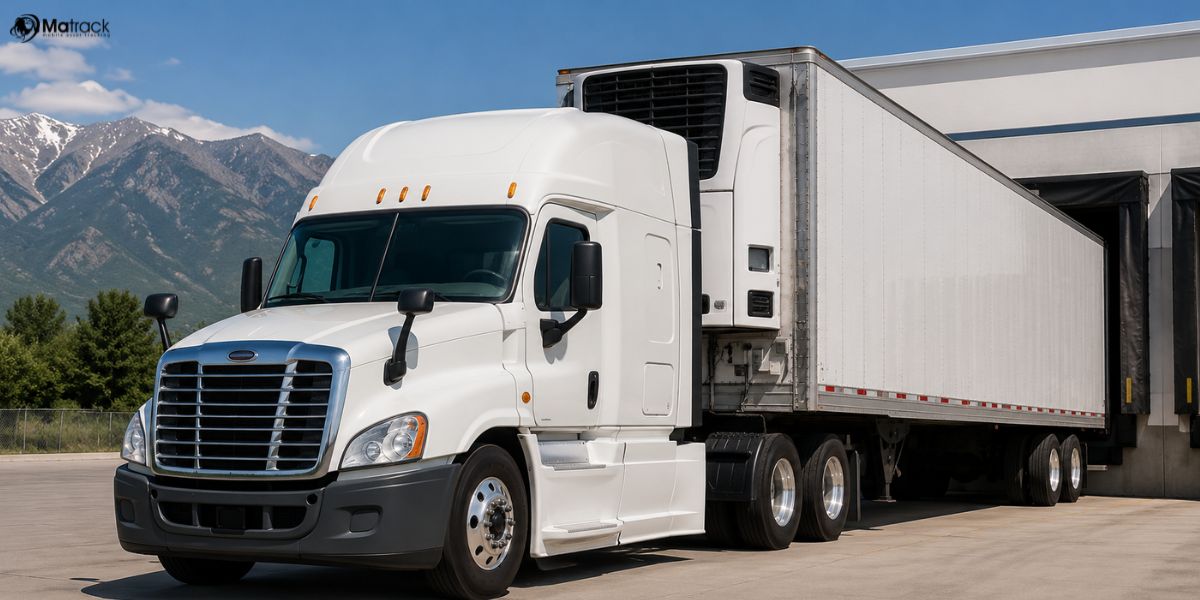
A reefer truck is a refrigerated commercial vehicle used to move temperature-sensitive freight inside a controlled cargo space. Insulated walls, sealed doors, and a transport refrigeration unit maintain the required temperature during transit.
Dairy, frozen food, seafood, meat, pharmaceuticals, flowers, and fresh produce commonly move through cold chain logistics. Controlled-temperature shipping helps preserve shelf life, product quality, and food safety across regional and long-haul deliveries.
Unlike a dry van, refrigerated trailers actively regulate internal conditions instead of only protecting freight from weather exposure. Cold air circulation, thermal flooring, and monitoring equipment help sensitive shipments stay within the shipper’s specified range.
How Does a Reefer Truck Work?
Reefer trucks work by refrigeration, thermal protection, airflow, and monitoring systems that keep sensitive freight within the required temperature range.
- Cooling Unit: Transport refrigeration units generate cold air inside the trailer and adjust output based on the shipper’s required setting.
- Thermal Barrier: Insulated walls, sealed doors, and protected flooring limit outside heat transfer, helping the trailer hold stable conditions.
- Air Circulation: Floor channels and ceiling air chutes move cooled air around pallets, boxes, and stacked freight for consistent coverage.
- Control Panel: Digital controls allow drivers to set the required level before pickup and check whether the reefer unit holds that setting during transit.
- Temperature Sensors: Monitoring devices record cargo-space conditions throughout the trip, helping carriers confirm compliance during pickup, transit, and delivery.
What Are the Common Reefer Truck Capacities?
Common reefer truck capacities include 28-foot, 48-foot, and 53-foot trailers, with most full-size refrigerated units handling about 42,000 to 44,000 pounds.
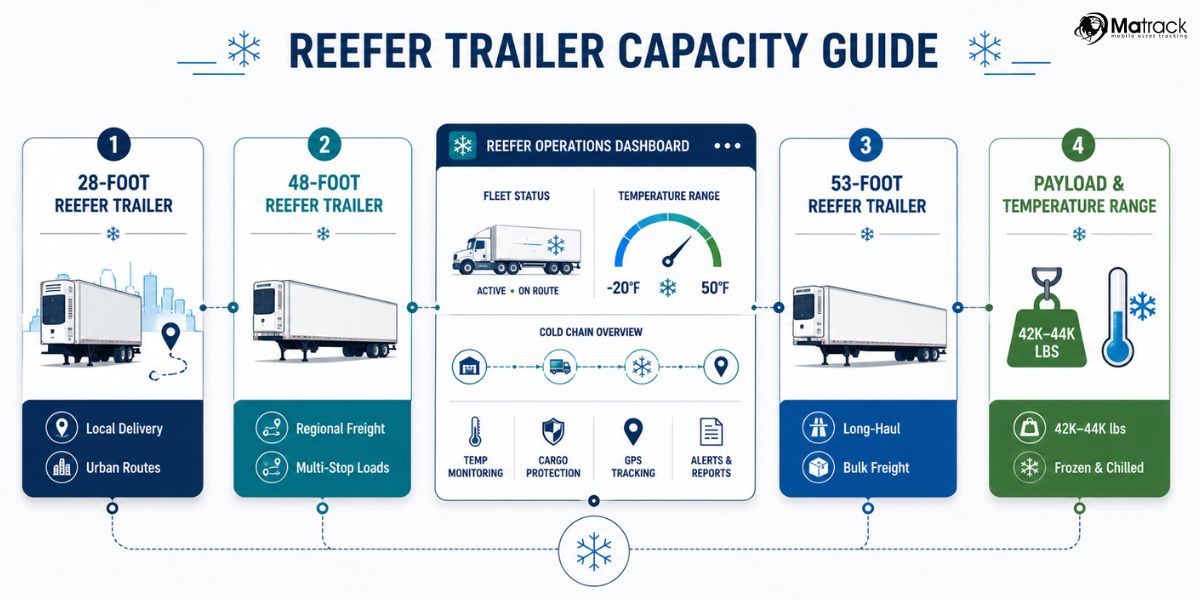
28-Foot Reefer Trailer
Smaller refrigerated trailers fit local grocery routes, restaurant supply runs, and city-based cold chain distribution. Compact dimensions support tighter delivery areas where maneuverability matters more than maximum volume.
48-Foot Reefer Trailer
Mid-sized temperature-controlled units work well for regional food shipments, retail supply networks, and multi-stop refrigerated freight routes. Added interior space gives carriers more flexibility without requiring the largest trailer configuration.
53-Foot Reefer Trailer
Long-haul carriers often use 53-foot refrigerated trailers for high-volume loads across interstate routes. Larger interiors support bulk frozen goods, produce, packaged foods, and temperature-sensitive retail inventory.
Payload and Temperature Range
Most refrigerated trailers carry around 42,000 to 44,000 pounds, although final payload depends on product density, fuel level, and reefer unit weight. Temperature settings can support frozen, chilled, or controlled-room-temperature freight based on shipment requirements.
What Products Are Usually Transported in Reefer Trucks?
Perishable goods and temperature-sensitive products usually move in reefer trucks when stable frozen, chilled, or climate-controlled conditions are required.
- Food Products: Meat, seafood, frozen meals, dairy items, bakery goods, and packaged foods need refrigerated transport to protect freshness and safety.
- Fresh Produce: Fruits, vegetables, herbs, and leafy greens require steady airflow and cooling to slow ripening during distribution.
- Medical Shipments: Vaccines, biologics, blood plasma, insulin, and laboratory samples depend on controlled temperatures during transportation.
- Beverage Loads: Juice products, bottled drinks, beer ingredients, and specialty beverages often travel in refrigerated trailers to maintain product quality.
- Floral Distribution: Flowers, nursery plants, and decorative greenery move in cooled environments to reduce moisture loss and premature spoilage.
- Specialty Freight: Cosmetics, chemicals, candles, and heat-sensitive retail products may also require refrigerated transportation during seasonal shipping conditions.
What Requirements Are Needed for Reefer Trucking?
Reefer trucking requires driver qualifications, refrigeration knowledge, temperature compliance, and regular equipment maintenance to transport sensitive freight safely.
CDL and Driver Qualifications
Commercial drivers need a valid CDL to operate refrigerated trailers across regional and interstate routes. Experience with temperature-sensitive freight also helps drivers manage loading procedures, reefer settings, and delivery schedules.
FSMA Compliance
Food shipments transported in refrigerated trailers must follow Food Safety Modernization Act regulations during transit. Sanitation procedures, temperature records, and proper handling practices help carriers meet food safety requirements.
Reefer Unit Maintenance
Refrigeration systems require regular inspections to prevent cooling failures during transportation. Fuel levels, battery condition, airflow components, belts, and electrical connections should be checked before dispatch.
Temperature Documentation
Shippers often require temperature logs before pickup, during transit, and after delivery confirmation. Digital monitoring systems and reefer control panels help carriers maintain accurate shipment records throughout transportation operations.
Cargo Loading Procedures
Freight placement inside refrigerated trailers affects airflow circulation and cooling performance. Proper spacing between pallets helps cold air move evenly across temperature-sensitive shipments.
Emergency Preparedness
Breakdowns and reefer malfunctions can damage frozen or chilled freight within a short period. Drivers usually keep emergency repair contacts, backup fueling locations, and reefer service information ready during long-haul trips.
Why Is Reefer Trucking Important in Cold Chain Logistics?
Reefer trucking is important in cold chain logistics because it protects temperature-sensitive freight during long-distance transportation. USDA Agricultural Refrigerated Truck Quarterly data reported 8.62 million tons of U.S. fresh produce truck shipments in Q1 2025, showing how much refrigerated transport supports food distribution.
Fresh produce, dairy, meat, seafood, frozen goods, and medical products depend on stable cooling conditions from pickup to delivery. Controlled trailer temperatures reduce spoilage, preserve product quality, and support food safety standards across supply chains.
Perishable goods often travel across cities, states, and regions before reaching retailers, pharmacies, restaurants, or consumers. Refrigerated trucking keeps these shipments usable, compliant, and ready for sale by preventing temperature breaks during transit.
What Are the Best Tips for Reefer Truck Drivers?
Reliable reefer transportation depends on accurate temperature settings, steady airflow, working refrigeration equipment, proper load handling, and quick action when cooling problems appear.
1. Pre-Cool the Trailer Before Loading
A warm trailer can raise product temperature before refrigerated freight even leaves the loading dock. Frozen foods, dairy products, seafood, and fresh produce usually need a cooled cargo space before warehouse teams begin loading.
Reefer operators should start the refrigeration unit before pickup so the trailer reaches the required setting in advance. Closed doors, clear vents, and steady air movement keep cold conditions stable inside the compartment.
2. Verify Temperature Settings and Shipment Instructions
Wrong reefer settings can damage chilled inventory, frozen loads, pharmaceuticals, and floral products even on shorter delivery routes. Bill of lading documents usually mention the required temperature setting, handling notes, and shipper instructions.
Continuous mode is often used for highly perishable freight because it reduces cooling gaps during transit. Regular checks on the control panel also confirm whether the unit is holding the required range.
3. Perform Routine Reefer Maintenance
Mechanical issues in refrigeration systems can cause spoiled freight, delayed deliveries, and expensive claims. Preventive checks allow carriers to find weak batteries, low fuel levels, loose belts, blocked vents, or wiring problems before dispatch.
Warning alarms, unusual vibration, and unstable readings often point to equipment faults that need service. Clean trailer interiors also reduce contamination risk after food, seafood, dairy, or produce deliveries.
4. Maintain Proper Airflow Around Freight
Blocked airflow can create warm spots inside refrigerated trailers and prevent cold air from reaching the full load. Poor product placement may also cause uneven cooling around pallets, boxes, and stacked freight.
Spacing between pallets allows air to move through the trailer without obstruction. Load bars, straps, and balanced weight distribution reduce freight movement on highways, rough roads, and multi-stop delivery routes.
5. Monitor Temperature Conditions Throughout the Route
Hot weather, long stops, repeated door openings, and traffic delays can affect reefer performance during transport. Temperature sensors, data loggers, and reefer monitoring systems provide continuous records for shipment protection and compliance.
Manual checks at fuel stops and rest areas give transport crews another way to confirm stable operation. Any sudden temperature change should be handled quickly before product quality or receiver acceptance is affected.
6. Stay Prepared for Reefer Failures
Unexpected reefer shutdowns can place frozen goods, chilled products, and medical shipments at immediate risk. Fast response can prevent spoilage, shipment rejection, missed delivery windows, and costly freight claims.
Error codes on the reefer control panel often show whether the issue is mechanical, electrical, or fuel-related. Roadside repair contacts, spare fuses, emergency fuel access, and nearby cold storage options help protect the load during breakdowns.
7. Follow Food Safety and Reefer Regulations
Temperature-controlled transportation must follow sanitation and compliance standards for food, beverage, and pharmaceutical supply chains. Missed temperature logs, dirty trailers, incorrect settings, or broken seals can lead to rejected shipments and penalties.
FSMA requirements often include shipment records, clean trailer conditions, and proof that required temperatures were maintained. Washing the refrigerated compartment after deliveries reduces contamination risk between different product categories.
Final Thoughts
Reefer trucks play a major role in moving perishable goods through cold chain logistics without damaging product quality. Refrigeration systems, sealed trailer structures, airflow circulation, and temperature monitoring all contribute to safe transportation for sensitive shipments.
Capacity planning also affects transportation efficiency because trailer size, payload limits, cooling equipment, and product density influence freight movement across regional and interstate routes. Proper loading procedures, pre-cooling practices, maintenance checks, and temperature tracking reduce spoilage risks throughout delivery operations.
Successful refrigerated transportation requires operational consistency, equipment management, and strict temperature control across every stage of the route. Fleet teams that maintain compliance standards and monitor reefer performance closely can protect shipments and support dependable delivery schedules.