

Are Dash Cams Legal in the United States?
Yes, dash cams are legal in most U.S. states, but legality depends on how the device is installed and used. Compliance mainly comes down to keeping the camera from blocking your view and following state recording laws.
Rules differ from state to state since no single federal law controls dash cam use. Some states restrict anything that blocks the driver’s view, and others place stricter limits on recording conversations.
Drivers usually run into trouble through poor placement or unlawful audio capture. A state-by-state review helps you avoid those issues and use a dash cam without crossing legal limits.
What are the Dash Cam Laws By State?
Dash cam laws vary across the U.S., with legality depending on placement, visibility rules, and state-specific recording regulations.
Alabama
Alabama restricts objects placed on a vehicle’s windshield, so suction-mounted dash cams can create legal issues. Dash cam use is still allowed if placement does not block the driver’s view of the road.
Alaska
Alaska Statute 13.04.225 allows dash cameras as long as driver visibility remains unobstructed. Driver-side placement must stay under 5 square inches, which means a two-inch-by-two-inch device is allowed, but a three-inch-by-three-inch unit would exceed the limit.
Arizona
Arizona allows dash cams, but placement rules are strict and tied to windshield visibility. Driver-side mounting must stay in the lower corner and fit within 5 square inches, while passenger-side mounting may use up to 7 square inches in the lower corner.
Arkansas
Arkansas permits dash cameras if they are concealed behind the rearview mirror and do not interfere with sightlines. Once placement blocks the driver’s field of vision, use becomes unlawful.
California
California legalized dash cams with specific placement limits for windshield installation. Upper-center placement may not exceed 5 square inches, bottom-right placement may not exceed 7 square inches, and installation should stay away from airbag deployment zones.
Audio recording adds another legal step in California. Consent is required from everyone inside the vehicle before voices can be recorded.
Colorado
Colorado allows dash cams on the dash or behind the rearview mirror, giving drivers more than one compliant option. Mirrored or metallic devices are restricted since reflected glare can interfere with safe driving.
Connecticut
Connecticut prohibits opaque objects on windshields, and state law does not clearly exempt dash cams from that rule. Low-profile placement away from direct sightlines is the safer approach under current visibility standards.
Delaware
Delaware bars non-transparent materials on the windshield, side wings, and side or rear glass. Dash cams therefore need to be mounted in a position that does not fall under those restrictions, with interior placement offering the safer route.
District of Columbia (D.C.)
Washington, D.C. allows dashboard cameras but does not permit windshield mounting. Local law also restricts non-transparent material on the windshield, so placement choice matters from the start.
Audio recording requires passenger authorization inside the vehicle. A visible notice stating that audio is being recorded for safety can help support compliance.
Florida
Florida prohibits objects that obstruct the driver’s view, even though no dash cam-specific law directly addresses installation. Dash cam use remains legal if placement does not interfere with forward visibility.
Georgia
Georgia allows drivers to use dash cams and permits audio or video recording with passenger approval. Windshield mounting can still become a problem, since opaque objects on the front windshield are restricted under state law.
Hawaii
Hawaii allows dash cams in upper or lower windshield corners and also permits interior mounting options. Size limits generally range from 5 to 7 inches square depending on where the unit is installed.
Idaho
Idaho law focuses on preserving an unobstructed line of sight for the driver. Placement away from the windshield’s main viewing area is the safer way to stay within that rule.
Illinois
Illinois vehicle law does not directly address dash cams, but general visibility rules still apply. Windshield mounting is permitted if the device does not block the driver’s view, and driver-side placement should stay within a 5-inch square limit.
Indiana
Indiana permits dash cams on both the dash and the windshield if installation follows state limits. Passenger-side bottom-corner placement must remain within 4 square inches to stay compliant.
Iowa
Iowa law does not specifically mention dash cams, but visibility rules still govern how they can be used. Any device that blocks the windshield, wings, or windows can turn a legal setup into a violation.
Kansas
Kansas allows dash cams on either the dash or the windshield. Placement remains lawful only if it does not significantly hinder the driver’s eyesight.
Kentucky
Kentucky does not set a specific dashcam placement rule in state law. Legal use mainly depends on keeping the device from obstructing the driver’s view.
Louisiana
Louisiana allows dash cam use, but state law still requires an unobstructed view through the windshield. Placement lower in the vehicle or just behind the mirror is generally safer than mounting directly in the driver’s line of sight.
Maine
Maine permits dash cams as long as they do not interfere with driver visibility. State law also exempts certain required or supplied vehicle equipment, which may support lawful use in some situations.
Maryland
Maryland sets defined placement rules for vehicle cameras. Mounting is allowed above the AS-1 line or within 5 inches below the windshield, and bottom-corner installation may use up to a 7-inch square area.
Massachusetts
Massachusetts does not permit windshield-mounted dash cams under its opacity rules. Interior placement offers the more practical option, and side-mounted devices may be allowed only if window light reflectance stays within legal limits.
Michigan
Michigan allows camera use inside the vehicle but restricts windshield mounting. Certain larger or specialized vehicles, including some heavy trucks and buses, may fall under separate exemptions.
Minnesota
Minnesota requires camera placement behind, above, or below the rearview mirror. State treatment of dash cams recognizes their role in monitoring driver input and supporting vehicle safety.
Mississippi
Mississippi prohibits any obstruction of the driver’s view, but dash cams themselves are not banned. Legal use depends on proper placement, and recorded footage can also help document incidents on the road.
Missouri
Missouri is one of the few states that does not directly address driver visibility in dashcam terms. Flexible placement is possible, though keeping the device behind the rearview mirror or away from sightlines remains the more practical choice.
Montana
Montana law requires a fully unobstructed windshield, with no items allowed to block or reduce driver visibility. Interior placement is the safer option since windshield mounting can create compliance issues.
Nebraska
Nebraska allows dash cams inside the vehicle but restricts placement on the windshield. Audio recording requires permission from passengers before capturing conversations.
Nevada
Nevada allows small dash cams in the lower corner of the windshield, with size limited to under 6 inches squared. Placement within that limit keeps usage compliant without broader restrictions.
New Hampshire
New Hampshire restricts front windshield dashcams, making that placement unlawful. Interior or rear-facing setups can still be used without violating state rules.
New Jersey
New Jersey prohibits non-transparent objects on the windshield and front-side windows. Placement near the passenger-side area or inside the vehicle helps avoid violations.
New Mexico
New Mexico permits dash cams but requires careful placement to maintain visibility. Mounting directly on glass surfaces can create issues, so interior positioning is preferred.
New York
New York allows dash cams and even recognizes their role in resolving traffic incidents. Insurance incentives have been introduced for vehicles equipped with operating cameras, while interior placement remains the safer approach.
North Carolina
North Carolina does not directly regulate dash cam placement, but visibility laws still apply. Careful positioning inside the vehicle helps avoid blocking the driver’s view.
North Dakota
North Dakota prohibits dash cams on the windshield and requires glass areas to remain free of mounted items. Interior placement provides a compliant setup.
Ohio
Ohio restricts windshield-mounted dash cams but allows installation inside the vehicle. Recording remains legal as long as driver visibility is not affected.
Oklahoma
Oklahoma restricts dashboard cameras if they interfere with visibility but allows usage when placement does not block the windshield view. Proper positioning remains key for compliance.
Oregon
Oregon prohibits materials that interfere with vehicle visibility, which limits windshield or window mounting. Recording video and audio is still allowed if placement follows visibility rules.
Pennsylvania
Pennsylvania prohibits mounting dash cams on vehicle glass, including the windshield. Interior placement is required to keep the driver’s view unobstructed.
Rhode Island
Rhode Island allows dash cams but restricts windshield mounting. Placement inside the vehicle is allowed as long as road visibility is maintained.
South Carolina
South Carolina permits dash cams inside the vehicle but restricts mounting on windows. All windows must remain fully visible to the driver.
South Dakota
South Dakota prohibits non-transparent materials on vehicle glass. Interior placement is allowed, and audio recording may require prior notice or consent.
Tennessee
Tennessee requires an unobstructed windshield and does not allow devices that interfere with visibility. Dash cams remain legal if installed in a compliant position.
Texas
Texas treats any object that reduces driver visibility through the windshield or windows as a violation. Interior placement is required since windshield mounting can create legal issues.
Utah
Utah allows limited windshield placement if size and extension remain within defined limits. Cameras may extend no more than four inches, making careful positioning important.
Vermont
Vermont allows dash cams in specific windshield zones with defined size limits. Bottom-right placement can extend up to 12 inches in length, while upper-left placement must remain smaller.
Virginia
Virginia restricts windshield-mounted dash cams but allows interior installation. Visibility of the road must remain unobstructed at all times.
Washington
Washington allows recording of video and audio through dash cams, even while parked. Placement must still avoid blocking the driver’s forward view.
West Virginia
West Virginia restricts non-transparent materials on the windshield but allows flexibility in other areas. Placement outside the driver’s sightline helps maintain compliance.
Wisconsin
Wisconsin allows dash cams but limits placement to areas behind the rearview mirror. Installation must avoid zones cleaned by windshield wipers and areas between the driver and the windshield.
Wyoming
Wyoming allows dash cams inside the vehicle but restricts windshield mounting. Legal use depends on keeping the driver’s view clear at all times.
What Are the Main Legal Factors That Determine Dash Cam Compliance?
Dash cam compliance depends on legal rules tied to placement, recording, privacy, and how footage is handled.
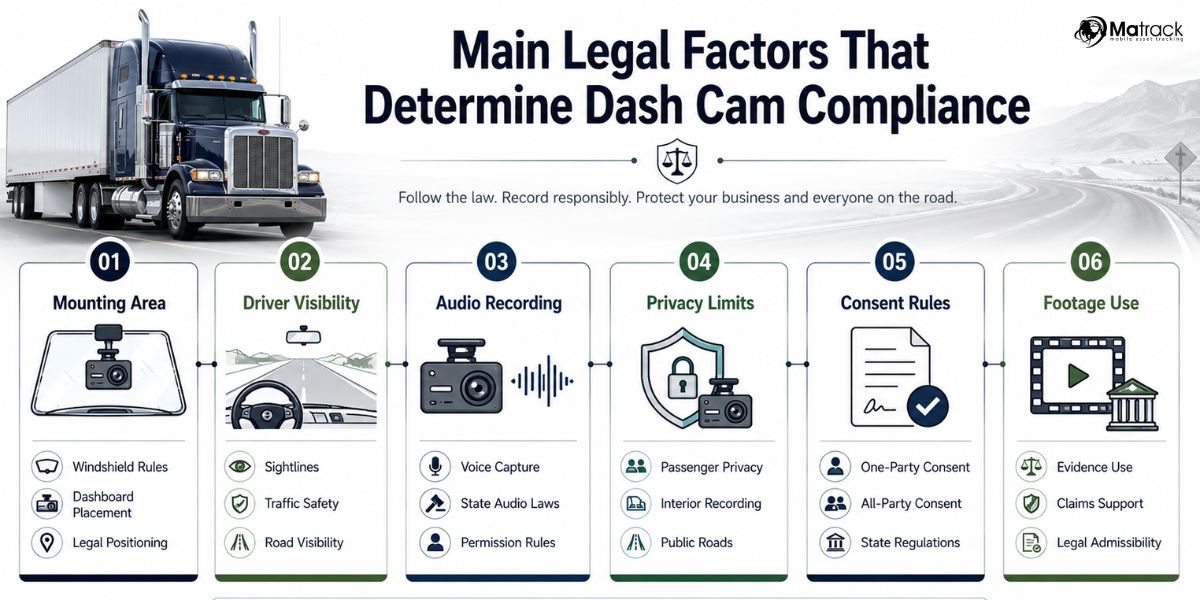
- Mounting Area: State laws often define where a camera can be placed on the windshield or dashboard. Incorrect positioning can create a violation even if usage is allowed.
- Driver Visibility: Clear road view remains a priority under traffic laws. Any device that interferes with sightlines can lead to penalties.
- Audio Recording: Video capture is usually permitted, but sound recording can trigger stricter consent laws. Conversations inside the vehicle may require permission depending on the state.
- Privacy Limits: Recording on public roads is generally accepted, but interior footage raises more concerns. Passenger activity and private settings increase legal sensitivity.
- Consent Rules: States follow different standards for recording conversations. One-party and all-party consent laws directly affect how in-car audio can be used.
- Footage Use: Recorded video can support claims and legal cases. Value depends on whether the footage was captured within legal boundaries.
Where Can You Mount a Dash Cam Legally?
Placement rules are meant to keep the road visible to the driver and prevent the camera from interfering with safe vehicle operation.
- Windshield Zones: Some states allow installation only in limited areas of the windshield, such as near the rearview mirror or along the edge. Cameras placed outside those areas can create a legal problem.
- Dashboard Mounting: Dashboard placement is accepted in many states and often gives drivers a safer installation option. Position still needs to stay low enough to avoid blocking the view ahead.
- Driver Sightline: Traffic laws often focus on whether the device affects the driver’s forward view. A compact camera can still become a violation if it sits in the wrong position.
- Camera Size: Large units and bulky mounts usually face more scrutiny during traffic stops or inspections. Compact models are often easier to place without creating obstruction concerns.
- State Restrictions: Some states set exact limits on placement or device dimensions. Reviewing local rules before installation helps prevent avoidable violations.
Can Dash Cams Record Audio in Every State?
Audio recording through a dash cam is not treated the same way in every state, since consent laws apply to recorded conversations inside a vehicle.
- Consent Rules: Some states allow one-party consent, which means one person involved in the conversation can approve the recording. Other states require permission from everyone involved before audio can be captured.
- In-Car Recording: Conversations inside a vehicle can fall under state privacy laws. Recorded audio without proper consent can create legal trouble in stricter states.
- Passenger Notice: Drivers who carry passengers should pay close attention to disclosure. Notice about in-car recording can help reduce legal risk.
- Microphone Use: Built-in microphones can record sound automatically unless settings are changed. Turning audio off or using clear notice can help avoid compliance issues.
- State Variation: Video recording is usually treated differently from audio recording under state law. Reviewing consent rules first helps drivers avoid recording conversations in a way that crosses legal limits.
How Should Drivers Use a Dash Cam When Traveling Across State Lines?
Travel across state lines can create compliance issues since dash cam laws do not stay the same everywhere.
- Placement Rules: Windshield and dashboard laws can change from one state to another. A setup that works in one place may not meet requirements in the next.
- Audio Recording: Consent laws create the biggest risk during interstate travel. Recording conversations without proper approval can lead to legal trouble in stricter states.
- Strictest Standard: Following the most restrictive rule across states helps avoid constant adjustments. Safer approach keeps both placement and recording within limits.
- Passenger Notice: Informing passengers about recording reduces privacy-related concerns. Clear notice helps avoid disputes tied to in-car conversations.
- Stable Setup: Consistent camera position and controlled settings make long-distance driving easier. Fewer changes mean fewer chances of making mistakes.
- Route Awareness: Checking state rules before entering a new region helps drivers stay prepared. Small effort upfront can prevent avoidable violations.
Why is Matrack Fleet Dash Cam the Best Choice for Your Fleet ?
Matrack Fleet Dash Cam supports fleet operations by combining real-time video access with GPS tracking and driver alerts. This setup helps managers monitor vehicles closely and respond quickly to on-road situations.
Multiple camera support gives full visibility inside and around the vehicle, making it easier to track driver activity and road conditions. Alerts for behaviors like distraction or fatigue help reduce risk and improve overall driving standards.
Cloud-based access allows instant retrieval of footage during incidents, which supports faster reviews and clearer decision-making. Features like collision warnings and lane alerts add another layer of awareness that strengthens fleet safety and control.
Frequently Asked Questions
Can Dash Cam Footage Be Used Against You in Court?
Yes, dash cam footage can be used against you if it shows evidence of breaking the law or driving negligently. Courts accept such footage if it was recorded legally and hasn’t been tampered with. Know More.
Is Dash Cam Footage Admissible in Court?
Courts often accept dashcam footage as evidence if it’s relevant, legally obtained, and authentic. It’s commonly used in accident cases to prove fault or support claims.
Can Police Take Your Dash Cam Footage?
Yes, law enforcement can request your dashcam footage during investigations. In some cases, they may need a warrant to access it, depending on local laws and circumstances.
Do You Need Consent to Record with a Dash Cam?
This depends on the laws in your state. States with all-party consent laws require you to inform and get approval from everyone who has recorded. However, video recording in public spaces is generally allowed without consent.