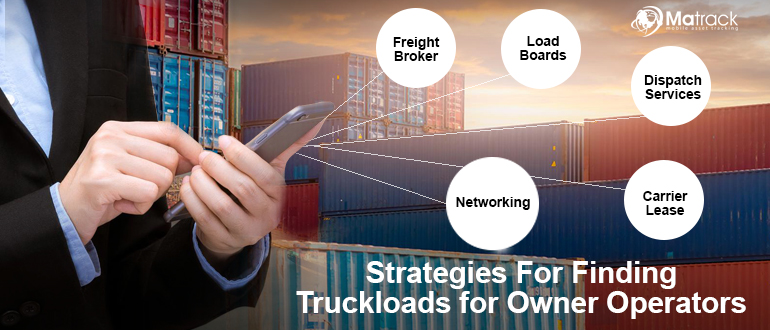


Owner operators usually find truckloads through freight brokers, load boards, dispatching services, carrier lease-on programs, and direct shipper connections. Right option depends on how often loads are needed, how much independence matters, and how much time can go into sourcing freight.
Freight brokers and truck load boards help fill gaps quickly, especially across unfamiliar lanes or during slower weeks. Dispatching services take over booking and communication tasks, which helps solo operators spend less time chasing freight.
Carrier lease-on programs connect drivers with established freight networks, and direct freight relationships can lead to repeat business with higher margins. Mixing fast-access options with relationship-based channels often leads to steadier revenue and fewer empty miles.
What Are the Best Strategies to Find Truckloads as an Owner Operator?
Owner operators usually rely on a mix of freight access channels to keep revenue steady, reduce empty miles, and maintain control over lanes, rates, and scheduling.
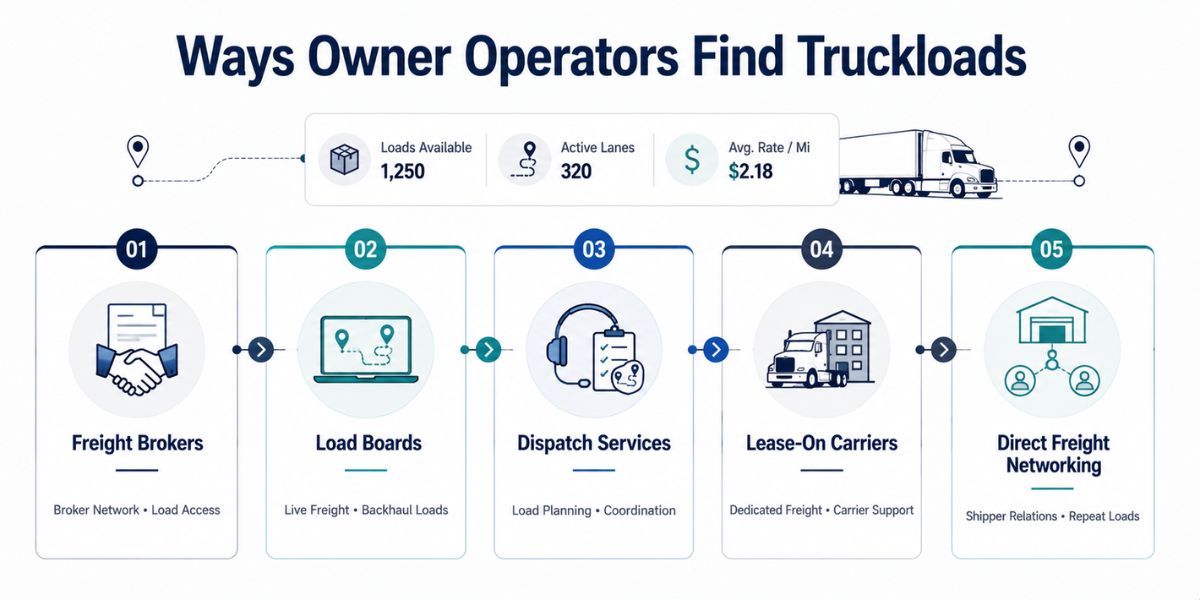
1. Work With a Freight Broker
Freight brokers help owner operators connect with shippers that need loads moved across local, regional, and long-haul lanes. Faster access to available freight makes this option useful for drivers who want to keep the truck moving without spending hours chasing leads.
A wide broker network can open the door to dry van loads, reefer freight, flatbed loads, and last-minute shipments in different markets. Steady load opportunities also help reduce downtime and improve weekly revenue potential.
Commission fees can cut into the final rate, so load selection matters a lot. Careful rate negotiation, credit checks, and working with reliable freight brokers can protect margins and reduce payment risk.
2. Use a Load Board for Trucks
Online truckload boards give owner-operators quick access to live freight listings from brokers and shippers. Search tools usually make it easy to sort loads by pickup location, destination, equipment type, rate per mile, and appointment time.
High listing volume makes load boards useful for booking backhaul freight, covering empty miles, and finding loads in unfamiliar markets. Quick action often makes the difference because good-paying freight can disappear within minutes.
Heavy competition is one of the main drawbacks of public load boards. Constant market tracking, fast communication, and a sharp eye on lane rates are important when trying to secure profitable truckloads.
3. Hire a Dispatching Service
Many owner operators use a dispatching service to handle load booking, broker calls, paperwork, and schedule coordination. Extra support on the back end gives drivers more time to focus on pickups, deliveries, and hours of service compliance.
Experienced dispatchers often know which freight lanes are paying, which brokers move loads consistently, and where rate pressure is building. Smart load planning can lead to fewer deadhead miles and stronger revenue per mile.
Dispatch fees usually come as a flat amount per load or a percentage of gross revenue. Service quality matters a lot because a weak dispatcher can waste time, book poor freight, and hurt weekly earnings.
4. Lease On with a Carrier
Leasing on with a motor carrier gives owner-operators access to freight under an established authority. Steady load flow can make daily operations easier for drivers who do not want to handle direct load sourcing alone.
Dedicated routes, fuel card programs, trailer access, and back-office support are common benefits in this setup. Predictable freight volume can also reduce the stress of searching for the next load after every delivery.
Less freedom comes with that support. Revenue splits, company rules, and limited load choice can make this option less attractive for drivers who want full control over rates and lanes.
5. Network for Direct Freight Opportunities
Direct freight usually comes from relationships with local shippers, warehouses, manufacturers, and distribution centers. Personal outreach and dependable service can turn a one-time load into repeat business on a regular lane.
Higher margins are often possible because broker commissions and third-party dispatch fees are removed from the equation. Repeat customers also make planning easier and create more predictable cash flow over time.
Building direct shipper relationships takes patience and consistency. Professional communication, on-time delivery, and reliable service are usually what turn a contact into a long-term freight customer.
Which Truckload Strategy Is Best for Your Business?
The right strategy depends on business stage, freight goals, and how much control an owner operator wants over daily load decisions. Load boards and freight brokers usually fit early-stage operations because they provide quick access to truckloads without requiring an existing shipper network.
Dispatching services make more sense when load search, scheduling, and paperwork start taking too much time away from actual driving. Carrier lease-on programs also fit operators who want steadier freight and less pressure around authority, compliance, and constant load sourcing.
Direct freight networking usually becomes more valuable over time as relationships with shippers begin to grow. Most owner operators get the best results by combining quick-access options for immediate revenue with relationship-based strategies that support long-term profitability.
Frequently Asked Questions
What is the fastest way to find truckloads as an owner operator?
Freight brokers and load boards usually help owner operators find truckloads faster than any other method. Immediate access to posted freight makes both options useful when a truck needs a load quickly after delivery.
Are load boards worth paying for?
Yes, paid load boards are worth it when consistent freight access, better filters, and rate insights improve load selection. Higher-quality listings can help reduce empty miles and increase overall efficiency.
Is working with a freight broker profitable?
Working with a freight broker can still be profitable if the load offers a healthy rate per mile and fits the truck’s lane strategy. Broker commissions reduce the gross payout, so profitability depends on total trip cost, deadhead, and payment terms rather than the posted rate alone.
Should new owner operators hire a dispatching service?
Yes, hiring a dispatching service can help new owner operators manage load booking and scheduling more effectively. Reduced workload allows more focus on driving while improving consistency in freight movement.
Is leasing on with a carrier better than running independently?
Leasing on with a carrier works best for owner operators who want steady freight and less pressure around compliance, authority, and customer acquisition. Running independently offers more control over rates and business direction, but it also requires more responsibility in finding and managing freight.
How do owner operators find direct freight opportunities?
Direct freight opportunities usually come from shipper relationships built through outreach, referrals, repeat service, and reliable communication. Long-term consistency matters here, since most shippers continue working with carriers that deliver on time and handle freight professionally.