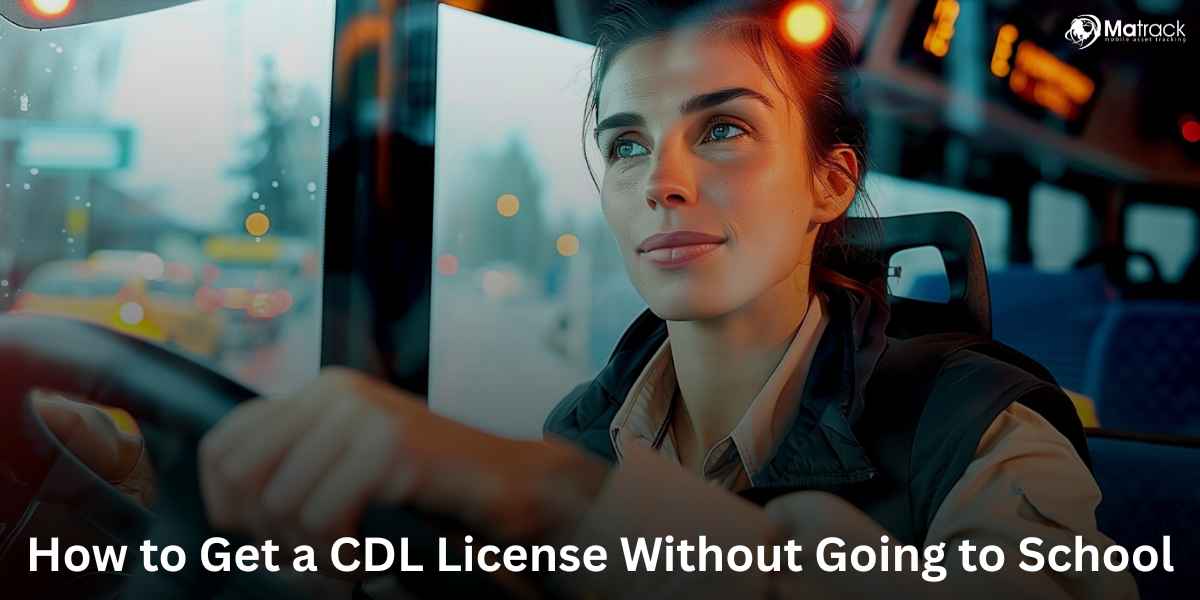


Can You Get a CDL Without Going to School?
Yes, getting a CDL without attending a traditional truck driving school is possible, but skipping school does not mean skipping the process. Most first-time applicants still have to meet licensing rules, complete required training, and pass the exams before a CDL can be issued.
Many people choose this route to avoid private school tuition or to move into job-based training. Company-sponsored programs, community options, and other approved paths can reduce upfront costs while still covering the required steps.
Federal rules changed the process on February 7, 2022, as the FMCSA made entry-level driver training mandatory for many new Class A and Class B CDL applicants. Since that point, getting a CDL without school has usually meant choosing a different training route rather than avoiding training altogether.
Read More: Everything you need to know about CDL License
Who Needs Training Before Getting a CDL?
Most first-time CDL applicants need training before taking the skills test.
- Class A license: Training is usually required for applicants who want to drive combination vehicles such as tractor-trailers.
- Class B license: People planning to operate heavy straight trucks, large buses, or similar vehicles often need training as part of the licensing process.
- Passenger endorsement: Extra instruction is commonly required here since carrying passengers involves added safety responsibility.
- School bus endorsement: Student transportation brings its own rules and safety standards, so specialized preparation is generally expected.
- Hazmat endorsement: Handling hazardous materials usually requires additional training due to stricter compliance and safety requirements.
What Are the Basic Requirements to Get a CDL Without Going to School?
Skipping a traditional CDL school does not remove the requirements tied to getting a commercial license.
Minimum Age
Most states allow CDL applicants to start at 18 for intrastate driving, while 21 is usually required for interstate driving and certain endorsements. Age determines what type of commercial driving is legally allowed.
Proof of Identity
State licensing offices require documents that verify identity, residency, and legal presence before a CDL application can move forward. Those records are reviewed before permit approval.
Driving Record
Suspensions, serious violations, or other disqualifying offenses can delay the process or stop it completely. A valid license and a clean enough record are part of basic eligibility.
Medical Qualification
Commercial drivers must pass a physical exam that checks vision, hearing, blood pressure, and overall health. Medical clearance is required before the licensing process can continue.
Commercial Learner’s Permit
A CLP comes after passing the written knowledge exam based on the state CDL manual. Permit approval allows supervised practice and leads into the training stage.
Training and Skills Test
Required training still applies in many cases, even without attending a traditional school. CDL qualification depends on passing the pre-trip inspection, basic control test, and road test.
What Steps Should You Follow to Get a CDL Without Attending a Traditional School?
Getting a CDL without attending a traditional school still follows the same licensing path, with training completed through another approved option.
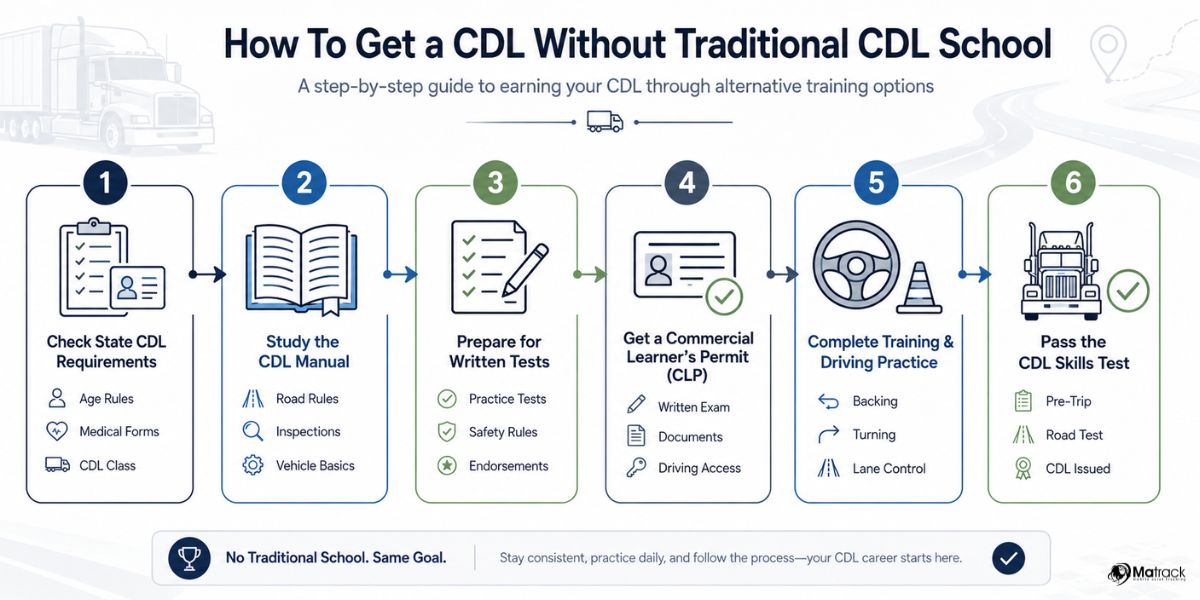
Step 1: Check Your State’s CDL Requirements
Start with your state’s CDL rules. Age limits, permit conditions, medical forms, document requirements, and endorsement rules can change from one state to another.
A quick review shows which CDL class matches your goal and what your state expects before testing begins. Missing one requirement at this stage can slow down the whole process.
Step 2: Get Your CDL Manual
Your state’s CDL manual explains what appears on the written exams and what skills matter later in the process. Typically, the manual covers road rules, inspection steps, control maneuvers, and class-specific material.
Reading through the manual gives structure to your preparation. Manual knowledge also makes driving practice feel more connected to what examiners look for during testing.
Step 3: Prepare for Written Tests
Written test prep comes next. Most applicants need to study traffic laws, safety rules, inspection topics, air brakes, combination vehicles, and endorsement material based on the license they want.
Practice tests, flashcards, and review guides can help turn those topics into something easier to remember. Good prep here makes permit approval much smoother.
Step 4: Apply for a Commercial Learner’s Permit
Passing the written exam leads to a Commercial Learner’s Permit, also called a CLP. A CLP gives you legal access to supervised commercial driving practice.
Most states also ask for identification documents, medical certification, and permit fees during this step. Permit approval marks the point where study time shifts into real vehicle practice.
Step 5: Complete Training and Gain Driving Experience
A nontraditional path still includes training in numerous instances. Employer-sponsored programs, community colleges, registered providers, and similar alternatives often replace private truck driving schools.
Driving time matters most here. Backing, turning, braking, shifting, lane control, and pre-trip inspection routines all need repetition before skills start to feel natural.
Step 6: Pass the CDL Skills Test
Your final step is the CDL skills test in the right type of vehicle. Most states divide this exam into three parts: pre-trip inspection, basic control maneuvers, and on-road driving.
Passing all three sections leads to CDL issuance through your state licensing office. Reaching this point means you completed the process without going through a traditional truck driving school.
What Are Your Options Besides a Traditional CDL School?
Skipping a traditional CDL school opens up several alternative paths, with differences in cost, structure, and job flexibility.
Employer-Sponsored Training
Trucking companies often run their own CDL training programs tied to job placement. Training takes place under company guidance, followed by employment with that same company under a fixed-term agreement.
Company-Paid CDL Programs
Some employers handle training costs upfront or offer reimbursement after hiring, which reduces initial expenses. Terms can vary, so pay structure, contract duration, and working conditions should be reviewed before committing.
Community College Programs
Community colleges offer CDL training at lower costs compared to private schools, combining classroom sessions with hands-on driving experience. Longer schedules are common, but fewer contract restrictions allow more freedom in choosing future employers.
Workforce and Government Programs
Workforce initiatives and state-funded programs sometimes cover training costs for individuals entering high-demand industries like trucking. Eligibility depends on factors such as location, income level, or employment status, and application timelines may differ.
Military or Veteran Pathways
Military driving experience can support CDL qualification through programs that recognize prior training. Veteran benefits may also help cover training-related expenses, depending on eligibility and available support.
How Much Does It Cost to Get a CDL Without School?
Getting a CDL without a traditional school can still cost money, but the total usually depends on whether training comes through an employer, a low-cost provider, or a paid program.
Permit and Application Fees
Permit and application fees usually fall between $10 and $50, depending on the state. These charges apply at the beginning of the process, so they remain part of the cost even if training itself comes through a cheaper route.
Medical Exam Costs
Medical exam costs often range from $75 to $150, though pricing can vary by clinic and location. Since medical clearance is required before moving deeper into the CDL process, this is one of the standard expenses most applicants have to plan for.
Training Costs
Training costs can vary widely based on the path chosen. Lower-cost options may start around $1,500, while private CDL programs often fall between $3,000 and $10,000, especially if driving time, classroom instruction, and testing support are included.
Employer-Sponsored Training Costs
Employer-sponsored programs can reduce upfront cost to almost zero in some cases. Trade-offs usually come in the form of a work commitment, and leaving before the contract ends can lead to repayment costs that may reach $5,000 or more.
Skills Test and Endorsement Fees
Skills test fees and endorsement charges can add another $100 to $500+ depending on the state, test provider, and license type. Costs can rise further if a retest is needed or if extra endorsements such as hazmat or passenger are added.
Additional Expenses
Vehicle rental, travel, scheduling, and study materials can add a few hundred dollars more to the total cost. Even without a school, a low-cost CDL path can still land somewhere between a few hundred dollars and several thousand dollars depending on how training is arranged.
What Are the Advantages and Risks of Getting a CDL Without Going to School?
Choosing a nontraditional CDL path can lower upfront costs, but it can also affect training quality, job flexibility, and long-term control over your career.
| Advantage | Risk |
| Employer-sponsored or subsidized training can reduce or remove private school tuition. | Repayment clauses can make a low-cost start expensive if the contract ends early. |
| Company-linked training can lead straight into paid work after licensing. | Early job choice may be limited to the company that provided training. |
| Alternative providers give applicants more than one path into trucking. | Training quality can vary depending on the provider. |
| Some nontraditional paths move faster from permit to employment. | Faster training can leave skill gaps if practice time is limited. |
| Job-based training can create a direct path into the industry. | Contract terms can restrict freedom to switch employers. |
| Some programs offer options that fit local availability or personal timing. | Limited class dates or employer schedules can delay progress. |
| Approved programs may provide the vehicle needed for practice and testing. | Independent applicants may struggle to find the right vehicle for the skills test. |
| Lower starting costs can make CDL entry possible without heavy debt. | Company-sponsored routes can limit route choice, home time, and starting pay. |
| Solid alternative programs can prepare applicants well for CDL testing. | Weak training can increase the chance of failing the skills test. |
| A lower-cost path can lead to income without paying full private school tuition. | Saving money at the start can come with trade-offs in training depth and job freedom. |
Final Thoughts
A CDL can be obtained without attending a traditional school, but all licensing steps still need to be completed, including training, permits, and testing. Alternative paths change how the process is done, not what is required.
Lower upfront cost often drives this decision, especially through employer-sponsored or community-based options. Trade-offs can include contract obligations, limited job flexibility, or less structured training support.
Right preparation and consistent practice play a major role in success on this path. Choosing a training route that aligns with long-term goals helps build a stable and sustainable driving career.
Frequently Asked Questions
Is ELDT Training Required Without Truck Driving School?
Yes, ELDT training is required for first-time CDL applicants, license upgrades, and certain endorsements under FMCSA rules. You can complete it through approved online courses, private instructors, or employer-based programs without attending a full truck driving school.
Where Can You Find ELDT Providers Without Attending School?
Approved providers are listed in the FMCSA Training Provider Registry, including online programs and independent trainers. Many drivers choose self-paced courses because they offer flexible scheduling and lower costs.
How Much Does It Cost to Get a CDL Without School?
Getting a CDL independently usually costs between $400 and $1,200 depending on testing, training, and truck rental fees. This option is often far more affordable than paying for a traditional CDL program.
What Are the Best Tips for Passing the CDL Test Without School?
Study the CDL manual regularly and focus heavily on pre-trip inspections since that section causes the most failures. Practicing backing, turning, and driving in different road conditions can also improve confidence before the test.
Which CDL Endorsements Can You Get Without School?
Drivers can add endorsements like Hazmat (H), Tanker (N), and Doubles/Triples (T) by passing the required exams. These certifications help qualify for higher-paying and more specialized driving jobs.