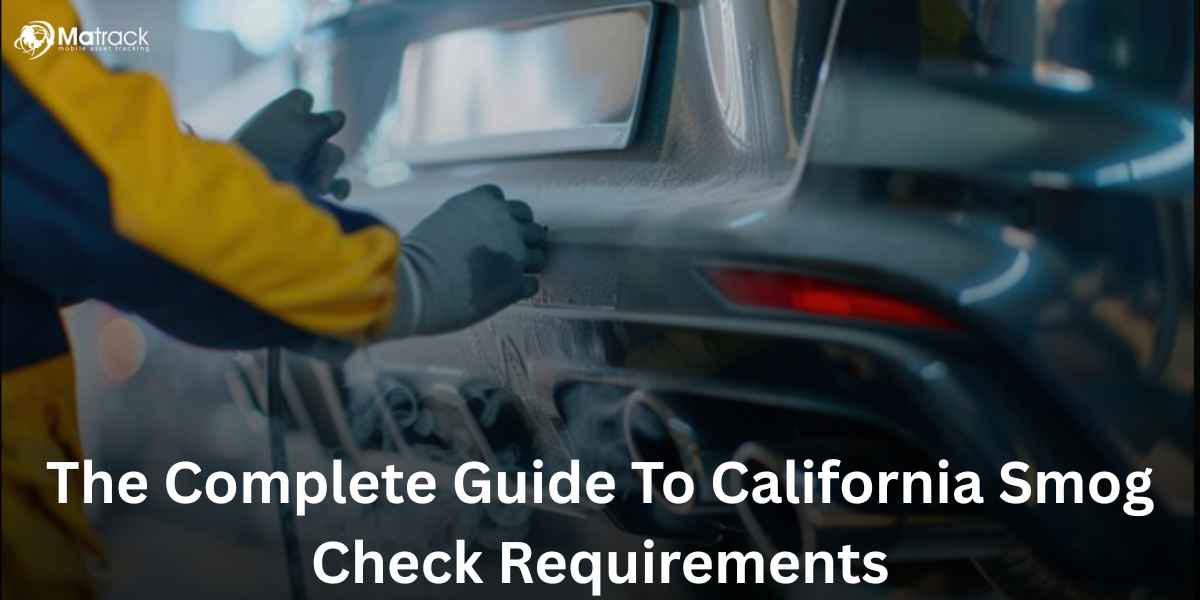


What Is a California Smog Check?
California smog check refers to a state-required emissions inspection that checks whether a vehicle meets air pollution standards. It plays a direct role in keeping a vehicle eligible for registration and lawful road use.
Inspection covers key emissions-related components, onboard diagnostic systems, and overall compliance with state rules. Passing means the vehicle meets required standards, whereas failing signals repairs may be needed before approval.
Who Needs a Smog Check in California?
Most vehicles in California need a smog check, but the rule depends on model year, fuel type, and registration situation.
- Gasoline Vehicles: Gasoline-powered vehicles from model year 1976 onward usually fall under California’s smog check rules. For most owners, that means testing becomes part of the regular registration cycle unless the vehicle qualifies for an exemption.
- Diesel Vehicles: Diesel vehicles can also require a smog check, especially when they fall within the covered model-year range. Requirement does not rest on fuel type alone, since weight class and registration status can also affect whether testing applies.
- Hybrid Vehicles: Hybrid models are often assumed to be exempt, but that is not always the case under California requirements. Many still need a smog check once they move beyond the exemption window given to newer vehicles.
- Ownership Transfer: Smog certification often becomes necessary when a vehicle is sold or transferred to another owner. In that situation, requirement shifts from routine compliance to a transaction-related step that supports registration transfer.
- Out-of-State Vehicles: Vehicles brought into California usually need a smog check before they can be registered in the state. Even if the vehicle was already legal elsewhere, California may still require testing before accepting it into its own registration system.
How Does a California Smog Check Work?
California smog check works through a step-by-step inspection process that measures whether a vehicle meets state emissions standards.
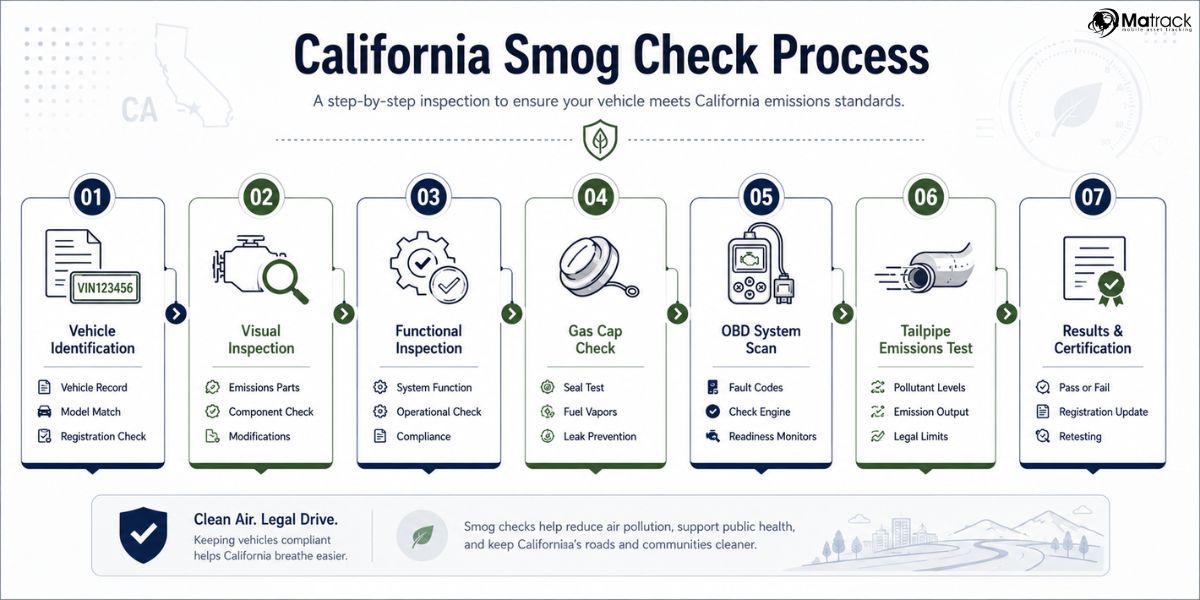
Vehicle Identification
Inspection starts with verifying the vehicle details to make sure the test matches the correct model, year, and registration record. Accurate identification matters since testing methods can vary based on vehicle classification.
Visual Inspection
Technicians check emissions-related components to confirm they are present, properly connected, and free from unauthorized changes. Missing, disconnected, or altered parts can affect compliance before any system testing begins.
Functional Inspection
Certain components are tested to confirm they operate as intended during normal vehicle use. Problems in basic emissions-related functions can point to larger compliance issues.
Gas Cap Check
The gas cap is inspected to ensure it seals properly and helps prevent fuel vapor from escaping. A weak or damaged seal can contribute to emissions failure during inspection.
Onboard Diagnostics Check
Modern vehicles go through an onboard diagnostics scan to detect fault codes and monitor system readiness. Check engine light activity or incomplete monitors can prevent a passing result.
Tailpipe Emissions Test
Some vehicles may still require a tailpipe emissions test to measure the pollutants released during operation. Results are compared against allowed limits to determine whether the vehicle stays within legal standards.
Results and Certification
Inspection ends with a pass or fail result based on the findings from all required testing steps. Passing records are sent for registration purposes, while failing means repairs and retesting may be needed.
When Is a Smog Check Required in California?
Smog check becomes mandatory in specific situations tied to registration, ownership changes, and compliance conditions.
Registration Renewal
Most vehicles require a smog check every two years as part of the registration renewal cycle. Requirement is usually mentioned in the renewal notice, making it a routine compliance step.
Change of Ownership
Smog certification is typically required when a vehicle is sold or transferred to a new owner. Requirement ensures the vehicle meets emissions standards before registration is updated.
Out-of-State Registration
Vehicles brought into California must pass a smog check before they can be registered locally. The requirement applies even if the vehicle was compliant in another state.
First-Time California Registration
Vehicles being registered in California for the first time often need a smog inspection. Requirement confirms the vehicle meets state-specific emissions standards before approval.
DMV or State Notice
Some vehicles may be directed to complete a smog check due to a DMV notice or compliance issue. Requirement in these cases does not follow the regular schedule but is still mandatory.
After Certain Repairs or Modifications
Vehicles that undergo major emissions-related repairs or modifications may require a smog check to confirm compliance. Requirement helps ensure that changes do not increase pollution levels.
California DMV Smog Check Requirements by Vehicle Age
| Vehicle Age | Smog Check Requirement |
| 0-7 Years | Exempt (pay abatement fee) |
| 8-14 Years | Biennial smog check |
| 15+ Years | More likely to require STAR test |
| Pre-1976 Models | Fully exempt |
Where Can You Get a Smog Check in California?
California offers several licensed station types, and the right choice depends on whether your vehicle only needs testing or may also need repairs.
Test-Only Stations
Test-only stations perform inspections without offering repair services. Result remains neutral since no repair work is tied to the outcome.
Test-and-Repair Stations
Test-and-repair stations handle inspection and repair work in one location. Drivers often prefer them when they want failed issues fixed without visiting a second shop.
Repair-Only Stations
Repair-only stations focus on correcting emissions-related problems but do not perform official smog inspections. Vehicles usually return to a testing station after repairs are completed.
STAR Stations
STAR stations follow stricter state performance standards for inspection quality and accuracy. Certain vehicles are specifically directed to these stations for compliance reasons.
Smog Check Referee Centers
Referee centers handle unusual cases such as disputes, exemption questions, and non-standard vehicle situations. Additional review at these centers helps resolve issues regular stations cannot finalize.
Which Vehicles Are Exempt From California Smog Check Requirements?
Certain vehicles are excluded from smog check requirements based on age, fuel type, and classification.
Older Vehicles
Gasoline vehicles from model year 1975 and older are generally exempt from smog check requirements. Age-based classification places these vehicles outside the standard emissions testing cycle.
Newer Vehicles
Some newer vehicles do not require immediate testing during their initial years of registration. Temporary exemption delays smog checks until the vehicle reaches a certain age.
Electric Vehicles
Electric vehicles are exempt since they do not produce tailpipe emissions. Absence of combustion removes the need for emissions-based inspection.
Motorcycles
Motorcycles are not included in California’s smog check program. Emissions standards for these vehicles are regulated differently.
Special Cases
Certain diesel and specially classified vehicles may be exempt depending on weight, model year, or usage type. Eligibility in these cases depends on technical specifications rather than a single rule.
How Should You Prepare for a Smog Check?
Preparation can make the difference between passing on the first visit and coming back for a retest.
Check Engine Light and Fault Codes
Check engine light should be off before the inspection begins. Active fault codes or stored emissions issues can quickly lead to a failed result.
Complete Readiness Monitors
The vehicle needs enough driving time after repairs or a battery reset for its readiness monitors to return to normal. Incomplete monitor status can stop the test from being completed successfully.
Drive 100+ Miles After Battery Replacement
Battery replacement often resets the vehicle’s internal diagnostic system and clears emissions data. Driving more than 100 miles helps many vehicles restore monitor readiness before a smog check.
Inspect Visible Emissions Components
Loose hoses, damaged exhaust parts, or disconnected sensors can affect inspection results before deeper testing even starts. Catching those issues early can reduce the chance of failure.
Warm Up the Engine
Driving the vehicle before the test helps bring the engine to normal operating temperature. Stable operating conditions can support more consistent inspection results.
How Much Does a California Smog Check Cost?
California smog check cost depends on whether your vehicle needs a full inspection, qualifies for an exemption-related fee, or needs repairs after a failed test.
Inspection
Inspection price is not fixed across California, so the amount can vary from one station to another. Most drivers use about $68 as a practical average for the smog inspection itself, even though some stations may charge less and others may charge more.
Certification
Passing the test also adds a separate $8.25 certificate fee. That means a vehicle that passes often costs more than the inspection price alone, since the certification charge is added at the end of the process.
Smog Abatement
Newer vehicles that are still within the exemption period usually do not need a regular biennial smog test. Instead, owners generally pay a $25 smog abatement fee with registration renewal until normal testing begins.
Smog Transfer
Change of ownership works differently for vehicles that are four model years old or newer. In those cases, California usually applies a smog transfer fee instead of requiring a full smog inspection during the transfer.
Repair and Retest Cost
Cost can rise quickly when a vehicle fails and needs emissions-related repairs before it can pass. State data shows average repair expenses around $770, which means the inspection fee is often only a small part of the total amount some drivers end up paying.
What Happens If Your Vehicle Passes or Fails?
Inspection results shape the next step immediately, since a pass moves the vehicle closer to compliance and a fail means emissions issues still need to be resolved.
Passing the Smog Check
Passing means the vehicle meets California emissions requirements at the time of inspection. Test result is generally sent through the system, which helps registration or ownership transfer move forward without extra delay.
Failing the Smog Check
Failing means the vehicle did not meet one or more required emissions standards during inspection. Report from the test identifies the problem areas, which gives the owner a clearer idea of what needs attention next.
Required Repairs
Failed vehicles usually need emissions-related repairs before they can qualify for approval. Repair process focuses on correcting the exact issue that caused the failed result rather than repeating the test without changes.
Retesting the Vehicle
Vehicle must return for another inspection after the necessary repairs are completed. Retest confirms whether the corrections were enough to bring the vehicle back within legal emissions limits.
Registration Impact
Passing supports registration renewal, transfer, or first-time California registration without added compliance problems. Failing can delay those steps until the vehicle meets the required standard.
Timing and Compliance
Inspection outcome also affects how quickly the owner needs to act, especially when registration deadlines are close. Delays after a failed result can turn a repair issue into a larger compliance problem.
What Are the Most Common Reasons Vehicles Fail a Smog Check?
Failure often comes from deeper emissions-related problems that are not always obvious during normal driving.
Catalytic Converter
Catalytic converter helps reduce harmful pollutants before they leave the exhaust system. Reduced efficiency or internal damage can raise emissions enough to cause a failed result.
EVAP Leaks
Evaporative emissions system controls fuel vapors before they escape into the air. Small leaks in hoses, valves, or related parts can affect compliance during testing.
Fuel Imbalance
Fuel system problems can disturb the air-fuel mixture and lead to incomplete combustion. Once that balance shifts, emissions output can rise beyond acceptable limits.
EGR Problems
Exhaust gas recirculation system helps lower nitrogen oxide emissions during engine operation. Malfunction in that system can increase emissions and affect smog check performance.
Engine Misfire
Engine misfire can raise pollution levels even when the vehicle seems mostly normal on the road. Irregular combustion often becomes more visible during inspection conditions.
Component Wear
Older emissions-related parts can degrade over time without showing immediate major symptoms. Gradual performance decline may still push the vehicle beyond allowed limits.
What Should You Do If Your Car Fails a Smog Check in California?
A failed smog check does not end the process, but it does mean the vehicle needs repairs or further review before it can meet California requirements.
Review Report
The inspection report explains why the vehicle failed and points to the area that needs attention. Looking at that result first helps you avoid guessing and move toward the right fix.
Find Cause
Failure often starts with one emissions-related problem, but the warning on the report may only show the effect. Proper diagnosis helps uncover the actual cause before money is spent on unnecessary repairs.
Complete Repairs
Repair work should focus on the exact issue that caused the failed result. Once the root problem is fixed, the vehicle stands a much better chance of passing the next inspection.
Retest Vehicle
The vehicle needs another smog check after repairs are completed. Second inspection confirms whether the repairs solved the problem and brought emissions back within the allowed limit.
Check Assistance
Repair costs can become difficult when major emissions components need work. California support programs may help eligible drivers lower some of that financial burden.
Visit Referee
Certain cases involve unusual vehicle setups, exemption questions, or issues regular stations cannot fully resolve. Referee inspection provides a more specialized review when the standard process is not enough.
Final Thoughts
California smog check requirements affect registration, ownership transfer, and overall vehicle compliance across the state. Awareness of eligibility, timing, and process details helps avoid delays, failed inspections, and unexpected costs.
Exemptions, preparation, and follow-up steps shape how smoothly the process moves from start to finish. Early repairs and proper planning reduce stress during renewal, transfer, and inspection.