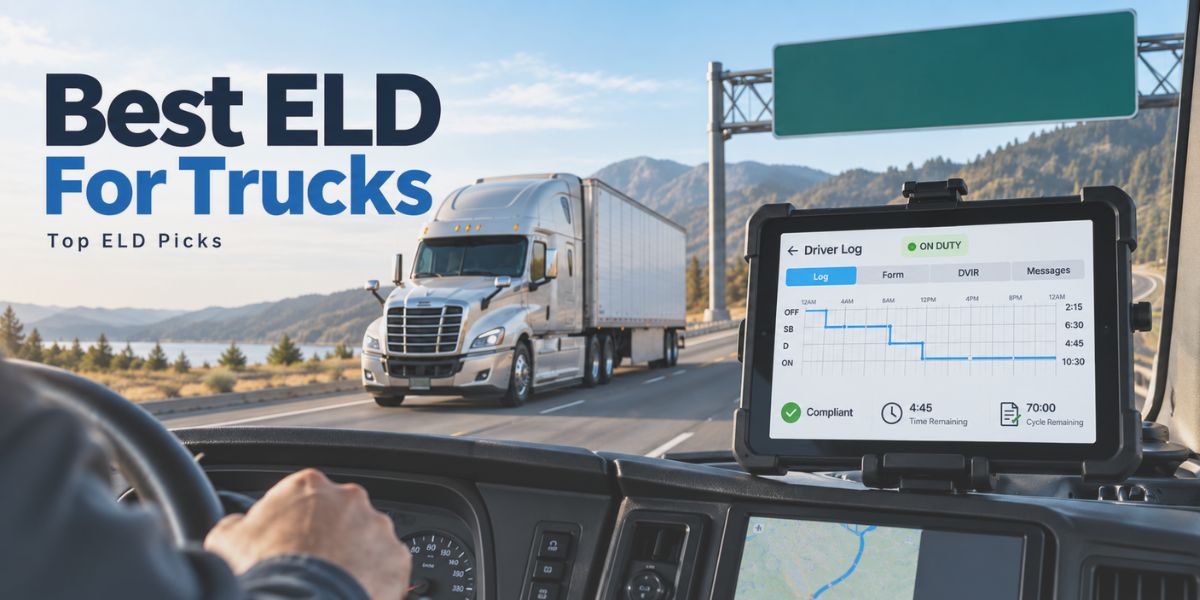
Affordable ELD buyers usually want one direct answer: the best overall choice is the device that keeps compliance dependable without turning into a long-term cost trap. Low subscription pricing can look attractive, but hardware, setup, DVIR, IFTA, GPS access, and add-on fees decide the real cost.
FMCSA registration belongs at the top of the checklist, since an ELD has to maintain valid Hours of Service records before price matters. Small trucking businesses also need inspection-ready data transfer and reliable assistance that keeps drivers moving during roadside checks.
FMCSA’s July 2025 Pocket Guide reports that federal and state agencies conducted 3.18 million roadside driver inspections in 2024, which shows how often compliance records can be reviewed on the road. Affordable ELD value in 2026 comes from predictable pricing, verified compliance, and fewer surprises during daily operations.
Our Top Picks For 5 Most Affordable ELDs in 2026
- Best For: Most affordable overall
- Cost: Starts at $19.95/month; free device and no contract listed
- Affordability Angle: Lowest recurring entry point among the five with bundled compliance value
- Standout Capability: DOT log transfer, mileage reporting, inspection mode, accurate location view
- Best For: No Monthly Fee ELD
- Cost: $249.99 one-time; no subscription fees
- Affordability Angle: Fixed ownership model removes monthly software billing
- Standout Capability: Local log storage, app-based roadside sharing, Garmin navigation compatibility
- Best For: Plug & Play ELD
- Cost: $395 one-time
- Affordability Angle: Lean setup avoids charging for broad analytics most small carriers may not need
- Standout Capability: Split-sleeper support, document capture, fuel records, paperless inspections
- Best For: Real-time tracking
- Cost: $39.95 hardware + $14.95/month service
- Affordability Angle: Combines logging and location oversight instead of requiring separate tracking tools
- Standout Capability: RODS, driver status updates, web access, 24/7 assistance
- Best For: Easy-to-use logging
- Cost: Pricing page available; exact plan cost needs confirmation
- Affordability Angle: Mobile-first workflow reduces training and paperwork burden
- Standout Capability: Driver files, alerts, maintenance records, six-month online storage
How Did We Test the Cheapest ELD for Trucks?
We tested affordable ELD devices based on whether they meet FMCSA requirements and perform reliably in daily truck operations. Each device was reviewed for log accuracy, engine data capture, installation time, and inspection readiness.
Cost evaluation focused on real operating expenses rather than advertised pricing. Subscription fees, contract terms, required add-ons, and access to essential functions such as log edits and driver certification were examined.
All devices were assessed under comparable usage conditions common to owner-operators and small trucking fleets. This allowed a clear comparison of compliance reliability and cost efficiency without weighting non-essential features.
What Are The Most Affordable ELDs In 2026?
1. Matrack ELD – Most Affordable
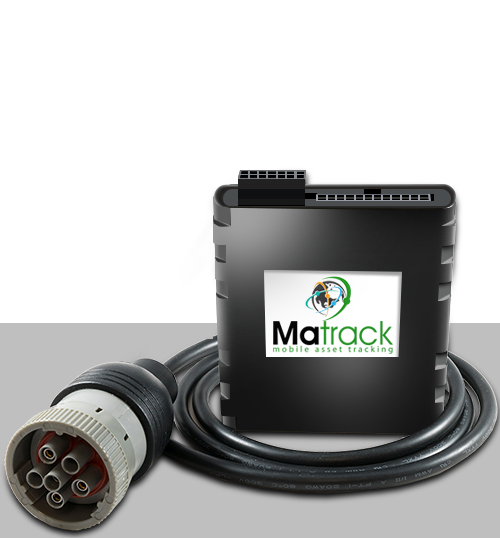
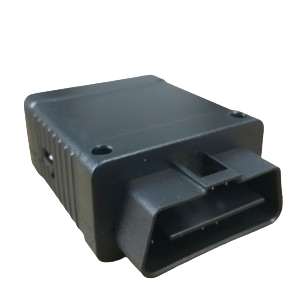
Matrack ELD is the most affordable ELD device for trucks we tested in 2026, mainly because log management, location visibility, flexible billing, and inspection worked through one clean setup. Daily use showed accurate HOS logging, DVIR entry, IFTA data capture, GPS tracking, roadside transfer access, and no-contract flexibility without making the driver workflow feel crowded.
Cost control became clear during routine dispatch work, as compliance records, vehicle movement, mobile access, and reporting remained connected, rather than requiring us to use extra software. Owner-operators and small fleet managers should find significant value in this system, particularly due to the ease of managing DOT inspections, API & integrations, driver scoring and fuel-tax documentation, and the option to buy an ELD and fleet dash cam combo from a single provider.
Instant tracking gave dispatch staff useful context on vehicle activity, while the driver app kept log edits, inspection notes, and compliance transfer information simple during stops. A minor point to note is that operations focused on standard electronic logging may not use every advanced function immediately, but that wider capability is also why this ranked as the top affordable option in our testing.
Pros and Cons
| Pros | Cons |
|---|---|
| ✅ Low monthly entry cost structure. | ❌ Check Basic vs Premium plan coverage before signup. |
| ✅ Free device reduces upfront spend. | |
| ✅ No long contract lock-in. | |
| ✅ GPS and compliance stay combined. |
Key Features
- Logbook Sync
- DOT Transfer
- Mileage Reports
- Inspection Mode
- Fleet Map
- Rule Warnings
- Driver Portal
2. Garmin eLog – Best No Monthly Fee ELD
Garmin eLog worked well in our testing because it gives drivers a direct path to ELD compliance without a monthly service plan. Setup was simple, with the unit connecting to 9-pin J1939 or 6-pin J1708 diagnostic ports before pairing with the mobile app for HOS recording.
On the road, the app kept duty status, remaining drive time, stored records, and inspection transfer access easy to manage without pulling the driver into a larger fleet platform. Vehicle compatibility still needs a close look before purchase, since the device is built around specific heavy-truck diagnostic connections rather than every port configuration.
Garmin eLog gives the clearest value to buyers who want secure log storage, straightforward compliance records, and predictable ownership costs without recurring ELD fees. The tradeoff is purchase rigidity: paying upfront for a specific device can make truck changes, port mismatches, or future compliance needs less flexible than the one-time-cost model first appears.
Pros and Cons
| Pros | Cons |
|---|---|
| ✅ No monthly subscription fees. | ❌ Retail price and vehicle-port support vary. |
| ✅ Fixed hardware ownership cost. | |
| ✅ Good for solo drivers. | |
| ✅ Garmin app handles logs. |
Key Features
- Mobile Records
- Roadside File
- Local Storage
- Drive Timer
- Break Notice
- Port Link
- dēzl Pairing
- Sync Status
3. BIT ELD – Best Plug & Play ELD
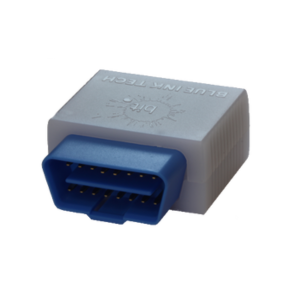
BIT ELD suits carriers that want an affordable plug-and-play path to ELD compliance without stepping into a larger telematics package. Blue Ink Tech shapes the platform around DOT registration, HOS alerts, paperless DVIR, document capture, fuel tracking, IFTA mileage, and back-office access, so setup and daily use stay focused on core regulatory work.
The plug-and-play value comes from that focused design rather than a stripped-down feel. Driver logs, inspection forms, fuel records, trip documents, and tax-mileage data stayed easy to review, giving office staff the control they need without paying for dispatch features meant for larger networks.
Reporting depth is the main compromise, especially for managers who want trend analysis, route planning intelligence, or advanced driver performance views. Carriers that care most about easy setup, clear documentation, controlled cost, and steady compliance workflows should find this setup practical in regular use.
Pros and Cons
| Pros | Cons |
|---|---|
| ✅ Focused small fleet compliance. | ❌ Confirm device, cable, and portal costs before buying. |
| ✅ Paperless inspections reduce admin. | |
| ✅ Fuel records reporting. | |
| ✅ Documents stay driver-linked. |
Key Features
- Duty Alerts
- Digital Inspections
- Fuel Capture
- Tax Mileage
- Paperwork Upload
- Sleeper Split
- Office Portal
- Entry Prompts
4. GPS Insight ELD – Best for Real-Time Tracking
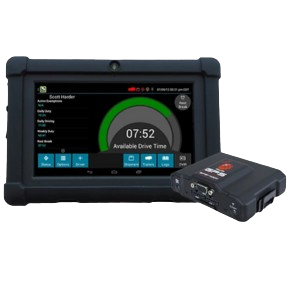
GPS Insight ELD stood out as the strongest choice for companies that want driver logs closely connected to vehicle movement. During evaluation, HOS tracking, DVIR, RODS, telematics data, certified hardware, BYOD access, tablet, multilingual app use, and U.S.-based technical assistance gave the platform a more tracking-focused purpose than a basic logging device.
Cost savings show up by combining compliance work with location intelligence instead of paying for separate tools that cover similar ground. ELD Complete adds IFTA data, Bluetooth connection, yard moves, personal conveyance, diagnostics, malfunction alerts, and driver log management, which makes sense for teams already relying on vehicle visibility to manage routes and equipment.
Pricing needs careful review before purchase because tablets, hardware selection, BYOD assumptions, coverage, and plan access can affect the final number. Buyers who already prioritize live vehicle data should find strong value here, provided every cost item is confirmed in writing before judging it against lower-priced ELD options.
Pros and Cons
| Pros | Cons |
|---|---|
| ✅ Logs connect with movement data. | ❌ Final price depends on selected package. |
| ✅ BYOD device flexibility. | |
| ✅ Multilingual app drivers. |
Key Features
- RODS Review
- Yard Mode
- Personal Conveyance
- Bluetooth Link
- Tablet Setup
- Fault Notice
- Diagnostic Events
- Status Prompts
5. Gorilla Safety ELD – Best for Easy-to-Use
Gorilla Safety ELD brings a mobile-first compliance setup for teams moving drivers away from paper logs and scattered inspection files. FMCSA-compliant HOS entry, eDVIR, mechanic inspection records, alerts, accident investigation tools, and document management all sit inside a familiar app-based workflow.
Savings come less from a headline price and more from reducing the time drivers and office staff spend chasing paperwork. Logs, signatures, manuals, repair notes, inspection files, and incident records can be handled in one place, which makes adoption easier for drivers who do not want a complicated compliance platform.
Document control is the main focus here, so buyers should match it to how their business actually runs. Carriers that rely heavily on forms, inspection history, and driver participation should find strong value, while deeper diagnostics or advanced tracking intelligence may need closer review before making this the primary ELD system.
Pros and Cons
| Pros | Cons |
|---|---|
| ✅ Mobile workflow reduces paperwork. | ❌ Module selection can change the monthly total. |
| ✅ Documents stay centrally organized. | |
| ✅ Mechanic inspections repairs. | |
| ✅ Accident tools add value. |
Key Features
- App Logging
- Repair Checks
- Mechanic Review
- Crash Files
- Policy Vault
- Defect Notices
- Service Updates
- Upload Reminders
What Makes an ELD Device Affordable?
FMCSA Check
FMCSA registration comes before pricing because an ELD must valid hours of service records, roadside inspections, and data transfer. Inspection-ready logging reduces downtime and replacement risk if a low-cost tool cannot keep compliance records usable.Total Pricing
Real ELD cost includes the monthly plan, hardware, activation, installation,and any paid feature add-ons. Fleet buyers should compare the full 12-month or 36-month expense instead of choosing by the lowest subscription number.Device Setup
Hardware charges can change the final cost quickly, especially if cables, replacements, shipping, or installation help are billed separately. Driver downtime during setup adds cost even if the device itself looks inexpensive.Contract Flexibility
Long agreements can make a low monthly rate expensive after trucks leave service, routes change, or fleet size shifts. Cost control improves if owner-operators and SMB fleets can adjust plans without multi-year lock-in.Core Features
Useful ELD plans should include HOS logs, DVIR, IFTA mileage reporting, audit-ready exports, and driver app. Pricing becomes harder to trust if basic compliance workflows sit behind separate fees.Fleet Visibility
GPS tracking adds value if the same system route history, dispatch visibility, geofencing, maintenance context, or driver behavior review. ELD-only tools often become limiting once daily fleet work needs more than basic log storage.Which Cheap ELD Device Is Right for Your Fleet?
Matrack ELD
Start here if the fleet wants the lowest overall cost structure without separating ELD, GPS, DVIR, and IFTA into different tools. Matrack ELD gives owner-operators and SMB fleets a practical balance of low monthly pricing, $0 device cost, no long-term contract, and fleet visibility.Garmin eLog
Monthly fees are the dealbreaker for some independent drivers, which gives Garmin eLog a clear place on the shortlist. The one-time hardware model fits solo operators who run compatible trucks and only need basic HOS logging.BIT ELD
Required recordkeeping drives the case for BIT ELD. Small carriers can use it to keep logs, inspection forms, documents, fuel records, and IFTA mileage organized without paying for a larger software stack.GPS Insight ELD
Tracking comes first for GPS Insight ELD buyers. Fleets that already depend on real-time vehicle location can keep driver status, movement data, BYOD options, and ELD records connected inside one tracking-led setup.Gorilla Safety ELD
Paperwork cleanup is the reason to consider Gorilla Safety ELD. Mobile logs, inspection forms, repair notes, incident files, and stored documents make it useful for fleets moving away from manual driver forms.Why Trust Us?
Affordable ELD devices need more than low pricing. FMCSA compliance, Hours of Service accuracy, roadside inspection, log certification, DVIR access, and reliable data transfer decide whether low-cost hardware can work safely for commercial trucking.
Pricing also depends on the full ownership cost. Hardware fees, monthly plans, contract terms, setup requirements, GPS tracking, IFTA reporting, mobile access, and availability show whether an ELD remains economical after installation.
Matrack ELD, Garmin eLog, BIT ELD, GPS Insight ELD, and Gorilla Safety ELD cover different trucking needs. Fleet size, payment model, inspection readiness, tracking requirements, and driver usability help separate the lowest advertised price from the most practical affordable ELD option.
Final Verdict
Matrack ELD is the top affordable pick in 2026 for owner-operators and SMB fleets that want predictable pricing without long contract pressure. Its value comes from combining required compliance coverage with fleet visibility, so buyers avoid managing separate systems for logging, mileage records, and vehicle oversight.
Garmin eLog is the right fit for independent drivers who prefer a one-time hardware purchase instead of monthly billing. BIT ELD serves small carriers that mainly need organized driver records and mileage without paying for software depth built around larger teams.
GPS Insight ELD belongs on the shortlist for fleets that already rely on live vehicle location as part of daily supervision. Gorilla Safety ELD fits teams replacing paper-based driver forms, inspection notes, and repair documents with mobile records, but Matrack gives the clearest affordable choice for most small fleets in 2026.