

What Is Fleet Vehicle Maintenance?
Fleet vehicle maintenance is the planned inspection, servicing, repair, and monitoring of commercial vehicles to keep them safe, compliant, and operational. It covers routine tasks such as oil changes, tire checks, brake inspections, fluid top-ups, diagnostics, and part replacements.
Maintenance becomes more complex in fleet operations because multiple vehicles must be tracked by mileage, usage, service history, and operating conditions. Fleet managers use maintenance schedules and checklists to prevent breakdowns, reduce downtime, and control service costs.
Preventive maintenance, corrective actions, and data-based monitoring work together to form a complete fleet maintenance program. Connecting activities, businesses can extend vehicle lifespan and maintain reliable day-to-day operations.
Why Is Fleet Vehicle Maintenance Important?
Fleet vehicle maintenance is important because it protects vehicle safety, driver performance, and business continuity. Regular servicing helps prevent mechanical failures that can lead to roadside breakdowns, delivery delays, or compliance issues.
Reliable maintenance reduces operating costs when minor issues are detected before they turn into expensive problems. Fleet operators use inspection records, service schedules, and vehicle data to make maintenance decisions before downtime affects operations.
ATRI’s 2025 update found that non-fuel operational costs rose 3.6% to a record $1.779 per mile in 2024, while total marginal costs reached $2.260 per mile. These figures show why maintenance planning remains central to fleet budgeting, uptime, and long-term cost control.
How Does the Fleet Vehicle Maintenance Process Work?
Commercial fleets follow a structured workflow where inspection, diagnostics, scheduling, service actions, records, and reporting keep vehicles safe, compliant, available, and cost-controlled.
Vehicle Inspection
Daily inspections identify leaks, tire damage, brake wear, lighting faults, fluid issues, and safety defects before vehicles enter operation. Driver reports move early warning signs into the maintenance workflow.
Diagnostic Checks
Diagnostic tools read engine fault codes, battery condition, emissions alerts, sensor data, and system performance signals. Data from diagnostic checks helps reveal hidden issues behind visible vehicle symptoms.
Maintenance Scheduling
Maintenance timelines follow mileage, engine hours, vehicle age, usage intensity, and manufacturer recommendations. Planned intervals give managers a fixed path instead of relying on breakdown-based fixes.
Routine Upkeep
Oil changes, filter replacement, brake inspections, tire rotation, fluid top-ups, and battery checks keep vehicles ready for assigned routes. Maintenance tasks reduce wear across components exposed to load, heat, friction, and vibration.
Repair Management
Faults move into service workflows based on severity, vehicle availability, parts needs, and route impact. Repair planning helps return vehicles to operation without avoidable downtime.
Maintenance Records
History logs, service notes, replaced components, downtime data, and recurring issues are recorded for analysis. Records show which vehicles need attention, which parts fail often, and where costs are building up.
What Should Be Included in a Fleet Vehicle Maintenance Checklist?
A checklist turns vehicle condition into trackable inspection points across safety, performance, compliance, and service planning.
Engine System
Engine components need close review because overheating, oil degradation, worn belts, and clogged filters can stop vehicles mid-route. Oil level, coolant condition, hoses, and filters reveal early signs of mechanical stress.
Brake System
Braking conditions directly affect stopping distance, load control, and driver safety. Worn pads, low brake fluid, damaged discs, or delayed response can turn minor maintenance gaps into major road risks.
Tires and Wheels
Tire condition influences traction, fuel use, alignment, and road stability. Pressure loss, low tread depth, uneven wear, or wheel damage often points to deeper load or suspension issues.
Battery and Electrical System
Electrical health supports ignition, lighting, sensors, telematics devices, and onboard systems. Weak battery output, loose terminals, or wiring faults can interrupt both vehicle movement and fleet visibility.
Fluid Levels
Fluids control heat, pressure, lubrication, and movement across key systems. Coolant, transmission fluid, brake fluid, power steering fluid, and engine oil should be reviewed before contamination or low levels cause damage.
Suspension and Steering
Suspension absorbs road impact while steering keeps the vehicle stable under load. Poor alignment, loose joints, worn shocks, or delayed steering response can reduce control and increase tire wear.
Safety Equipment
Safety equipment protects drivers during inspections, emergencies, and roadside incidents. Lights, mirrors, seat belts, horns, reflectors, fire extinguishers, and emergency kits should remain functional and accessible.
What Are the Main Types of Fleet Vehicle Maintenance?
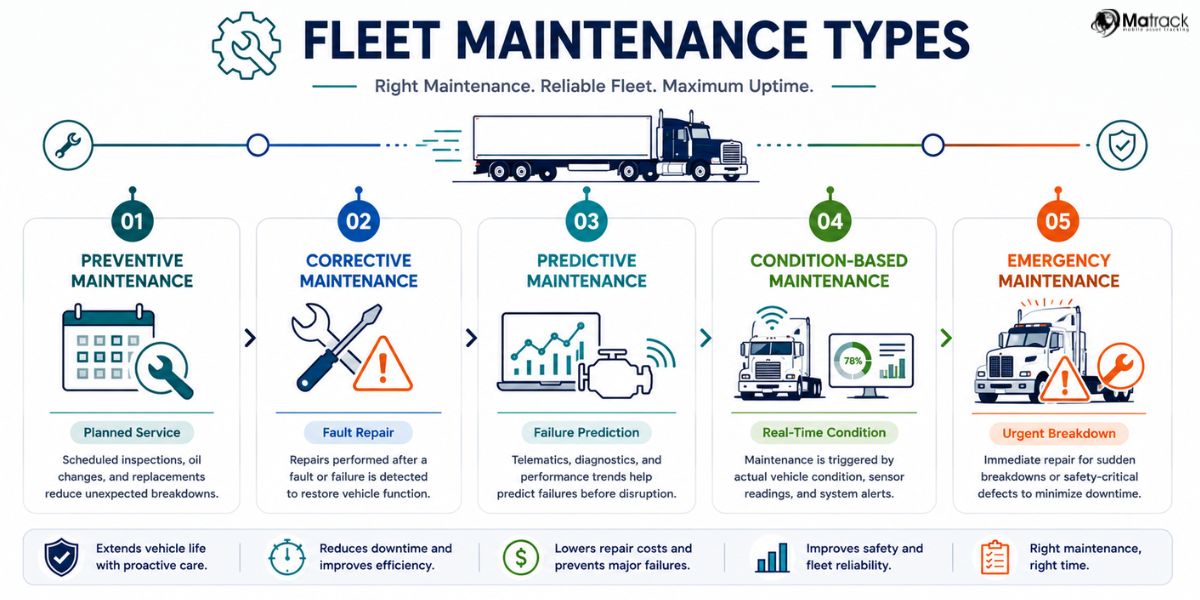
Fleet maintenance types are grouped by timing, vehicle condition, failure risk, data signals, and operational urgency.
Preventive Maintenance
Preventive maintenance follows planned intervals linked to mileage, engine hours, or manufacturer guidelines. Scheduled checks, oil changes, and part replacements reduce unexpected breakdowns.
Corrective Maintenance
Corrective maintenance begins after a fault, failure, or damage appears during inspection or operation. The goal is to restore vehicle function without extending downtime.
Predictive Maintenance
Predictive maintenance uses telematics data, diagnostics, and performance trends to anticipate failures. Engine alerts, temperature changes, and usage patterns help identify risk before disruption.
Condition-Based Maintenance
Condition-based maintenance depends on real-time vehicle health rather than fixed intervals. Action is taken only when wear levels, sensor readings, or system alerts cross defined limits.
Emergency Maintenance
Emergency maintenance applies to sudden breakdowns, roadside failures, or safety-critical defects. Immediate action gets the vehicle out of risk and back into operation.
How Much Does Fleet Vehicle Maintenance Cost?
In 2026, maintenance costs usually fall between $0.20 and $1.10 per mile, depending on vehicle age, mileage, duty cycle, road conditions, and repair frequency. Newer vehicles often stay closer to the lower range, while older or high-mileage units cost more as tires, brakes, fluids, batteries, and major components wear faster.
Annual spending can range from $18,000 to $45,000 per vehicle for commercial fleets with heavy usage or demanding routes. Costs increase through long idle hours, harsh driving conditions, delayed inspections, and breakdown-based maintenance instead of planned upkeep.
Cost control depends on per-mile tracking, service history reviews, and timely replacement decisions. Rising maintenance costs can signal the need for stricter scheduling, better diagnostics, or asset replacement planning.
How Can Businesses Build a Fleet Maintenance Program?
Program planning starts by connecting vehicle usage, inspection needs, repair history, and team responsibility into one working system.
Step 1: Build a Complete Vehicle Inventory
List every vehicle with model, age, mileage, fuel type, route type, operating hours, and duty cycle. Usage patterns help distinguish between vehicles that require basic upkeep and those exposed to heavier wear.
Step 2: Set Inspection Intervals Based on Risk
Inspection timelines should follow mileage, engine hours, vehicle age, route conditions, and manufacturer guidance. High-use vehicles need closer monitoring because brakes, tires, fluids, and batteries wear faster under heavier workloads.
Step 3: Create Driver Inspection Checklists
Drivers should report visible defects, warning lights, tire issues, leaks, and braking concerns before or after trips. Early reports help move small issues into the fleet maintenance workflow before they cause downtime.
Step 4: Centralize Service Records
Repair notes, inspection results, parts history, downtime, and cost data should stay in one system. Central records reveal repeat failures, missed inspections, and vehicles becoming too expensive to keep.
Step 5: Assign Clear Ownership
Drivers, technicians, and managers need defined roles for reporting, approvals, scheduling, and cost review. Clear ownership prevents delays between issue detection and corrective action.
Step 6: Review Performance Monthly
Monthly reviews should compare downtime, repair spend, checklist completion, and recurring faults. These findings help refine intervals, replace weak assets, and improve the maintenance program over time.
What Are the Best Practices for Fleet Vehicle Maintenance?
Long-term fleet performance improves when upkeep decisions match vehicle usage, road conditions, safety needs, repair history, and operating pressure.
Preventive Planning
Planned intervals based on mileage, engine hours, vehicle age, and route demands help teams handle wear before it becomes a breakdown. Missed schedules often create heavier component damage, longer downtime, and higher repair exposure.
Vehicle Data
Telematics data gives visibility into engine alerts, mileage patterns, idle time, fuel use, and driving behavior. These signals help teams identify early risk before faults affect routes or safety.
Driver Training
Route teams need clear guidance on reporting noises, warning lights, tire issues, leaks, vibration, and braking changes. Early reports connect road-level observations with workshop action before small issues become larger failures.
Record Keeping
Detailed logs covering inspections, parts, downtime, repair notes, and vehicle history show how each asset performs over time. Accurate records reveal recurring faults, missed intervals, and vehicles that need closer review.
Parts Readiness
Critical items such as filters, belts, tires, fluids, batteries, and brake components should be available for common vehicle needs. Stock planning reduces delays and keeps repair workflows from depending on last-minute sourcing.
Cost Tracking
Per-mile tracking shows how much each vehicle requires to stay operational across routes, loads, and usage patterns. Unusual spending patterns can reveal hidden mechanical issues, poor driving habits, or replacement timing.
Fleet Reviews
Monthly reviews of downtime, failures, checklist completion, inspection gaps, and vehicle condition expose weak points in the program. Review findings help refine schedules, update checklists, and improve reliability across the fleet.
How Can Fleet Maintenance Software Help?
Software connects vehicle data, inspection tracking, scheduling, and reporting into one system that keeps maintenance activities visible and organized.
Real-Time Tracking
GPS and telematics systems provide visibility into vehicle location, usage patterns, engine alerts, and movement history. Live tracking helps identify vehicles that may require attention based on behavior or performance signals.
Automated Scheduling
Maintenance schedules can be set using mileage, engine hours, or time intervals within the system. Automated reminders reduce missed inspections and keep servicing aligned with vehicle usage.
Centralized Data
Inspection records, repair history, downtime logs, and cost data stay stored in one place for easy access. This visibility makes it easier to track patterns and compare vehicle performance over time.
Fault Alerts
System-generated alerts highlight engine faults, battery issues, overheating, or abnormal usage signals. Timely alerts allow teams to act before the issue turns into a breakdown.
Reporting and Insights
Reports highlight downtime trends, cost per mile, recurring faults, and vehicle performance patterns. These insights support decisions related to scheduling, repairs, and replacement planning.
Workflow Coordination
Task assignments, approvals, and updates can be managed within the platform for better visibility. Structured workflows help teams track progress and reduce delays in handling vehicle issues.
How Does Matrack Support Fleet Vehicle Maintenance?
Matrack connects vehicle tracking, driver behavior, and system alerts into one platform so maintenance decisions are based on real-time usage and condition. Location data, route patterns, and engine signals help identify vehicles that require attention before issues affect operations.
Mileage-based triggers, engine alerts, and usage thresholds highlight when inspections or part replacements are needed. These signals reduce missed upkeep and help teams act at the right time instead of waiting for breakdowns.
Driver behavior insights, fuel usage patterns, and performance reports show how vehicles are being used across routes. Combined data helps link wear patterns with driving habits, improving planning, cost control, and long-term fleet reliability.