

If your business spends money on fuel every day, a fuel card is usually a better choice than a credit card because it helps control fuel expenses, track driver spending, and reduce unnecessary fuel costs. A credit card is better for flexible everyday spending, but it does not provide the same level of fuel management and operational control.
Managing fuel expenses becomes difficult when multiple vehicles and drivers use regular credit cards for daily operations. Fuel cards simplify the process by organizing fuel transactions, setting spending limits, and giving businesses a clearer view of fuel consumption across routes and vehicles.
For general purchases like travel, online payments, or retail shopping, credit cards still offer better flexibility and wider acceptance. Fuel cards, however, work better when the priority is lowering fuel expenses, improving operational visibility, and keeping fuel spending under control.
What Is a Fuel Card?
A fuel card is a payment tool built for managing fuel expenses across business vehicles, especially in logistics, transport, and delivery operations. Regular fuel purchases are recorded under one account, reducing dependency on cash or manual reimbursements.
Limits can be applied based on driver identity, vehicle usage, fuel type, or transaction value, creating controlled spending behavior. Purchases are usually confined to fuel stations or specific vehicle-related services, which helps prevent non-operational expenses.
Data generated from every transaction includes fuel volume, location, and usage patterns across routes. Such visibility supports cost reduction, detects irregular usage, and improves overall fuel efficiency in daily operations.
What Is a Credit Card?
A credit card is a financial payment tool that allows users to make fuel and general purchases using a predefined credit limit. Expenses from fuel stations, retail stores, and online platforms are grouped into a billing cycle for repayment.
No category-based restrictions apply, so spending remains open across personal and business needs. Reward structures like cashback or points are often linked to total spending, including fuel purchases.
Records reflect overall expenses within a billing cycle rather than isolating fuel consumption. Flexibility suits individuals and businesses with mixed spending needs, though fuel-specific control and tracking remain minimal.
What Is the Difference Between a Fuel Card and a Credit Card?
Fuel card and credit card serve different roles in handling fuel expenses, spending behavior, and financial control.
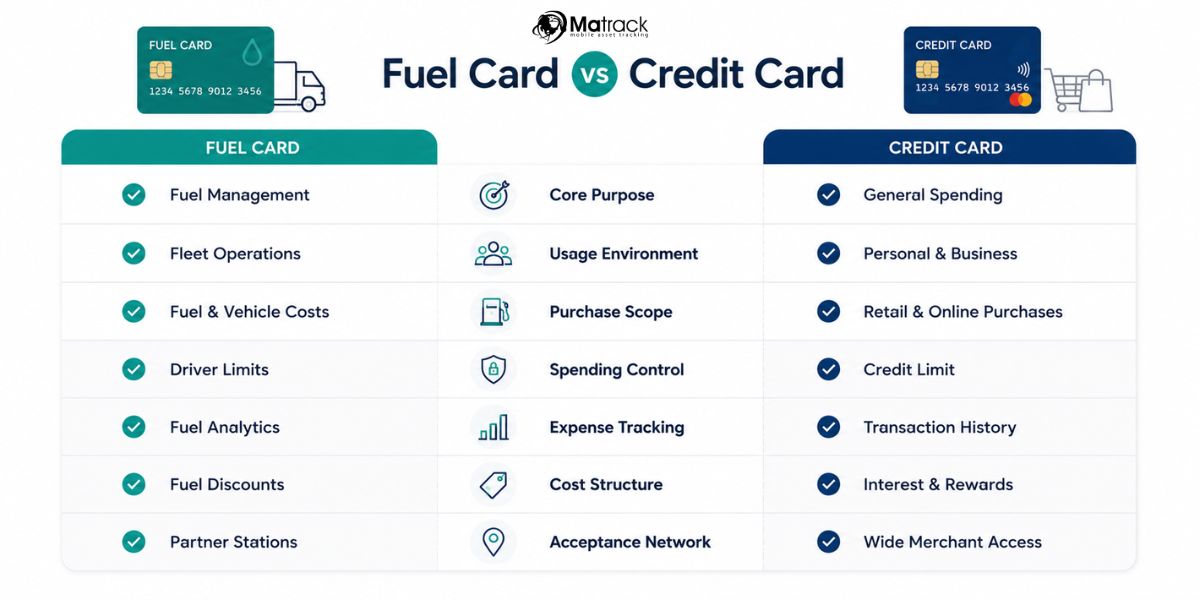
Core Purpose
Managing fuel costs across vehicles becomes simpler with a fuel card, especially in operations where fuel is a recurring expense. Broader financial needs such as travel bookings, supplies, or fuel purchases are typically handled through a credit card.
Usage Environment
In logistics or delivery operations, fuel cards support structured workflows tied to drivers and vehicles. Personal spending or mixed business expenses often rely on a credit card due to its wide usability.
Purchase Scope
Vehicle-related expenses like diesel, petrol, or maintenance are commonly tied to fuel card usage within approved categories. Everyday purchases ranging from online payments to retail shopping fall under the scope of a credit card.
Spending Control
Driver-specific limits, fuel quantity caps, or usage timing can be enforced through a fuel card to reduce misuse. With a credit card, spending freedom exists within the credit limit, which shifts control toward user behavior rather than system rules.
Expense Tracking
Operational insights such as fuel usage, route-based consumption, or driver activity are generated through fuel card systems. A credit card records total transactions in statements, though separating fuel data requires additional effort.
Cost Structure
Per-litre savings or negotiated pricing often shape the value of a fuel card in high fuel usage scenarios. Interest rates, annual fees, or reward benefits influence the overall cost of using a credit card.
Acceptance Network
Fuel card usage depends on supported fuel stations or partner networks, which may limit location flexibility. Wider acceptance allows a credit card to function across multiple merchants, including fuel stations and other services.
How Do Fuel Cards and Credit Cards Work for Fuel Purchases?
Fuel purchases follow different workflows depending on whether a fuel card or a credit card is used.
Payment Process at Fuel Stations
Fuel card transactions connect directly to a business account within an approved fuel network, linking the purchase to a driver or vehicle. Credit card payments pass through banking networks, with the amount added to the cardholder’s billing cycle.
Authorization and Verification
Entry of driver ID, vehicle number, or secure PIN is often required before a fuel card transaction is approved. Credit card usage depends on PIN, tap, or authentication methods based on transaction limits.
Billing and Settlement
Fuel card usage results in consolidated billing for all fuel transactions under one account, often aligned with business reporting cycles. Credit card expenses appear in monthly statements, with repayment options that may include interest on unpaid balances.
Data and Fuel Insights
Fuel card systems capture details such as fuel type, litres purchased, location, and time of transaction. Credit card records focus on transaction value and merchant category without separating fuel-specific metrics.
Control During Transactions
Restrictions applied through a fuel card can limit purchases to fuel, set quantity caps, or define usage timing. Credit card transactions remain unrestricted at the point of purchase as long as available credit exists.
What Can You Buy With a Fuel Card vs. a Credit Card?
Purchase scope differs significantly between fuel card usage and credit card usage, especially across fuel-related and general expense categories.
| Fuel Card | Credit Card |
| Petrol, diesel, or approved fuel types within supported fuel stations | Petrol, diesel, or any fuel purchase at most stations without restriction |
| Maintenance, servicing, tolls, or lubrication (based on program setup) | Allowed, but mixed with other expenses without category separation |
| Not supported beyond transport-related categories | Office supplies, subscriptions, travel bookings, employee expenses |
| Not allowed due to usage restrictions | Fully allowed across retail, online, and service-based transactions |
| Predefined limits ensure only fuel or vehicle-related usage | No category-level restriction; spending depends on user behavior |
| Directly linked to vehicle operations and fuel consumption | Blended with overall spending, making fuel tracking less isolated |
| Limited to operational needs and approved merchants | High flexibility across multiple spending environments |
Which One Should You Buy?
The right choice depends on fuel usage frequency, operational structure, and how spending needs to be controlled. Businesses handling multiple vehicles or daily refueling often benefit more from a fuel card due to structured tracking, usage limits, and visibility over fuel expenses.
Flexibility becomes the priority in situations where fuel is only one part of overall spending across travel, subscriptions, or general purchases. Credit card fits naturally in such cases since it allows transactions across multiple categories without restrictions.
Savings outcome varies based on how the card is used, with fuel card supporting direct cost control through pricing mechanisms and credit card offering rewards tied to total spending. Selection becomes easier by aligning the card type with fuel demand, need for control, and financial management approach.
How Matrack Fleet Fuel Card Helps in Real Fuel Cost Savings
Matrack Fleet Fuel Card combines fuel payments with routing, tracking, and reporting to reduce fuel costs while improving control over fleet operations.
- Fuel Savings: Live fuel pricing data guides drivers toward lower-cost fuel stations, reducing per-litre cost across daily routes and long-haul trips
- Wide Acceptance: Access to a large fuel station network ensures uninterrupted refueling, preventing detours or operational delays during trips
- Spend Control: Transaction limits based on driver, vehicle, or fuel type help eliminate unnecessary purchases and keep fuel expenses aligned with operations
- Real-Time Tracking: Every fuel transaction appears instantly on the platform, allowing managers to monitor usage patterns and detect irregular spending behavior
- Route Optimization: Drivers are automatically guided toward cost-efficient fuel stops, which reduces total trip cost without impacting delivery timelines
- Expense Reporting: Centralized fuel data simplifies accounting by organizing transactions into structured reports, reducing manual reconciliation effort
- GPS Integration: Fuel purchases are matched with vehicle location data, ensuring accuracy in reporting and helping verify whether fuel usage aligns with route activity
- Alerts System: Instant notifications for every transaction improve visibility and help identify misuse, duplicate purchases, or unusual fuel activity early
- IFTA Support: Automated fuel tax calculations reduce compliance workload and minimize reporting errors for interstate fleet operations
- Operational Efficiency: Centralized control over fuel, drivers, and routes improves decision-making, reduces leakage, and increases overall fleet profitability
Frequently Asked Questions
Can fuel cards be used like regular credit cards?
No, fuel cards cannot be used like regular credit cards since usage is restricted to fuel stations or vehicle-related expenses. Credit cards work across multiple merchants, making them suitable for general spending.
Do fuel cards help businesses save more money?
Yes, fuel cards help businesses save more money when fuel usage is high and frequent. Savings come from controlled spending, fuel pricing advantages, and reduced misuse.
Are Fuel Cards Better Than Credit Cards for Fuel Savings?
Yes, fuel cards deliver more fuel savings in most high-usage scenarios. Credit cards provide indirect savings through rewards, which may not match direct fuel cost reductions.
Which Option Gives You More Spending Control and Expense Tracking?
Fuel cards provide more control and detailed tracking compared to credit cards. Spending limits and fuel-specific data make monitoring easier and more accurate.
Which Card Is More Widely Accepted?
Credit cards are more widely accepted than fuel cards. Fuel cards work only within supported fuel station networks.
What Fees, Interest, and Hidden Costs Should You Expect?
Credit cards usually involve interest, annual fees, and penalties if not paid on time. Fuel cards may include transaction or service fees but often avoid high interest costs.
Who Should Buy a Fuel Card and Who Should Buy a Credit Card?
Businesses with frequent fuel needs should choose a fuel card for greater control and savings. Individuals or flexible spenders should choose a credit card for wider usability.