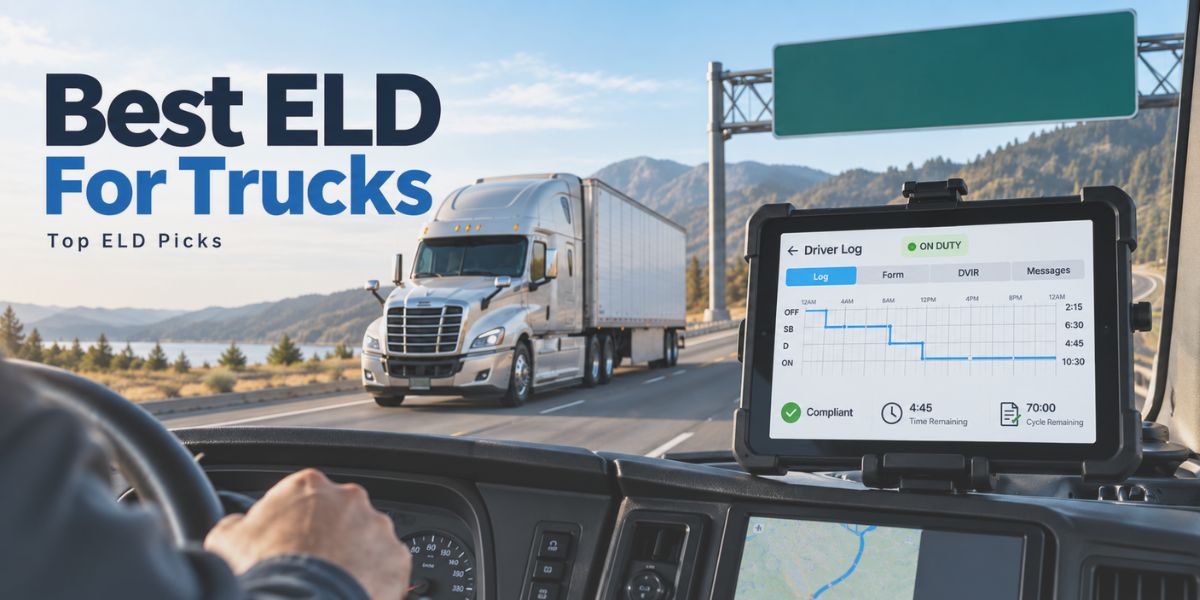
FMCSA-approved electronic logging devices (ELDs) are certified systems that automatically record driving time, engine hours, vehicle movement, and driver duty status to enforce Hours-of-Service compliance. In 2026, fleets depend on properly registered and inspection-ready ELDs to replace paper logs, reduce manual errors, and meet increasingly strict roadside enforcement standards.
Certification alone does not guarantee real-world performance, especially as inspections and compliance audits become more frequent. Reliable ELDs maintain consistent uptime, automate HOS tracking without sync delays, install quickly across vehicle types, and transfer logs cleanly during roadside checks.
This guide ranks seven leading ELD solutions using compliance accuracy, installation speed, total cost efficiency, and support reliability as the core decision factors for owner-operators and fleets alike. According to FMCSA estimates, improved ELD compliance helps save 26 lives and prevent 562 injuries each year, underscoring why choosing a dependable system matters beyond administrative reporting.
What Does FMCSA Approval Mean for an ELD?
FMCSA approval means an electronic logging device is registered with the Federal Motor Carrier Safety Administration and meets the technical standards set under the ELD mandate. This confirms the device can automatically record driving time, engine activity, vehicle movement, and driver duty status without manual input.
To qualify for FMCSA approval, an ELD must connect directly to the vehicle’s engine, apply Hours-of-Service rules automatically, and protect original log records from improper edits. It must also support secure, standardized data transfer so logs can be presented accurately during roadside inspections.
What Technical Requirements Must an ELD Meet to Stay Compliant?
An electronic logging device must meet specific technical standards defined by the FMCSA to ensure accurate, tamper-resistant, and inspection-ready Hours-of-Service compliance.
Engine Sync
An ELD must connect directly to the vehicle’s engine control module to capture engine power status, engine hours, miles driven, and motion automatically. Driving status must be triggered by vehicle movement without relying on manual driver input.
HOS Automation
The device must automatically record driving time and apply Hours-of-Service rules based on the driver’s profile. It must prevent edits that alter original records while allowing annotations that preserve data integrity.
Data Security
An ELD must securely store log records and retain original data even after edits are made. All changes must be time-stamped and traceable to maintain audit and enforcement validity.
Log Transfer
The system must support approved data transfer methods to share logs with enforcement officers during roadside inspections. Transfers must be accurate, complete, and accessible without delay.
FMCSA-Approved ELD Comparison Table 2026
- Best For: Best Overall – Reliable and affordable
- Cost: $19.95 (Free device, no contract)
- Installation: Plug-and-play (5 minutes)
- Compliance: FMCSA-certified, automatic HOS, DVIR, IFTA
- Support: 24/7 live & SMS support, lifetime warranty
- Best For: Box Trucks – Rugged and verified accuracy
- Cost: $30–$35
- Installation: Hard-wired, professional setup
- Compliance: FMCSA-registered, PIT third-party verified
- Support: Dedicated support, online resources
- Best For: Simple Installation – Fast setup for small fleets
- Cost: $25.95
- Installation: Plug-and-play
- Compliance: FMCSA-compliant, HOS & DVIR
- Support: Phone and chat support, business hours
- Best For: IFTA Reporting – Deep compliance coverage
- Cost: $39–$45
- Installation: BYOD or tablet option
- Compliance: FMCSA & Transport Canada certified
- Support: 24/7 driver hotline and technical support
- Best For: Mobile App Users – App-based compliance
- Cost: $19.50
- Installation: Bluetooth pairing
- Compliance: FMCSA & Transport Canada compliant
- Support: In-app and phone support
- Best For: Large Fleets – AI-powered fleet analytics
- Cost: $33–$40
- Installation: Plug-and-play gateway
- Compliance: FMCSA-certified, AI annotations, HOS & DVIR
- Support: 24/7 enterprise-grade support
- Best For: Hotshot Fleets – High-speed logistics
- Cost: $35–$45
- Installation: Plug-and-play
- Compliance: FMCSA-certified, automated duty-state
- Support: 24/7 support with live assistance
How We Reviewed FMCSA-Approved Electronic Logging Devices?
FMCSA-approved electronic logging devices were reviewed based on real-world performance rather than specifications or promotional claims. Log accuracy, system stability, and behavior during routine driving and roadside inspections formed the foundation of the review.
Compliance reliability, installation experience, and driver interaction were closely observed during normal fleet use. Log transfer performance during inspections, along with pricing clarity and support availability, also influenced the findings.
A consistent standard was applied across different fleet sizes a nd operating conditions to maintain meaningful comparisons. The results highlight which ELDs deliver dependable compliance and practical value beyond minimum regulatory requirements.
What Are The Top 7 FMCSA-Approved ELD List In 2026?
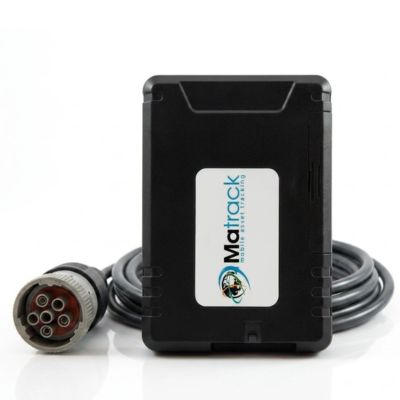
Matrack ELD — Best Overall
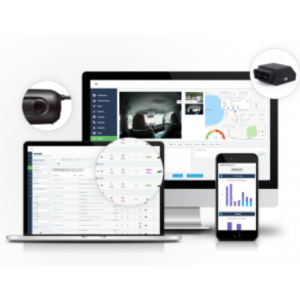
Matrack ELD covers the broadest range of fleet requirements, which is why it is positioned as the overall choice across small, mid-sized, and growing operations. Hours-of-Service tracking follows engine activity closely, keeping logs accurate without ongoing driver adjustments.
HOS records, DVIRs, IFTA mileage, and GPS history remain available within one system, which simplifies compliance checks across different vehicle types. This consolidation matters most for fleets managing mixed routes and changing schedules.
Cost structure also plays a role at scale. Contract-free pricing and lifetime hardware coverage allow fleets to expand or downsize without re-evaluating the compliance system itself.
Pros and Cons
| Pros | Cons |
|---|---|
| ✅ Free hardware with no contract requirements | ❌ Dashboard visuals feel dated |
| ✅ Stable GPS updates on long or short routes | ❌ Limited analytics for performance-focused fleets |
| ✅ Lifetime warranty for long-term reliability | |
| ✅ Early violation warnings reduce HOS errors |
Key Features
- Plug-and-play OBD connection
- Real-time HOS cycle alerts
- Geo-fencing with vehicle-specific zones
- Automatic idle-time detection
- DVIR defect notifications for flagged issues
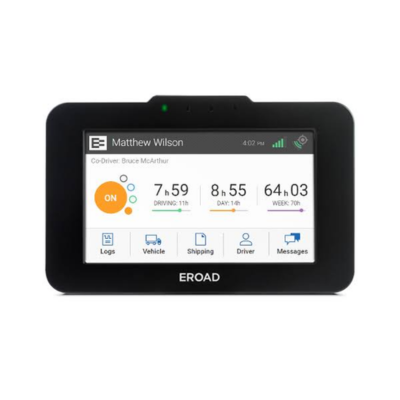
EROAD Ehubo — Box Truck Operations
EROAD Ehubo aligns most naturally with box trucks operating frequent delivery routes and repeated stop cycles. Hardware stability supports consistent data capture in loading zones, urban corridors, and short repositioning movements.
Stop durations and route transitions are reflected accurately, which helps document delivery activity during inspections. DVIR workflows support routine vehicle checks, though deeper system settings require more navigation.
For delivery-focused fleets, durability often outweighs flexibility. EROAD Ehubo fits environments where vehicles stay assigned and routes follow predictable patterns.
Pros and Cons
| Pros | Cons |
|---|---|
| ✅ Rugged hardware suited for delivery environments | ❌ Multi-layer menu navigation |
| ✅ PIT-verified ELD accuracy | ❌ Fixed mount limits repositioning in tight cabs |
| ✅ Precise dwell-time tracking in loading areas | |
| ✅ Structured DVIR screen for quick inspections |
Key Features
- Hard-wired ECM tether for vibration-heavy use
- Geofenced entry/exit alerts for dock zones
- On-device DVIR prompts
- Automatic IFTA distance logging
- Speed-threshold alerts for urban routes
GPSTrackit — Owner-Operators and Small Fleets
GPSTrackit suits owner-operators and small fleets that need compliance tools without complex setup or long onboarding. Vehicles can be added or swapped quickly while maintaining clean log continuity.
Mileage capture and duty-status changes remain consistent on regional and short-haul routes. Inspection support covers standard requirements without introducing advanced reporting layers.
Simplicity becomes an advantage when time and resources are limited. GPSTrackit supports compliance without adding operational overhead.
Pros and Cons
| Pros | Cons |
|---|---|
| ✅ Fast setup for rotating fleet vehicles | ❌ Shallow diagnostic data |
| ✅ Multilingual driver support | ❌ No advanced performance metric customization |
| ✅ Clean log timestamps reduce corrections | |
| ✅ Smooth DVIR submissions for basic checks |
Key Features
- Universal app compatibility
- Early HOS-limit notifications
- Idle-time alerts tied to cost thresholds
- Stop-duration updates for route delays
- Mileage summaries stored automatically
J. J. Keller ELD — IFTA and Audit-Heavy Fleets
J. Keller ELD addresses fleets where fuel tax reporting and regulatory documentation are ongoing priorities. Long-haul and multi-jurisdiction routes highlight the importance of its structured compliance framework.
State mileage separation and IFTA summaries closely follow actual travel patterns. Audit-support tools assist during reviews, although the interface benefits from established workflows.
For fleets facing frequent audits, consistency matters more than speed. The system performs best once processes are clearly defined.
Pros and Cons
| Pros | Cons |
|---|---|
| ✅ Strong Bluetooth stability on long hauls | ❌ Complex interface for new users |
| ✅ Roadside Inspection Hotline assistance | ❌ Too feature-dense for smaller fleets |
| ✅ Highly accurate IFTA state-line tracking | |
| ✅ Deep behavior monitoring for coaching |
Key Features
- Compliance Tablet option for controlled use
- Automated fuel-tax mapping
- Behavior alerts for braking and acceleration
- Border-rule notifications for U.S./Canada shifts
- SmartAssign event-cleanup engine
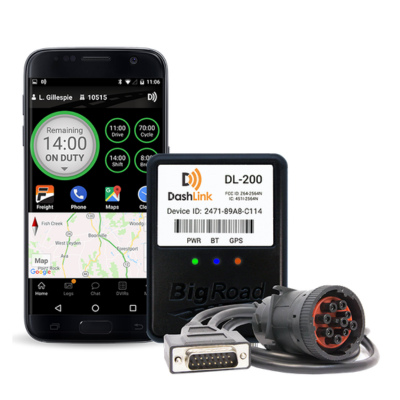
BigRoad Dashlink — Mobile-First Owner-Operators
BigRoad Dashlink paired effortlessly with our drivers’ personal phones, giving them a familiar interface for logs, DVIRs, and edits without relying on dedicated hardware. Transport Canada compliance also made border transitions smoother during short-notice load shifts.
On urban and regional runs, the app handled HOS and certification tasks cleanly enough to prevent back-office corrections. The integrated load board helped fill driver downtime, but the GPS trail struggled to capture fine movement during tight yard maneuvers where accuracy matters.
Messaging stayed responsive during dense traffic, keeping dispatch aware of delays in real time. The trade-off is that heavy phone usage—navigation, calls, messaging, logging—can occasionally slow the app on older devices, which isn’t ideal for drivers running multiple apps at once.
Pros and Cons
| Pros | Cons |
|---|---|
| ✅ Phone-based workflow drivers adapt to quickly | ❌ Lower GPS precision in tight yards |
| ✅ Transport Canada compliant | ❌ Older phones may slow during heavy use |
| ✅ Integrated load board to fill downtime | |
| ✅ Reliable in-app messaging |
Key Features
- Bluetooth module for fast truck pairing
- Movement-triggered duty-status prompts
- Log-certification reminders
- Yard-move notifications
- Speed alerts set to custom thresholds
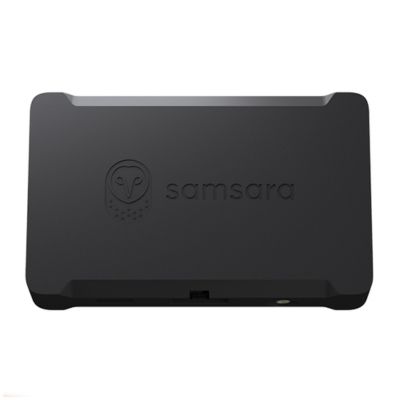
Samsara — Large Truck Fleets and Enterprises
Samsara fits large truck fleets where ELD data feeds into broader operational systems. Compliance records integrate with maintenance, safety, and dispatch tools across departments.
This shared visibility helps identify trends before violations escalate. Configuration requires planning, particularly for organizations transitioning from simpler platforms.
Scale influences the return on investment. Samsara delivers the most value when fleets operate with established processes and centralized oversight.
Pros and Cons
| Pros | Cons |
|---|---|
| ✅ Fast diagnostic capture supports maintenance | ❌ Learning curve for teams new to large platforms |
| ✅ AI-driven log annotations | ❌ More features than mid-sized fleets often need |
| ✅ Strong fatigue and routing insight tools | |
| ✅ Hotspot keeps devices connected anywhere |
Key Features
- 200+ integration ecosystem
- AI driving-event alerts
- Real-time detour and inefficiency warnings
- Automatic duty-state corrections
- Predictive maintenance prompts
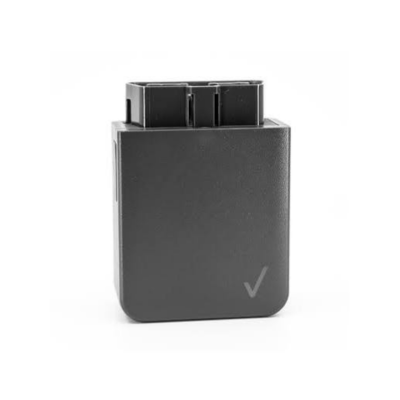
Verizon Connect — Hotshot and Time-Sensitive Trucks
Verizon Connect aligns with hotshot and expedited trucking where schedules shift quickly and downtime carries higher risk. Duty-status updates remain accurate as vehicles move between frequent stops.
Real-time GPS tracking supports routing decisions on long interstate runs. Support availability adds reliability during nonstandard operating hours.
In time-sensitive operations, predictability protects revenue. Verizon Connect performs best where visibility and uptime matter more than customization.
Pros and Cons
| Pros | Cons |
|---|---|
| ✅ Auto duty-status shifts fit hotshot workflows | ❌ Older maintenance logs require extra filtering |
| ✅ 24/7 support for time-critical loads | ❌ Broad system may exceed small-team needs |
| ✅ GPS detail strengthens ETA accuracy | |
| ✅ Smooth DVIR-to-maintenance syncing |
Key Features
- Network-backed data integrity
- Real-time reroute alerts for time-sensitive jobs
- DVIR-based repair notifications
- Speed-variance alerts for highway corridors
- Movement-triggered duty-state prompts
Key Factors to Consider Before Buying an ELD
Installation and Compatibility
Choose plug-and-play devices for faster setup and wider vehicle support. Verify compatibility with light, medium, and heavy-duty trucks.Pricing and Contract Terms
Check for hidden fees, hardware costs, and contract requirements. Select subscription plans that include updates and full support.Compliance and Reporting Features
Ensure automatic HOS recording, DVIR tools, and IFTA reporting. Devices must meet FMCSA technical standards and allow secure data transfer.Customer Support and Warranty
Pick providers offering 24/7 live assistance and long-term hardware coverage. Consistent support ensures minimal downtime and quicker issue resolution.Who Needs Which ELD Device?
Matrack ELD
Matrack ELD fits fleets that want a reliable, low-cost, and fully automated compliance tool. Its free hardware, quick installation, and lifetime warranty make it ideal for owner-operators and multi-vehicle fleets seeking maximum value.EROAD Ehubo
EROAD Ehubo suits fleets operating in dense city routes with frequent stops. Its rugged build, verified accuracy, and precise geofencing ensure dependable tracking during short-distance and high-frequency operations.GPSTrackit
GPSTrackit works best for small or rotating fleets needing fast deployment. Its plug-and-play design and multilingual interface make it practical for teams with varied routes and driver backgrounds.J. J. Keller ELD
- J. Keller ELD serves fleets running across U.S. and Canadian territories that need deep compliance tracking. Its IFTA automation, border-rule updates, and audit-ready reports support carriers managing complex regulations.
BigRoad Dashlink
BigRoad Dashlink fits owner-operators and small teams relying on personal devices. Its phone-based setup, easy log management, and built-in load board simplify daily compliance without extra hardware.Samsara ELD
Samsara ELD suits large carriers needing full operational visibility and integrated data systems. Its AI-driven insights, predictive alerts, and 200+ integrations make it a strong choice for fleets scaling nationwide.Verizon Connect
Verizon Connect supports hotshot operations and time-sensitive deliveries requiring continuous uptime. Its automatic duty-state changes, accurate GPS tracking, and 24/7 assistance keep fast-moving loads compliant and on schedule.Frequently Asked Questions
What is an FMCSA-Approved ELD Device?
An FMCSA-approved ELD is a certified electronic logging device listed on the FMCSA registry. It automatically records driving hours, engine data, and duty status to maintain Hours-of-Service compliance.
How Do I Check If an ELD Is FMCSA Approved?
You can confirm approval by visiting the official FMCSA ELD registry. Only listed devices are verified to meet federal technical and compliance standards.
Which ELD Is the best overall in 2026?
Most of these trackers, like Matrack ELD is the best overall, offer plug-and-play options for quick and simple installation.
What Features Are Most Important in an ELD?
The most critical features include automatic HOS recording, real-time GPS tracking, DVIR support, IFTA automation, and secure DOT inspection transfer options.
How Long Does ELD Installation Take?
Plug-and-play ELDs such as Matrack and GPSTrackit install in under five minutes using standard diagnostic ports, requiring no technical expertise.
Do Small Fleets and Owner-Operators Need ELDs?
Yes, all commercial drivers operating under FMCSA Hours-of-Service rules must use an approved ELD unless they meet exemption criteria like short-haul or driveaway-towaway operations.
Final Verdict
Matrack ELD stands as the best overall FMCSA-approved device in 2026 for reliability, cost efficiency, and compliance accuracy. Its free hardware, no-contract pricing, and lifetime warranty make it the most practical solution for fleets that need consistent uptime and automated reporting without extra costs.
Each ELD tested in this comparison delivers unique advantages suited to specific fleet types and operational demands. From EROAD’s rugged precision for box trucks to Samsara’s enterprise-level data integration, the range of options allows fleets to choose based on scale, route type, and compliance needs.
For most carriers, a dependable ELD must provide stable GPS data, fast log syncing, and responsive support to avoid costly violations. Matrack ELD meets all these benchmarks, making it the top choice for fleets prioritizing accuracy, simplicity, and long-term value.