

What Is Tire Tread Depth?
Tire tread depth is the height of grooves built into the rubber surface of a tire that touches the road. Drivers measure tread depth in 32nds of an inch or millimeters to see how much usable tread remains.
Deep grooves help a tire grip the road and maintain control during everyday driving. Grooves also push water away from the contact area, which helps reduce the chance of hydroplaning on wet pavement.
Regular driving slowly wears down the rubber between the tread blocks. Reduced groove depth weakens traction, braking grip, and overall tire performance on the road.
Why Is Tire Tread Depth Important?
Tire tread depth directly affects how well a vehicle grips the road and responds to changing driving conditions.
- Road Traction: Deep tread grooves help tires hold the pavement firmly, giving drivers better control during acceleration and turns.
- Braking Performance: Strong traction also improves braking ability, allowing tires to slow the vehicle more effectively on dry and wet roads.
- Hydroplaning Prevention: During rain, tread channels guide water away from the tire surface so the vehicle stays connected to the road instead of sliding.
- Driving Stability: Consistent tread depth across tires helps maintain balanced steering and smoother handling at highway speeds.
- Safety Compliance: Maintaining adequate tread depth also helps vehicles meet DOT and FMCSA tire safety requirements, particularly for commercial trucks and fleet inspections.
What Are DOT Tire Tread Depth Regulations?
Tire tread depth regulations set by the Department of Transportation (DOT) establish the minimum tread levels required for vehicles operating on public roads.
These regulations form part of federal safety standards enforced through roadside inspections and vehicle compliance checks. Commercial trucks, buses, and other commercial motor vehicles (CMVs) must maintain specific tread depths to remain legally roadworthy.
Maintaining tires above the DOT minimum tread depth helps ensure proper traction, braking control, and safe vehicle handling. For commercial fleets, meeting these requirements also helps avoid FMCSA violations, inspection failures, and out-of-service orders.
What Is the Minimum Legal Tire Tread Depth?
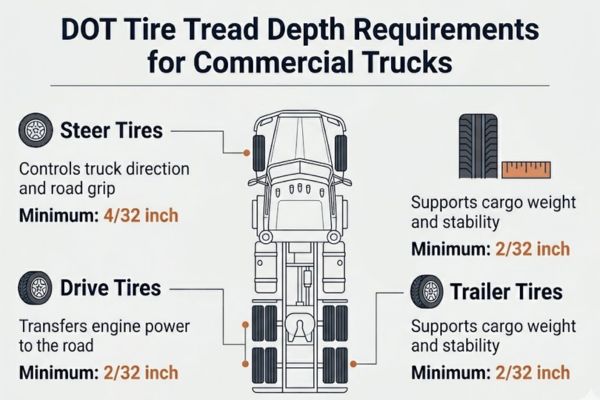
The DOT minimum tire tread depth is 4/32 inch for steer tires and 2/32 inch for drive and trailer tires on commercial vehicles.
1. Steer Tire Tread Depth
Steer tires guide the direction of the truck and play the biggest role in maintaining control. For that reason, DOT regulations require at least 4/32 inch of tread depth so the front tires maintain reliable road grip.
2. Drive Tire Tread Depth
Drive tires deliver power from the engine to the pavement and help move the truck under heavy loads. Federal safety rules allow a minimum tread depth of 2/32 inch, though many fleets replace them earlier to maintain stronger traction.
3. Trailer Tire Tread Depth
Trailer tires carry cargo weight and help keep the entire tractor-trailer stable on the road. DOT inspections require at least 2/32 inch of tread depth so the trailer maintains proper balance and braking stability.
How Do You Measure Tire Tread Depth?
Measuring tire tread depth helps determine how much usable rubber remains in the grooves that grip the road.
1. Tread Depth Gauge
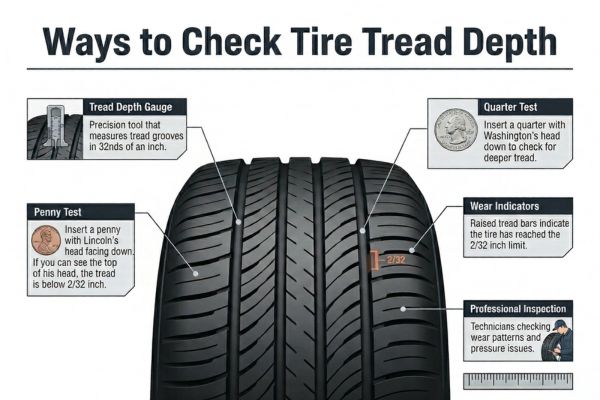
A tread depth gauge provides the most accurate reading of tire grooves. The probe slides into the groove and shows the remaining depth in 32nds of an inch or millimeters.
2. Penny Test
Many drivers use a penny to check tire wear during routine inspections. Lincoln’s head placed inside the groove helps reveal remaining tread. Visible space above the head means the tire is approaching the wear limit.
3. Quarter Test
The quarter test offers another simple way to check deeper tread levels. Washington’s head placed into the groove shows whether enough tread remains for safe road grip.
4. Tread Wear Indicators
Modern tires include small raised bars molded into the tread grooves. Tires have reached the 2/32 inch legal limit once the tread surface becomes level with these bars.
5. Professional Tire Inspection
Service technicians measure tread depth during maintenance checks and safety inspections. Detailed inspections can also identify uneven wear caused by alignment problems or improper tire pressure.
Tire Tread Depth Chart
Tire tread depth measurements show how much usable tread remains and help determine whether tires are new, safe, worn, or legally due for replacement.
| Tread Depth | Tire Condition | Driving Performance | Replacement Recommendation |
| 11/32 – 10/32 inch | New Tire | Maximum traction and full tread performance | No replacement needed |
| 9/32 – 8/32 inch | Very Good Condition | Strong road grip in dry and wet conditions | Safe for continued driving |
| 7/32 – 6/32 inch | Good Condition | Reliable traction though slight wear begins | Monitor tread during routine checks |
| 5/32 – 4/32 inch | Moderately Worn | Reduced traction in heavy rain or wet roads | Consider replacing soon |
| 3/32 inch | Heavily Worn | Limited water evacuation and weaker grip | Replacement recommended |
| 2/32 inch | Legal Minimum Limit | Very low traction and high hydroplaning risk | Tire must be replaced to remain road legal |
When Should Tires Be Replaced Based on Tread Depth?
Tires should be replaced once tread depth reaches 4/32 inch for safe wet-road performance or 2/32 inch for the legal replacement limit.
8/32 Inch Tread Depth
Tires with 8/32 inch of tread depth remain in very good condition. Road grip, braking performance, and water evacuation still function effectively.
6/32 Inch Tread Depth
Around 6/32 inch, tires still provide dependable traction for everyday driving. Regular inspections become important since noticeable wear begins during this stage.
5/32 – 4/32 Inch Tread Depth
Traction during rain starts declining once tread depth approaches 4/32 inch. Many drivers replace tires at this point to maintain stronger wet-road braking performance.
3/32 Inch Tread Depth
Depth close to 3/32 inch indicates heavy wear. Tire grooves struggle to channel water effectively and hydroplaning risk increases during wet conditions.
2/32 Inch Tread Depth
Tread depth of 2/32 inch represents the legal minimum limit for road use. Tires worn to this level must be replaced because traction and braking capability become severely reduced.
What Causes Tire Tread Wear?
Tire tread depth gradually decreases due to road friction, driving habits, and vehicle maintenance conditions.
Road Friction
Continuous contact between the tire and the road slowly wears down the rubber surface. High speeds, rough pavement, and long-distance driving accelerate tread wear over time.
Improper Tire Inflation
Incorrect tire pressure affects how the tire touches the road. Underinflated tires wear faster along the edges, while overinflated tires wear more in the center.
Wheel Alignment Issues
Misaligned wheels cause tires to drag slightly instead of rolling evenly. This leads to uneven tread wear patterns and reduces overall tire lifespan.
Aggressive Driving
Frequent hard braking, rapid acceleration, and sharp cornering increase stress on tire tread. Over time, aggressive driving habits can significantly shorten tire life.
Lack of Tire Rotation
Tires wear at different rates depending on their position on the vehicle. Regular tire rotation helps distribute wear evenly and preserves tread depth for a longer period.
How Can Drivers Maintain Proper Tire Tread Depth?
Proper tire maintenance helps slow tread wear and ensures tires remain safe for longer driving distances.
Maintain Correct Tire Pressure
Correct tire pressure allows the tire to contact the road evenly. Balanced pressure helps prevent uneven tread wear and improves overall tire lifespan.
Rotate Tires Regularly
Tires wear differently depending on their position on the vehicle. Regular tire rotation distributes wear more evenly and helps preserve tread depth.
Check Wheel Alignment
Proper wheel alignment ensures tires roll straight and evenly across the road surface. Misalignment can cause rapid or uneven tread wear across one side of the tire.
Inspect Tires Frequently
Routine visual inspections help drivers notice worn tread, uneven wear patterns, or early tire damage. Early detection allows tires to be replaced or serviced before safety becomes a concern.
Avoid Aggressive Driving
Sudden acceleration, hard braking, and sharp cornering place extra stress on tire tread. Smooth driving habits help preserve tread depth and improve tire longevity.
Balance the Tires
Wheel balancing keeps the tire rotating smoothly at higher speeds. Balanced tires reduce vibration and help prevent irregular tread wear.
Avoid Overloading the Vehicle
Excess weight places additional pressure on tires and increases tread wear. Staying within the vehicle’s recommended load limit helps protect tire structure and tread life.
Are There Any Exceptions to DOT Tire Tread Depth Regulations?
DOT tread depth regulations apply to most vehicles operating on public roads, though certain limited situations may allow regulatory flexibility.
Temporary Movement for Repairs
Vehicles traveling directly to a repair facility may sometimes operate under special movement permits. These permits usually allow short-distance travel so worn tires can be replaced safely.
Agricultural and Farm Vehicles
Farm equipment often operates on private land or rural roads rather than major highways. State regulations may apply different safety requirements for agricultural vehicles.
Off-Road and Construction Equipment
Construction vehicles and off-road machinery typically function outside standard highway traffic conditions. Separate safety standards often govern these types of vehicles.
Emergency Vehicles
Ambulances, fire trucks, and other emergency vehicles may receive temporary operational flexibility during urgent response situations. Regular maintenance and safety inspections still remain necessary.
State-Specific Regulations
Some states enforce additional vehicle inspection rules beyond federal guidelines. Local laws may include specific tire safety requirements for passenger vehicles and commercial fleets.
What Happens if Tires Do Not Meet DOT Tread Depth Requirements?
Operating a vehicle with worn tires can lead to safety hazards and enforcement actions during inspections.
Failed Safety Inspections
Roadside inspectors regularly check tire condition during vehicle safety inspections. Tires below the legal tread depth limit can cause the vehicle to fail inspection.
Traffic Citations
Drivers operating vehicles with unsafe tires may receive traffic violations. Repeated offenses can lead to higher fines or additional penalties.
Out-of-Service Orders
Commercial vehicles with severely worn tires may be placed out of service during DOT inspections. The vehicle cannot continue operation until the tires are replaced.
Increased Accident Risk
Worn tread reduces traction, braking ability, and water evacuation. Higher risk of hydroplaning or loss of control becomes a major safety concern.
Liability for Fleet Operators
Trucking companies must maintain vehicles according to federal safety standards. Non-compliance can lead to legal liability, insurance issues, and safety score penalties.
Final Thoughts
Tire tread depth plays a critical role in vehicle safety, road traction, and regulatory compliance. Understanding DOT tread depth requirements helps drivers and fleet operators maintain proper tire performance and avoid safety risks.
Regular inspections, proper maintenance, and timely tire replacement help ensure vehicles remain safe on the road. Maintaining adequate tread depth also helps drivers meet DOT safety standards while improving braking control and overall driving stability.
Frequently Asked Questions
How often should tire tread depth be checked?
Tire tread depth should be checked at least once a month and before long trips. Regular inspections help detect worn tires early and prevent unsafe driving conditions.
What tread depth is considered unsafe for driving?
Tread depth below 4/32 inch begins to reduce traction on wet roads. Tires worn to 2/32 inch are considered unsafe and reach the legal replacement limit.
Do new tires have the same tread depth?
New tires usually start with tread depth between 10/32 and 11/32 inch, though the exact depth may vary by tire type and manufacturer. Commercial truck tires often include deeper grooves designed for heavy loads and long-distance driving.
Can uneven tread wear affect vehicle safety?
Uneven tread wear can reduce traction and affect steering stability. Alignment problems, improper tire pressure, or lack of rotation often cause uneven wear patterns.
Does tire tread depth affect fuel efficiency?
Proper tire condition and balanced tread help maintain efficient contact with the road. Worn or uneven tires can increase rolling resistance and reduce fuel efficiency over time.